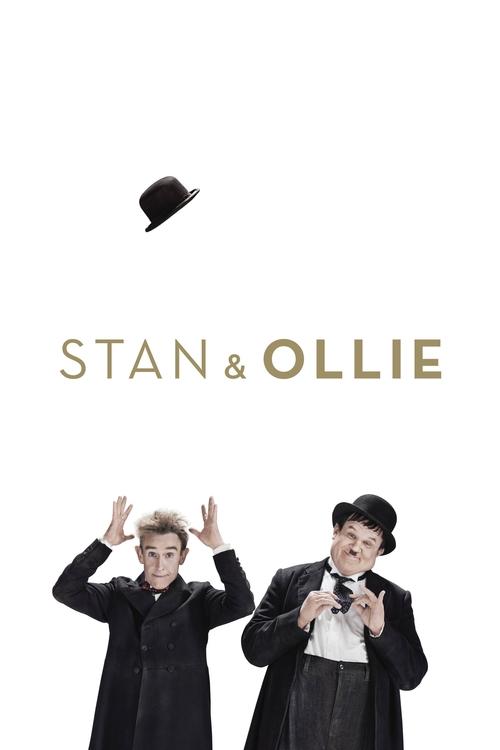
Stan & Ollie (2018)
Directed by Jon S. Baird
No — Stan & Ollie is not woke, scoring 6 out of 100 on our wokeness meter.
Stan & Ollie arrives as a modest elegy for two men who spent their lives falling over furniture, and it has no ambitions beyond the personal.
Consciousness Markers
A mild critique of studio exploitation and unfair contracts appears, but it is personal and industry-specific rather than a systemic anti-capitalist argument.
The cast is almost entirely white British and American performers, with no meaningful racial or ethnic diversity in the principal roles.
No LGBTQ+ characters, themes, or subtext are present; the central relationship is a non-romantic male friendship and professional partnership.
The wives are supportive and occasionally assertive, but the film does not advance a feminist critique or agenda.
The film does not engage with race, racism, or racial identity in any substantive way.
There are no environmental or climate-related themes in the film.
No body positivity themes are present; Oliver Hardy's weight is part of his established comic persona but is not treated as a social issue.
No neurodivergence themes or characters are present.
The film takes dramatic liberties with real events, but these are conventional biopic inventions rather than a modern ideological rewriting of history.
The film is a sentimental tribute with no preachy or lecture-like messaging.
Why it received this score
Stan & Ollie arrives as a modest elegy for two men who spent their lives falling over furniture, and it has no ambitions beyond the personal. Steve Coogan and John C. Reilly do the hard work of imitation, and the film watches them tour the British provinces in 1953, playing half-empty halls while a producer's attention drifts elsewhere. The camera stays close. The interest is in the silences between the routines, in the way a partnership outlives the affection that supposedly sustains it.
The film's one glancing grievance concerns money and contracts. Stan wants to leave Hal Roach and control his own work; Ollie will not rock a comfortable boat. Sixteen years later the resentment surfaces at a party, and the argument that follows is the film's best scene. It is a complaint about an industry that treats its artists as inventory, which is a real thing and an old one. The film keeps it personal. There is no systemic indictment here, no broader anger at the arrangement of capital, only two men nursing an old wound over drinks.
Everything else is tribute. The wives, played with sturdy good humour by Shirley Henderson and Nina Arianda, are supportive and sharp, and the film grants them a private hand squeeze that says more than any speech. It does not ask them to carry an argument. Nor does the film reach for a larger social program. The history is rearranged for dramatic convenience, which is standard biopic housekeeping and not an ideological rewrite. Laurel and Hardy never actually quarrelled, and the film quarrels on their behalf. That is sentiment, not sermonizing. The result is a warm, well-acted, entirely untroubling picture about two funny men growing old, and the pleasure it takes in them is sincere.
Analysis generated by our Consciousness Algorithm


Synopsis
With their golden era long behind them, comedy duo Stan Laurel and Oliver Hardy embark on a variety hall tour of Britain and Ireland. Despite the pressures of a hectic schedule, and with the support of their wives Lucille and Ida – a formidable double act in their own right – the pair's love of performing, as well as for each other, endures as they secure their place in the hearts of their adoring public
Questions about Stan & Ollie
Is Stan & Ollie woke?
No — Stan & Ollie is not woke, scoring 6 out of 100 on our wokeness meter. That earns it a verdict of Ultra Based.
Does Stan & Ollie have any woke elements?
Very few. None of the 10 markers reaches 30, the level where a marker counts as present; the highest is Eat the Rich at 10.
How does Stan & Ollie compare to other 2018 movies?
It ranks #244 of the 325 films from 2018 we've scored; their average is 20. The wokest is Return (92).
How is the Woke Score calculated?
An AI-assisted process researches the film and its reception, scores it 0–100 on ten markers, then combines those into one 0–100 Woke Score. It measures a specific set of 2020s cultural themes, not film quality.