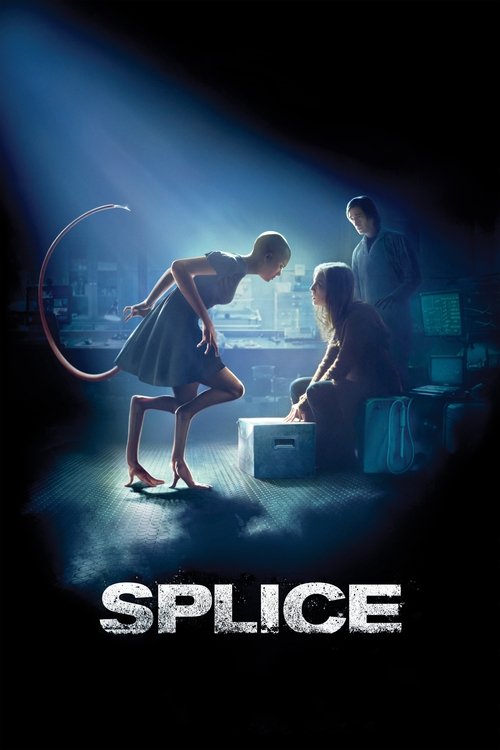
Splice (2010)
Directed by Vincenzo Natali
No — Splice is not woke, scoring 13 out of 100 on our wokeness meter.
Vincenzo Natali's Splice arrives from 2010, a year when a science fiction horror film could still be about two scientists in a lab doing something unwise with DNA and suffer no greater ideological burden than explaining itself.
Consciousness Markers
The N.E.R.D. corporation and its patenting of Dren's biology, plus Joan's cash offer to buy Elsa's pregnancy, offer a mild critique of corporate exploitation of science.
Elsa is a competent female lead scientist and the film probes her ambivalence about motherhood, but this is character drama rather than a feminist thesis.
The film gestures at bioethics and 'our genetic future,' but delivers these as horror beats rather than preachy sermonizing.
The cast is overwhelmingly white (Adrien Brody, Sarah Polley, Delphine Chanéac), with no diverse casting choices made or commented upon.
No LGBTQ+ themes or characters appear; the interspecies and metamorphic sexuality is played for horror, not identity politics.
The film engages no racial themes whatsoever.
No environmental or climate content; the genetic-engineering premise is about bioethics, not ecology.
No body-positivity messaging; the creature's body is treated as monstrous and horrifying.
No neurodivergence themes are present.
The film is speculative fiction with no historical revisionism.
Why it received this score
Vincenzo Natali's Splice arrives from 2010, a year when a science fiction horror film could still be about two scientists in a lab doing something unwise with DNA and suffer no greater ideological burden than explaining itself. Adrien Brody and Sarah Polley play Clive and Elsa, genetic engineers at a company called N.E.R.D., who splice human and animal material into a winged chimera named Dren. The film is grim, damp, and committed to its own unpleasantness. It wants to shock us and largely does, though the shocks are of the old-fashioned biological variety: stinger tails, amphibious gills, and a final act that curdles into assault. Nobody in the cast is there to check a box, and the film makes no comment on the fact.
Elsa is the more interesting half of the pair, a competent scientist whose ambivalence about motherhood drives the plot well before the creature does. This is character work, not a thesis, and the film never stops to explain what it thinks about women in science. It simply lets her be difficult. The creature's body is treated as monstrous throughout, which forecloses any warmer reading of physical difference. There is no representation to speak of, no racial dimension, no ecology, no neurodivergence, no historical argument. Instead the film has a laboratory and a bad idea.
The corporate material is the closest thing to a message. N.E.R.D. exists to patent what it did not create, and Joan eventually offers the pregnant Elsa a sum of money to finish the job. That is a mild jab at institutional appetite, delivered without a speech. The bioethics arrive as horror beats, not sermons, and the film trusts the audience to draw its own conclusions. It is a monster movie with a lab coat, and it seems content to remain one.
Analysis generated by our Consciousness Algorithm


Synopsis
Elsa and Clive, two rebellious young scientists, defy legal and ethical boundaries and forge ahead with a dangerous experiment: splicing together human and animal DNA to create a new organism. Named "Dren", the creature rapidly develops from a deformed female infant into a beautiful but dangerous winged human-chimera, who forges a bond with both of her creators — only to have that bond turn deadly.
Questions about Splice
Is Splice woke?
No — Splice is not woke, scoring 13 out of 100 on our wokeness meter. That earns it a verdict of Ultra Based.
Does Splice have any woke elements?
Very few. None of the 10 markers reaches 30, the level where a marker counts as present; the highest is Eat the Rich at 20.
How does Splice compare to other 2010 movies?
It ranks #63 of the 238 films from 2010 we've scored; their average is 11. The wokest is My Name Is Khan (84).
How is the Woke Score calculated?
An AI-assisted process researches the film and its reception, scores it 0–100 on ten markers, then combines those into one 0–100 Woke Score. It measures a specific set of 2020s cultural themes, not film quality.