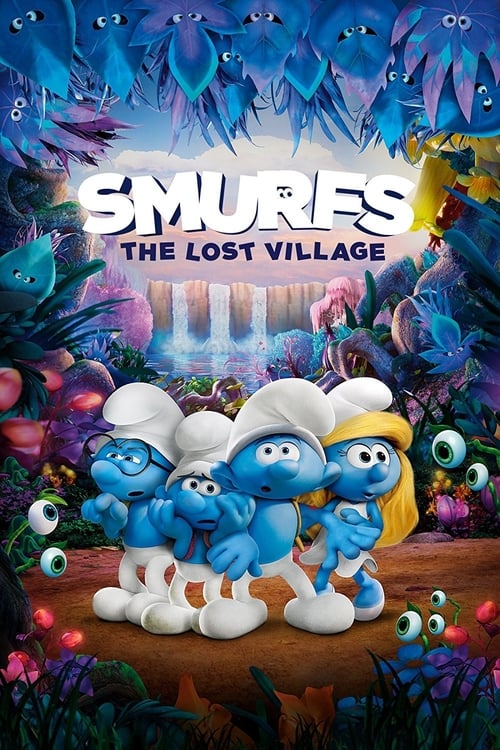
Smurfs: The Lost Village (2017)
Directed by Kelly Asbury
Partly — Smurfs: The Lost Village is somewhat woke, scoring 52 out of 100 on our wokeness meter.
The Smurfs return in fully animated form, a reboot of the live-action hybrids, and the result is a gentle, blue-hued adventure in which a map causes Smurfette and three male companions to discover a hidden village.
Consciousness Markers
The entire plot centers on Smurfette, the lone female Smurf, discovering an all-female Smurfy Grove and finding her purpose beyond being 'just a girl,' with a 'girl power' keyword, two female screenwriters, and a ReFrame Stamp for gender parity.
The voice cast is notably diverse, with Michelle Rodriguez, Danny Pudi, Tituss Burgess, Gabriel Iglesias, and Demi Lovato voicing key roles, though the characters themselves are uniformly blue Smurfs.
Critics noted a 'shockingly relevant and important central theme' about Smurfette's self-worth and the closing message that she can 'be anything she wants to be,' though it is delivered gently rather than preachy.
No LGBTQ+ themes or characters appear anywhere in the film.
The film contains no engagement with race or racial themes; the Smurfs are a single blue species.
No environmental or climate themes are present.
Gargamel is a generic villain seeking magical power, not a stand-in for wealth or capitalism.
No body positivity themes; the characters are stylized identical blue figures.
Brainy and Clumsy are comic archetypes rather than framed through any neurodivergence lens.
No historical revisionism; the film is pure fantasy.
Why it received this score
The Smurfs return in fully animated form, a reboot of the live-action hybrids, and the result is a gentle, blue-hued adventure in which a map causes Smurfette and three male companions to discover a hidden village. The voice cast is unusually diverse for a property about identical blue creatures: Demi Lovato, Michelle Rodriguez, Danny Pudi, Tituss Burgess, and Gabriel Iglesias populate the grove. The characters remain uniformly blue, so the diversity lives in the recording booth, not on the screen. That is a real but limited gesture. It earns some credit and no more.
The film's central concern is Smurfette, the lone female Smurf, who finds an entire village of female Smurfs and, with it, a purpose beyond being just a girl. Two women wrote the screenplay, and the project received a ReFrame Stamp for gender parity. The story is built around her self-worth, her belonging, and her eventual declaration that she can be anything she wants to be. This is delivered with a light touch, more bedtime story than public service announcement. The closing moral is present, but it does not scold. It simply arrives, smiles, and waits for the credits.
Elsewhere, the film is content to be a children's fantasy. There are no LGBTQ themes, no engagement with race, no climate parable, no critique of wealth, no body positivity, no neurodivergent framing, and no revision of history. Gargamel seeks magical power, not market dominance. The Smurfs are one blue species, so racial consciousness never enters. Brainy and Clumsy are comic types, not diagnostic categories. The result is a modest animated feature with a feminist spine and a diverse voice cast, surrounded by long stretches of harmless Smurf business. It means well, and it says so, but it rarely raises its voice.
Analysis generated by our Consciousness Algorithm
Part of


Synopsis
In this fully animated, all-new take on the Smurfs, a mysterious map sets Smurfette and her friends Brainy, Clumsy and Hefty on an exciting race through the Forbidden Forest leading to the discovery of the biggest secret in Smurf history.
Questions about Smurfs: The Lost Village
Is Smurfs: The Lost Village woke?
Partly — Smurfs: The Lost Village is somewhat woke, scoring 52 out of 100 on our wokeness meter. That earns it a verdict of Woke-Adjacent.
What makes Smurfs: The Lost Village woke?
3 of the 10 markers register at 30 or above, led by Feminist Agenda (78), Representation Casting (45) and Lecture Energy (40). On Feminist Agenda: The entire plot centers on Smurfette, the lone female Smurf, discovering an all-female Smurfy Grove and finding her purpose beyond being 'just a girl,' with a 'girl power' keyword, two female screenwriters, and a ReFrame Stamp for gender parity.
How does Smurfs: The Lost Village compare to other 2017 movies?
It ranks #33 of the 309 films from 2017 we've scored; their average is 19. The wokest is I Am Not Your Negro (92).
How is the Woke Score calculated?
An AI-assisted process researches the film and its reception, scores it 0–100 on ten markers, then combines those into one 0–100 Woke Score. It measures a specific set of 2020s cultural themes, not film quality.