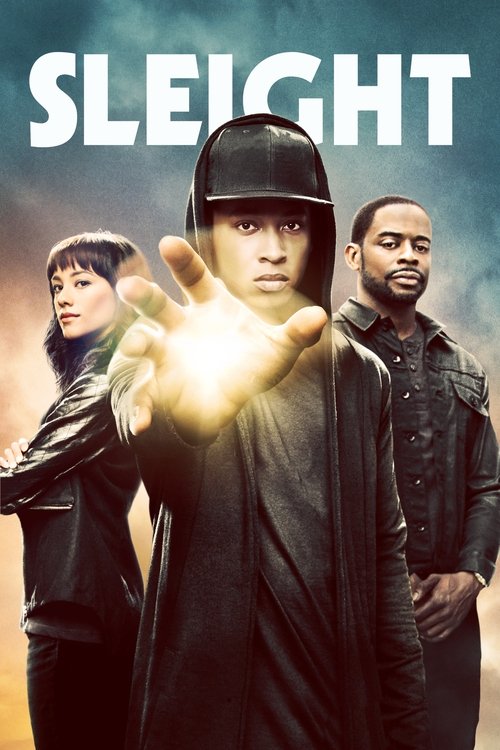
Sleight (2017)
Directed by J.D. Dillard
No — Sleight is not woke, scoring 19 out of 100 on our wokeness meter.
Sleight arrives with the modest confidence of a magic trick performed for a small crowd.
Consciousness Markers
Features a predominantly Black cast and a Black director in a genre film, though race is not a thematic focus.
No LGBTQ+ themes or characters are present in the film.
No feminist agenda or commentary is evident in the story.
Race is not addressed or explored as a theme in the film.
No climate or environmental themes are present.
The film depicts drug dealing out of economic necessity but does not advance an anti-capitalist message.
No body positivity themes or messaging are present.
No neurodivergence themes or characters are present.
The film is not based on historical events and does not revise history.
The film does not contain preachy or lecture-like messaging.
Why it received this score
Sleight arrives with the modest confidence of a magic trick performed for a small crowd. J.D. Dillard's debut follows Bo Wolfe, a young street magician in Los Angeles who hides an electromagnet in his forearm and sells drugs at night to keep a roof over his sister's head. The budget was a quarter of a million dollars. The film looks like it cost more, which is the closest thing to genuine magic on display. Jacob Latimore carries the picture with a stillness most young leads cannot manage, and Storm Reid, as the sister, does the work of three child actors with a fraction of the screen time.
The picture has a predominantly Black cast and a Black director working in a genre that historically has not welcomed either. That fact sits in the frame without comment. Nobody explains it. Nobody asks us to applaud it. Race is not the subject here; obligation is, and the cost of carrying a family when the legitimate routes have closed. The drug dealing reads as economics, not as a thesis about capital. There is no sermon waiting at the end of the third act, no lesson delivered to the audience with a raised eyebrow. The film wants to be a thriller about a man with a magnet in his arm, and it succeeds at being exactly that.
A critic tasked with sorting the cultural furniture finds the room nearly bare. No subplot bends toward instruction. No character arrives to explain the correct politics of the moment. The result is a lean, strange little genre exercise that trusts its audience to keep up. We are left, as ever, with our ledger and our red pen, and a page that stays stubbornly blank. It is a relief, and also a professional inconvenience.
This is a superhero story by construction, though it wears the costume lightly and never announces itself as such. There are no capes, no origin montage, no cosmic stakes. Just a young man, a magnet, and a debt he cannot pay. The restraint is admirable and, for our purposes, almost insulting in its quietness. We came to classify and found very little to classify, which may be the highest compliment this particular ledger can offer. A film that refuses to lecture is a rare vintage, and we note its absence of aftertaste with something close to gratitude, mixed with the faint boredom of a sommelier handed a glass of water. The craft is real. The messaging is not. We score what is there, and here, most of the shelf is empty by design, not by omission. That distinction matters, and it is the only distinction the picture seems interested in making. It makes it well. It makes it quietly. It makes it without a single raised voice, and for that, we set down the pen and pour ourselves something stronger. The lights flicker. Nobody explains why. Good. Let them wonder.
Thematic tags: superhero, book adaptation (none), sequel (none), remake (none), true story (none), oscar winner (none), box office number one (none). Only the superhero tag applies, and even that sits uneasily on a film this small. We file it under genre curiosity and move on to the next screening, where someone will almost certainly be shouting at us about the state of the world. Until then, silence is a welcome houseguest, and Sleight keeps it. The end. We are done here. Nothing further to report, which is itself a report of sorts, filed in triplicate, stamped, and shelved. The sommelier sips. The sommelier shrugs. The sommelier moves on.
Analysis generated by our Consciousness Algorithm


Synopsis
A young street magician is left to take care of his little sister after his mother's passing and turns to drug dealing in the Los Angeles party scene to keep a roof over their heads. When he gets into trouble with his supplier, his sister is kidnapped and he is forced to rely on both his sleight of hand and brilliant mind to save her.
Questions about Sleight
Is Sleight woke?
No — Sleight is not woke, scoring 19 out of 100 on our wokeness meter. That earns it a verdict of Ultra Based.
Does Sleight have any woke elements?
1 of the 10 markers register at 30 or above, led by Representation Casting (45). On Representation Casting: Features a predominantly Black cast and a Black director in a genre film, though race is not a thematic focus.
How does Sleight compare to other 2017 movies?
It ranks #96 of the 309 films from 2017 we've scored; their average is 19. The wokest is I Am Not Your Negro (92).
How is the Woke Score calculated?
An AI-assisted process researches the film and its reception, scores it 0–100 on ten markers, then combines those into one 0–100 Woke Score. It measures a specific set of 2020s cultural themes, not film quality.