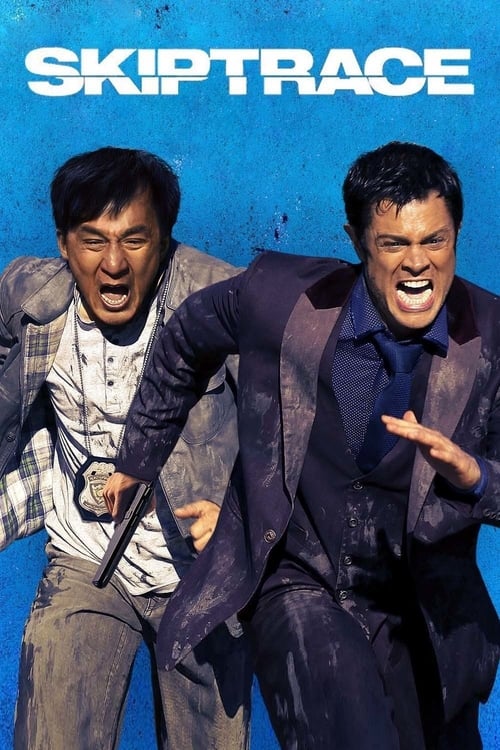
Skiptrace (2016)
Directed by Renny Harlin
No — Skiptrace is not woke, scoring 18 out of 100 on our wokeness meter.
Renny Harlin's Skiptrace arrives as a buddy-cop comedy of the 2016 vintage, a Sino-American co-production in which Jackie Chan's Hong Kong detective drags Johnny Knoxville's gambling conman across Mongolia and China in pursuit of a criminal called Matador.
Consciousness Markers
The film features a diverse international cast including Chinese, Hong Kong, American, Korean, and Russian actors, but this diversity is largely natural to the cross-cultural buddy-cop premise rather than a deliberate modern representation agenda.
There are no LGBTQ+ characters, themes, or subtext in the film.
Female characters exist as a damsel in distress and a hitwoman, but the film contains no feminist themes or commentary.
The film includes cross-cultural interactions between Chinese and American characters, but it does not engage with racial consciousness or racial justice themes.
There is no environmental or climate-related content in the film.
The villain is a businessman, but the film does not critique capitalism or wealth inequality.
There is no body positivity messaging or focus in the film.
There is no exploration or representation of neurodivergence in the film.
The film is a fictional action comedy and does not revise or reinterpret historical events.
The film is a lighthearted buddy-cop comedy with no preachy or lecture-like messaging.
Why it received this score
Renny Harlin's Skiptrace arrives as a buddy-cop comedy of the 2016 vintage, a Sino-American co-production in which Jackie Chan's Hong Kong detective drags Johnny Knoxville's gambling conman across Mongolia and China in pursuit of a criminal called Matador. The picture is amiable, loud, and structurally indifferent to the concerns that animate contemporary cultural criticism. What it offers instead is a broad itinerary of pratfalls, crotch humor, and alpacas. The classification effort here is mercifully brief.
The cast is genuinely international: Chinese, Hong Kong, Korean, Russian, and American performers share the frame. That diversity flows from the premise of a cross-border chase, not from any casting directive. Nobody comments on it. Nobody learns a lesson about it. Fan Bingbing plays the abducted daughter with professionalism, and Eve Torres plays a Siberian hitwoman with a certain efficiency, though the film has no interest in what either might signify. The villain is a businessman, which in a more anxious production would invite a sermon about greed. Here he is simply a man who wants a phone.
The film's most notable feature, from a taxonomic standpoint, is its absence of messaging. There is no environmental parable, no reckoning with history, no meditation on identity, no lecture. The narrative resolves through drowning, suicide, and a paternity joke, which is to say it resolves the way action comedies resolved things before anyone expected them to mean something. Critics at the time found it warmed-over. That assessment is fair. It is also, in its way, restful. A film that asks nothing of the audience beyond ninety minutes of Jackie Chan falling off things has become a rarity, and Skiptrace is that rarity, unimproved and unashamed.
Analysis generated by our Consciousness Algorithm
Part of


Synopsis
A detective from Hong Kong teams up with an American gambler to battle against a notorious Chinese criminal.
Questions about Skiptrace
Is Skiptrace woke?
No — Skiptrace is not woke, scoring 18 out of 100 on our wokeness meter. That earns it a verdict of Ultra Based.
Does Skiptrace have any woke elements?
1 of the 10 markers register at 30 or above, led by Representation Casting (30). On Representation Casting: The film features a diverse international cast including Chinese, Hong Kong, American, Korean, and Russian actors, but this diversity is largely natural to the cross-cultural buddy-cop premise rather than a deliberate modern representation agenda.
How does Skiptrace compare to other 2016 movies?
It ranks #85 of the 285 films from 2016 we've scored; their average is 16. The wokest is 13th (92).
How is the Woke Score calculated?
An AI-assisted process researches the film and its reception, scores it 0–100 on ten markers, then combines those into one 0–100 Woke Score. It measures a specific set of 2020s cultural themes, not film quality.