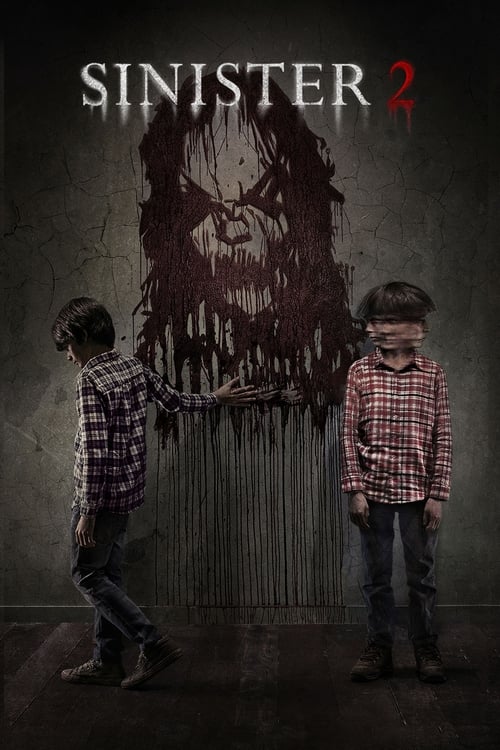
Sinister 2 (2015)
Directed by Ciarán Foy
No — Sinister 2 is not woke, scoring 7 out of 100 on our wokeness meter.
Sinister 2 arrives as the second installment in a franchise about a pagan deity named Bughuul who persuades children to murder their families and film the results.
Consciousness Markers
The cast includes a Black supporting actor (John Beasley) and a female lead, but neither is framed as a representational statement; they simply occupy standard horror-movie roles.
Courtney is a mother fleeing an abusive husband, which gives her a sympathetic arc, but she remains largely a victim to be rescued rather than a vehicle for any feminist argument.
No LGBTQ+ characters, themes, or subtext appear anywhere in the film.
Race is never addressed or commented upon; the presence of a Black professor is incidental and carries no thematic weight.
No environmental or climate themes whatsoever; the antagonist is a pagan child-murdering deity, not industry.
No economic critique or class commentary is present in the film.
No body-positive messaging; the film's treatment of bodies is purely gruesome horror spectacle.
Dylan's nightmares and torment are supernatural in origin, not framed as neurodivergence or mental-health advocacy.
The film invents its own occult mythology but makes no revisionist claims about real historical events.
Exposition about Bughuul's ritual rules is delivered as plot mechanics, not as social or moral instruction to the audience.
Why it received this score
Sinister 2 arrives as the second installment in a franchise about a pagan deity named Bughuul who persuades children to murder their families and film the results. Ciarán Foy directs with the grim professionalism of a man delivering a package he did not pack. James Ransone returns as the nameless former deputy, now a private investigator, and Shannyn Sossamon plays Courtney, a mother hiding from an abusive husband in a farmhouse marked for death. The film is competent and grim and almost entirely without ambition beyond the next jump scare, which it deploys with the persistence of a doorbell that will not stop ringing.
The cast includes a Black actor, John Beasley, as a professor who explains the occult rules, and a woman in the lead, but neither presence is offered as a statement of anything. They occupy their roles the way furniture occupies a room. Race goes unmentioned. No character's sexuality is examined. The environment is not a concern, the antagonist being a demon, not industry. Courtney's arc as a battered wife grants her sympathy, though she spends most of the running time being rescued by the deputy, which keeps the material inside the conventions of the genre as they stood in 2015.
The film offers mythology, delivered as rules and mechanics. The exposition about ritual sacrifice, missing children, and artwork of Bughuul is plot plumbing, not moral instruction. Nobody is told how to live. The bodies on the scarecrow posts exist for spectacle, not for advocacy. This is a slapdash sequel to a modest hit, reviewed poorly and forgotten quickly, and it carries no discernible cultural program. A viewer seeking progressive sensibilities in the murder of a family by its own child will come away empty. The score reflects that absence, which is total.
Analysis generated by our Consciousness Algorithm
Part of


Synopsis
A young mother and her twin sons move into a rural house that's marked for death.
Questions about Sinister 2
Is Sinister 2 woke?
No — Sinister 2 is not woke, scoring 7 out of 100 on our wokeness meter. That earns it a verdict of Ultra Based.
Does Sinister 2 have any woke elements?
Very few. None of the 10 markers reaches 30, the level where a marker counts as present; the highest is Representation Casting at 15.
How does Sinister 2 compare to other 2015 movies?
It ranks #183 of the 289 films from 2015 we've scored; their average is 15. The wokest is Chi-Raq (78).
How is the Woke Score calculated?
An AI-assisted process researches the film and its reception, scores it 0–100 on ten markers, then combines those into one 0–100 Woke Score. It measures a specific set of 2020s cultural themes, not film quality.