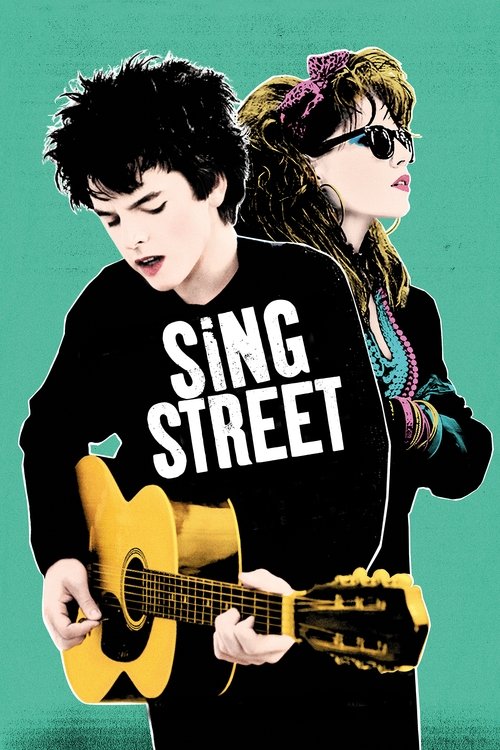
Sing Street (2016)
Directed by John Carney
No — Sing Street is not woke, scoring 6 out of 100 on our wokeness meter.
John Carney's 2016 musical is a semi-autobiographical account of a Dublin teenager who starts a band to impress a girl, and it conducts itself with an almost antique lack of agenda.
Consciousness Markers
The band includes a Black member (Ngig) and the cast is largely unknown Irish talent, but this is natural, unremarked ensemble casting rather than a self-conscious representation agenda.
Raphina is given some agency and her own escape ambitions, but the film is squarely a boy's coming-of-age story and makes no feminist argument.
The family's financial strain and recession-era Dublin provide texture, but there is no anti-capitalist thesis or eat-the-rich messaging.
The film is a warm, feel-good musical with no preachy or didactic messaging; it aims to charm rather than lecture.
No LGBTQ+ characters, themes, or subtext appear anywhere in the film.
Race is never addressed or thematized; the multiracial band is presented without comment.
No environmental or climate themes are present.
No body positivity themes or messaging appear in the film.
No neurodivergent characters or themes are depicted.
The film is a semi-autobiographical period piece set in 1985 Dublin and makes no attempt to revise or reinterpret history.
Why it received this score
John Carney's 2016 musical is a semi-autobiographical account of a Dublin teenager who starts a band to impress a girl, and it conducts itself with an almost antique lack of agenda. The year is 1985. The family is breaking apart over money. The Christian Brothers run the school with fists and shoe polish. All of this serves the story and nothing else. The film has no argument to make about the era it depicts, and no interest in making one.
Where the classification gets interesting is in the margins. Carney cast unknown Irish performers in nearly every young role, and the band includes a Black keyboardist, Ngig, who is simply present, plays his parts, and is never asked to explain himself. That is ensemble casting, not a program. Raphina, the object of Conor's affections, is given her own reasons to flee Dublin and her own disappointment when London fails her, which grants her more interiority than the genre usually permits. The film still belongs to the boy. The Lalor household's financial collapse, the emigration, the selling of the house, supply a mood of economic precarity, though nobody proposes a solution.
The remaining categories sit empty. There is no queer presence, no environmental concern, no body-positive messaging, no neurodivergent characterization, and no attempt to revise the historical record. As for sermonizing, the film has none. It would prefer to make us hum. It succeeds at that, which is its own kind of achievement and a modest one. We file it under charm, and we note the low score with something close to relief. The vintage is light, pleasant, and best consumed quickly.
Analysis generated by our Consciousness Algorithm


Synopsis
A boy growing up in Dublin during the 1980s escapes his strained family life by starting a band to impress the mysterious girl he likes.
Questions about Sing Street
Is Sing Street woke?
No — Sing Street is not woke, scoring 6 out of 100 on our wokeness meter. That earns it a verdict of Ultra Based.
Does Sing Street have any woke elements?
Very few. None of the 10 markers reaches 30, the level where a marker counts as present; the highest is Feminist Agenda at 12.
How does Sing Street compare to other 2016 movies?
It ranks #202 of the 285 films from 2016 we've scored; their average is 16. The wokest is 13th (92).
How is the Woke Score calculated?
An AI-assisted process researches the film and its reception, scores it 0–100 on ten markers, then combines those into one 0–100 Woke Score. It measures a specific set of 2020s cultural themes, not film quality.