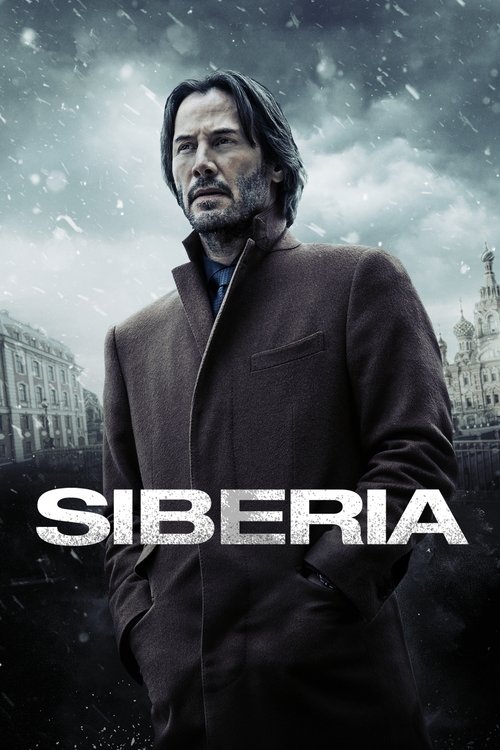
Siberia (2018)
Directed by Matthew Ross
No — Siberia is not woke, scoring 0 out of 100 on our wokeness meter.
Siberia opens with Keanu Reeves in a fur-lined coat, squinting at the horizon of a mining town that has clearly seen better decades.
Consciousness Markers
The cast is composed of Russian and Eastern European actors playing Russian characters, which is natural to the setting rather than any deliberate diversity-casting initiative. No marker-worthy intent is present.
There are no LGBTQ+ characters, themes, or subtext anywhere in the film.
While Katya is a willful character, the plot centers on a ritual in which women are coerced into servicing the male leads, which is antithetical to any feminist agenda.
The film engages no racial themes or commentary whatsoever.
The Siberian setting is atmospheric backdrop only; no environmental or climate messaging is present.
The diamond trade and gangster economics are plot mechanics, not a critique of capitalism or an 'eat the rich' thesis.
No body-positivity themes or messaging appear in the film.
No neurodivergent characters or themes are depicted.
The film is a fictional contemporary thriller with no historical revisionism.
A grim, amoral crime thriller with no preachy or didactic messaging directed at the audience.
Why it received this score
Siberia opens with Keanu Reeves in a fur-lined coat, squinting at the horizon of a mining town that has clearly seen better decades. He plays Lucas Hill, a diamond merchant whose business partner has vanished along with a pouch of rare blue stones. The plot drags him through Saint Petersburg and the Siberian interior, where every conversation is a threat and every woman is property. The film has no interest in instructing anyone about anything. It simply watches men behave badly in cold rooms.
The centerpiece is a ritual of brotherhood in which two gangsters require their women to service the opposing party as a gesture of good faith. Katya, played by Ana Ularu, is given a moment of defiance, but the scene exists to demonstrate the depth of her captivity, not to critique it. The camera observes. The plot continues. Lucas cheats on his wife, lies to federal agents, and dies face down in the snow for his trouble. Nobody learns. Nobody grows. The moral universe of the picture is a closed and airless room.
We searched this film for a thesis about representation, about gender, about the extraction economy that hollows out the town. We found none. The Russian cast plays Russian characters because the story is set in Russia. The diamonds are a McGuffin and not a metaphor for late capitalism. The environment is weather, not a warning. There is no sermon here, no lesson, no invitation to feel righteous about anything. It is a grubby, fatalistic genre exercise, and it achieves a kind of purity in its refusal to mean anything at all.
Analysis generated by our Consciousness Algorithm
Part of


Synopsis
Lucas, a diamond trader who travels to Saint Petersburg to arrange a sale, discovers that his Russian business partner has left his hotel and gone to a small Siberian village, so Lucas also heads there to try find him.
Questions about Siberia
Is Siberia woke?
No — Siberia is not woke, scoring 0 out of 100 on our wokeness meter. That earns it a verdict of Ultra Based.
Does Siberia have any woke elements?
No. All 10 markers score zero.
How does Siberia compare to other 2018 movies?
It ranks #291 of the 325 films from 2018 we've scored; their average is 20. The wokest is Return (92).
How is the Woke Score calculated?
An AI-assisted process researches the film and its reception, scores it 0–100 on ten markers, then combines those into one 0–100 Woke Score. It measures a specific set of 2020s cultural themes, not film quality.