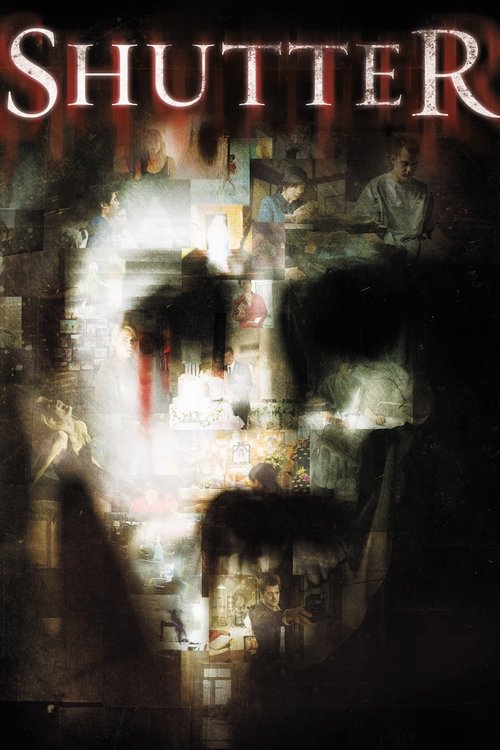
Shutter (2008)
Directed by Masayuki Ochiai
No — Shutter is not woke, scoring 6 out of 100 on our wokeness meter.
Shutter arrives in 2008 as yet another American remake of an Asian horror film, this time borrowing from Thailand instead of the usual Japanese well.
Consciousness Markers
The film addresses sexual violence and the resulting trauma and suicide of a female character, though it does so within a traditional horror framework rather than as a feminist critique.
The film features a Western cast in a Japanese setting, but the representation is standard for the genre and does not push specific diversity narratives.
The film is set in Japan, providing cultural context, but it does not engage with systemic racial issues or deep cultural commentary.
The protagonist suffers from severe mental breakdown and catatonia, which is presented as a consequence of trauma rather than an exploration of neurodivergence.
There are no discernible LGBTQ+ themes or characters present in the narrative.
There is no mention or depiction of environmental concerns or climate change.
The plot focuses entirely on personal trauma and supernatural horror, showing no critique of economic structures or wealth disparity.
The film does not address body image, self-acceptance, or positive body representation.
The film is a fictional supernatural horror story and does not deal with historical revisionism.
The film is driven by mystery and horror, lacking any didactic or overtly educational social commentary.
Why it received this score
Shutter arrives in 2008 as yet another American remake of an Asian horror film, this time borrowing from Thailand instead of the usual Japanese well. A newlywed photographer named Ben drags his wife Jane to Tokyo for a job, runs over a girl in the wilderness, and then watches spectral blurs colonize his fashion negatives. The ghost, it turns out, is a former lover he and his friends wronged. The film understands that a camera is a confession device.
Politically, the picture is nearly silent. The casting places an American couple inside a Japanese setting, which supplies atmosphere but no argument about who gets to occupy the frame. There are no queer currents, no environmental sermon, no critique of the money that funds Ben's magazine career. The one thread with any moral weight is the fate of Megumi, a woman drugged, assaulted, and driven to suicide by men who then bury the evidence. The film treats this as a horror reveal, a late-act gut punch, not a thesis. It is a nasty piece of plotting that happens to center a woman's suffering without ever asking to be praised for it.
The protagonist's collapse into catatonia registers as a plot mechanism, the wages of guilt, not an invitation to contemplate mental health. No lectures, no lessons, no redemption arc for the man who earned his haunting. A lean, mean, critically loathed little thriller moved $48 million on an $8 million budget and asked nothing of its audience beyond a flinch. In the taxonomy of cultural instruction, it is a null set. Refreshing, in its grim way.
Analysis generated by our Consciousness Algorithm


Synopsis
A newly married couple discovers disturbing, ghostly images in photographs they develop after a tragic accident. Fearing the manifestations may be connected, they investigate and learn that some mysteries are better left unsolved.
Questions about Shutter
Is Shutter woke?
No — Shutter is not woke, scoring 6 out of 100 on our wokeness meter. That earns it a verdict of Ultra Based.
Does Shutter have any woke elements?
Very few. None of the 10 markers reaches 30, the level where a marker counts as present; the highest is Feminist Agenda at 20.
How does Shutter compare to other 2008 movies?
It ranks #129 of the 212 films from 2008 we've scored; their average is 12. The wokest is Milk (68).
How is the Woke Score calculated?
An AI-assisted process researches the film and its reception, scores it 0–100 on ten markers, then combines those into one 0–100 Woke Score. It measures a specific set of 2020s cultural themes, not film quality.