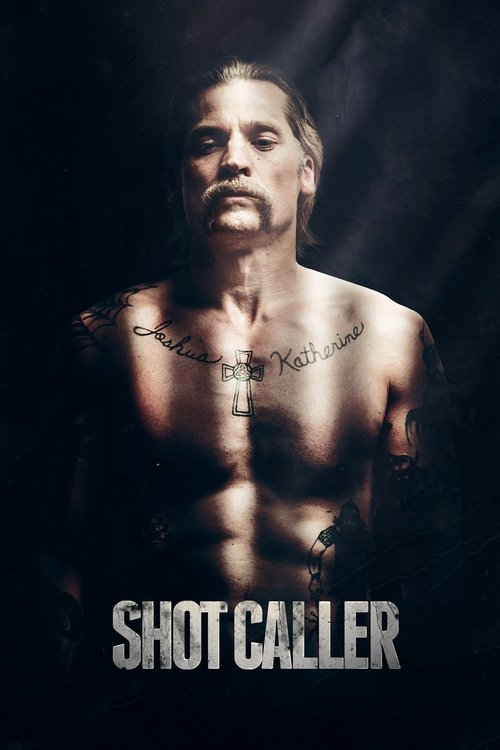
Shot Caller (2017)
Directed by Ric Roman Waugh
No — Shot Caller is not woke, scoring 8 out of 100 on our wokeness meter.
Shot Caller opens with a stockbroker named Jacob Harlon, a man of modest appetites and one wine glass too many, and spends the next two hours grinding him down into a prison gangster called Money.
Consciousness Markers
The cast is naturally diverse (Omari Hardwick, Benjamin Bratt, Evan Jones), but this reflects the racial makeup of the California prison-gang milieu rather than any deliberate representation agenda.
The protagonist's fall from stockbroker to inmate gestures faintly at systemic failure, but the film is a genre thriller, not an indictment of capitalism or the prison-industrial complex.
The film depicts white-supremacist and Sureño gang dynamics and racial violence, but as grim subject matter rather than a progressive racial-justice message.
Waugh's film is a lean, texture-driven crime drama that shows rather than preaches; there is little didactic messaging.
No LGBTQ+ characters, themes, or subtext appear anywhere in the film.
Lake Bell's Katherine is a supportive wife in a largely reactive role; the film has no feminist framing or commentary on gender.
No environmental or climate themes are present.
No body-positivity themes or messaging.
No neurodivergent characters or themes are explored.
The film is a fictional narrative grounded in research, not a revisionist retelling of historical events.
Why it received this score
Shot Caller opens with a stockbroker named Jacob Harlon, a man of modest appetites and one wine glass too many, and spends the next two hours grinding him down into a prison gangster called Money. Ric Roman Waugh directs with an anthropologist's patience for the texture of the California penal system: the tattoos, the racial stratification, the small brutalities that accumulate into a personality. It is a grim, efficient machine of a movie, and it has almost nothing to say about the way we live now. That is a compliment, delivered without enthusiasm.
The cast is diverse in the way a prison yard is diverse, which is to say along lines of tribal allegiance and threat. Omari Hardwick, Benjamin Bratt, and Evan Jones occupy the frame as members of rival factions, and the film treats their racial identities as operational facts, the raw material of violence, not as an occasion for moral instruction. Lake Bell appears as Katherine, the wife, and spends her scenes waiting, worrying, and being protected. The screenplay has no interest in her interior life and no interest in correcting that omission.
There is a faint structural grievance buried in the premise, the notion that a single mistake plus an indifferent system equals a life destroyed, and Participant Media's involvement suggests somebody hoped for more of it. Waugh never indulges the impulse. He shows the machinery and lets it run. The result is lean, mean, and mercifully free of sermons, a crime drama that trusts its audience to draw conclusions it has no intention of drawing for them.
Analysis generated by our Consciousness Algorithm


Synopsis
A newly-released prison gangster is forced by the leaders of his gang to orchestrate a major crime with a brutal rival gang on the streets of Southern California.
Questions about Shot Caller
Is Shot Caller woke?
No — Shot Caller is not woke, scoring 8 out of 100 on our wokeness meter. That earns it a verdict of Ultra Based.
Does Shot Caller have any woke elements?
Very few. None of the 10 markers reaches 30, the level where a marker counts as present; the highest is Representation Casting at 15.
How does Shot Caller compare to other 2017 movies?
It ranks #184 of the 309 films from 2017 we've scored; their average is 19. The wokest is I Am Not Your Negro (92).
How is the Woke Score calculated?
An AI-assisted process researches the film and its reception, scores it 0–100 on ten markers, then combines those into one 0–100 Woke Score. It measures a specific set of 2020s cultural themes, not film quality.