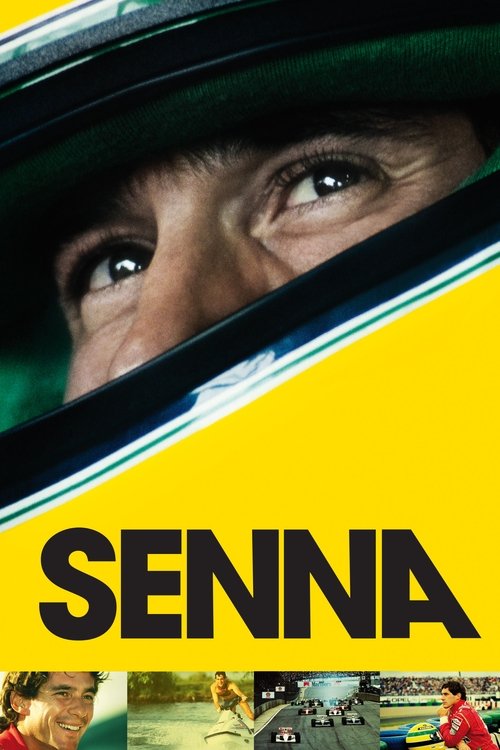
Senna (2010)
Directed by Asif Kapadia
No — Senna is not woke, scoring 0 out of 100 on our wokeness meter.
Asif Kapadia's Senna, released in 2010, refuses the standard documentary apparatus.
Consciousness Markers
Documentary uses archival footage of real F1 figures; no modern inclusive casting decisions are present.
No LGBTQ+ themes or characters.
No feminist agenda or gender-focused commentary.
Focuses on Brazilian national pride and charity, not racial consciousness or racial justice.
No environmental or climate themes.
Critiques F1 politics and commercialization lightly, but not an anti-capitalist or eat-the-rich message.
No body positivity themes.
No neurodivergence themes.
A documentary portrait, not a revisionist historical narrative in the woke sense.
No talking-head lectures or didactic social messaging; it is an archival collage.
Why it received this score
Asif Kapadia's Senna, released in 2010, refuses the standard documentary apparatus. There is no narrator, no authoritative commentary, no parade of experts seated before bookshelves. The film is assembled entirely from archival material: race footage, Brazilian and Japanese television, press conferences, and home video supplied by the Senna family. Kapadia arranges this into something closer to drama than reportage. The cameras were already there, forty of them at times, so the editing room could produce a two-shot, a reverse, a helicopter wide. The film won two BAFTAs, and deserved them.
Viewed against contemporary cultural expectations, the film is a blank slate. Its subject is a Brazilian national hero, and his philanthropy toward underprivileged children arrives in a closing title card, but the film frames this as personal legacy, not as racial or economic testimony. There is no modern casting calculus at work, no gender commentary, no environmental appeal, no meditation on body image or neurodivergence. The antagonists are Alain Prost and Jean-Marie Balestre, and their offenses are professional, not systemic. Formula One's drift into a political and commercial machine draws a skeptical eye, though the film stops well short of an indictment of capital itself.
The absence of sermonizing is the point. Senna trusts its footage to carry an argument about mortality, ambition, and the cost of a sport that had not yet learned to protect its drivers. It mourns a man without instructing the audience on how to mourn. A decade and a half on, the film feels like an artifact from a period when a documentary could simply tell a story, and the classification reflects that. Zero across the board. This is not a complaint.
Analysis generated by our Consciousness Algorithm
Part of
Synopsis
The remarkable story of Brazilian racing driver Ayrton Senna, charting his physical and spiritual achievements on the track and off, his quest for perfection, and the mythical status he has since attained, is the subject of Senna, a documentary feature that spans the racing legend's years as an F1 driver, from his opening season in 1984 to his untimely death a decade later.
Questions about Senna
Is Senna woke?
No — Senna is not woke, scoring 0 out of 100 on our wokeness meter. That earns it a verdict of Ultra Based.
Does Senna have any woke elements?
No. All 10 markers score zero.
How does Senna compare to other 2010 movies?
It ranks #204 of the 238 films from 2010 we've scored; their average is 11. The wokest is My Name Is Khan (84).
How is the Woke Score calculated?
An AI-assisted process researches the film and its reception, scores it 0–100 on ten markers, then combines those into one 0–100 Woke Score. It measures a specific set of 2020s cultural themes, not film quality.