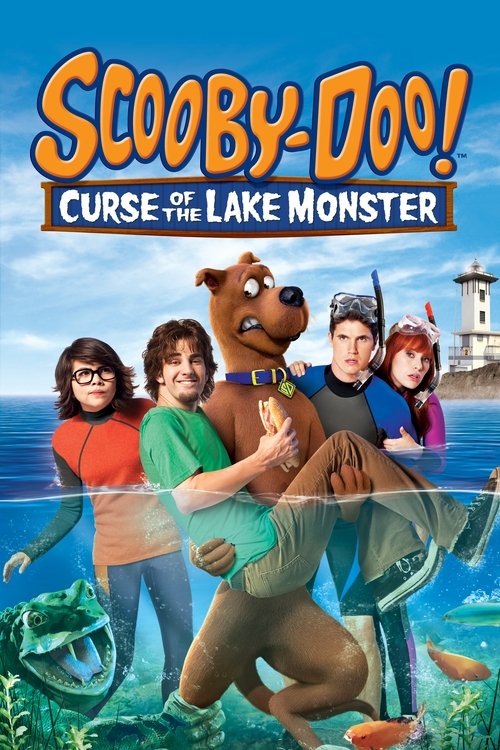
Scooby-Doo! Curse of the Lake Monster (2010)
Directed by Brian Levant
No — Scooby-Doo! Curse of the Lake Monster is not woke, scoring 10 out of 100 on our wokeness meter.
This is a made-for-television sequel to a 2009 reboot of a Hanna-Barbera cartoon, and it carries itself with the modest dignity of a summer-camp talent show.
Consciousness Markers
The cast includes Hayley Kiyoko as Velma and Nichelle Nichols in a small role, lending a smattering of non-white faces to an otherwise conventional lineup, but the film makes no note of it and casting proceeds along standard kid-franchise lines.
Velma and Daphne are competent and active participants in the mystery, and Velma ultimately frees herself from possession, but the film makes no argument about gender and simply follows the established cartoon template.
No LGBTQ+ characters, themes, or subtext appear anywhere in the film; the romantic entanglements are strictly heterosexual and ultimately dissolved.
The film contains no commentary on race, racism, or racial identity whatsoever; the story is a supernatural mystery with no racial dimension.
No environmental themes, climate messaging, or ecological subtext appear in the film.
There is no economic critique or anti-wealth messaging; the country club setting is treated purely as a summer job backdrop with no class commentary.
No body-positive messaging or commentary on body image appears; the film does not engage with physical appearance as a theme.
No neurodivergent characters, themes, or diagnoses are present or addressed in the film.
The witch Wanda Grubwort's backstory is drawn from the film's own invented folklore rather than any real historical event, so there is no revisionist reframing of actual history.
The film is a lighthearted comedic mystery aimed at children and delivers no moralizing monologues or social messaging to its audience.
Why it received this score
This is a made-for-television sequel to a 2009 reboot of a Hanna-Barbera cartoon, and it carries itself with the modest dignity of a summer-camp talent show. The gang takes seasonal jobs at a country club to repay a barn they burned down, a lake monster disrupts the opening party, and a witch named Wanda Grubwort possesses Velma. The plot proceeds exactly as the template demands. Director Brian Levant, a veteran of such assignments, keeps things brisk and harmless. The country club is a summer job backdrop, not a parable about wealth, and the class critique that some viewers might expect from a story about rich people and their lake remains entirely absent. What we get instead is frog monsters, moonstones, and a lighthouse keeper with a photograph.
The cast offers a mild demographic variety that the film neither notices nor celebrates. Hayley Kiyoko plays Velma, Nichelle Nichols appears briefly as a senator, and the film treats both facts as unremarkable, which is to its credit as entertainment and to its detriment as a specimen. Daphne and Velma are competent and active, and Velma ultimately frees herself from possession through the power of a song, but the film makes no argument about gender. It simply follows the cartoon. The romantic subplots dissolve by the final scene, leaving everyone as friends and Scooby reconciled with Shaggy. There is no messaging here, no lecture, no sermon about how we ought to live. The witch's backstory is invented folklore, not history revised.
For the classifier, this is a sparse specimen. The social consciousness is limited to a colorblind casting choice that the film itself declines to discuss. Everything else registers at zero. It is a children's mystery comedy that wants nothing more than to entertain for eighty minutes, and it achieves that modest aim without incident. We are left with a clean slate and very little to annotate.
Analysis generated by our Consciousness Algorithm


Synopsis
Scooby-Doo and the gang are on the case when a mysterious lake monster starts scaring the guests at a summer resort in Erie Point, where Fred, Daphne, Velma and Shaggy have taken on seasonal jobs to pay for a barn they accidentally burned down. But in addition to sneaking suspicions, there's some romance in the air.
Questions about Scooby-Doo! Curse of the Lake Monster
Is Scooby-Doo! Curse of the Lake Monster woke?
No — Scooby-Doo! Curse of the Lake Monster is not woke, scoring 10 out of 100 on our wokeness meter. That earns it a verdict of Ultra Based.
Does Scooby-Doo! Curse of the Lake Monster have any woke elements?
1 of the 10 markers register at 30 or above, led by Representation Casting (30). On Representation Casting: The cast includes Hayley Kiyoko as Velma and Nichelle Nichols in a small role, lending a smattering of non-white faces to an otherwise conventional lineup, but the film makes no note of it and casting proceeds along standard kid-franchise lines.
How does Scooby-Doo! Curse of the Lake Monster compare to other 2010 movies?
It ranks #84 of the 238 films from 2010 we've scored; their average is 11. The wokest is My Name Is Khan (84).
How is the Woke Score calculated?
An AI-assisted process researches the film and its reception, scores it 0–100 on ten markers, then combines those into one 0–100 Woke Score. It measures a specific set of 2020s cultural themes, not film quality.