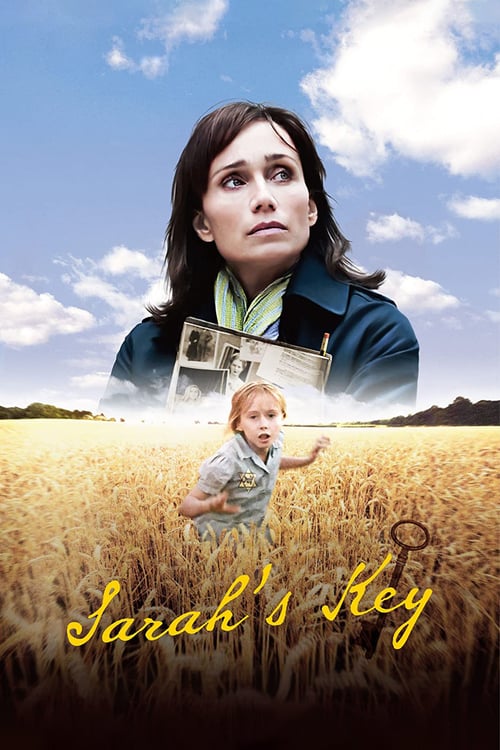
Sarah's Key (2010)
Directed by Gilles Paquet-Brenner
No — Sarah's Key is not woke, scoring 13 out of 100 on our wokeness meter.
Sarah's Key arrives with the sober bearing of a film that knows it is important, and it is.
Consciousness Markers
The film carries a solemn moral about remembering the Vel' d'Hiv Roundup and confronting buried national shame, delivered with earnest, occasionally didactic sentiment.
The modern-day protagonist is a woman who asserts autonomy over her pregnancy and marriage, but the film treats this as personal drama rather than a feminist thesis.
The cast is composed of white European actors appropriate to the period and setting; there is no deliberate race-, gender-, or identity-blind casting or diversity push.
No LGBTQ+ characters, themes, or subtext appear in the film.
The film depicts historical antisemitism and French complicity, but it does not engage with modern progressive racial consciousness or systemic-racism discourse.
No environmental or climate-related themes are present.
The film contains no critique of capitalism, wealth inequality, or class exploitation.
No body-positivity themes or messaging appear.
No neurodivergent characters or themes are present.
The film dramatizes a real historical atrocity and French responsibility, but it does not reinterpret history through a modern ideological lens.
Why it received this score
Sarah's Key arrives with the sober bearing of a film that knows it is important, and it is. The 1942 thread, following ten-year-old Sarah through the Vel' d'Hiv Roundup and the French bureaucracy that fed it, is rendered with a grim patience. The camera lingers. The closet door stays shut. There is a moral here about buried national shame and the duty of remembrance, and the film delivers it with the earnestness of a monument unveiling, complete with a final-act revelation that lands like a hand on the shoulder. That solemnity has its own gravity, though it tips into sermonizing whenever the screenplay decides the audience needs the lesson restated aloud.
The 2009 thread gives us Julia, an American journalist in Paris who pries open the family secret and, in the process, takes charge of her own life. She keeps a pregnancy her husband does not want, ends the marriage, and moves her daughters to New York. This is autonomy, plainly stated, though the film frames it as personal reckoning instead of argument. The cast is European, period-appropriate, and unremarkably so. Nobody is being cast against the grain for effect.
Elsewhere the cupboard is bare. No queer subtext. No climate anxiety. No indictments of wealth or class. No celebration of bodies in any form. No neurodivergent characters. No modern vocabulary of systemic injustice, despite a story drenched in state cruelty toward Jews. The film treats Vichy complicity as a historical wound, not a template for present-day politics. All that is left is a sincere, well-acted melodrama that wants us to remember the dead and to feel bad about forgetting. It succeeds at the first and overworks the second. A respectable vintage, if not a challenging one.
THEMATIC_TAGS: book_adaptation
MARKER_SUMMARY: representation_casting 0, lgbtq 0, feminist 15, racial_consciousness 0, climate 0, anti_capitalist 0, body_positivity 0, neurodivergence 0, revisionist_history 0, lecture_energy 30. Overall woke_score: 5. A Holocaust drama of genuine moral weight that carries almost none of the contemporary ideological furniture; its only measurable charge comes from its solemn instruction to remember and its portrait of a woman quietly seizing control of her own life. The vintage is sincere, the cellar is empty, and the sommelier files it under respectable, unremarkable, and mercifully free of sermonizing beyond the occasional heavy hand.
Analysis generated by our Consciousness Algorithm


Synopsis
On the night of 16 July 1942, ten year old Sarah and her parents are being arrested and transported to the Velodrome d'Hiver in Paris where thousands of other jews are being sent to get deported. Sarah however managed to lock her little brother in a closet just before the police entered their apartment. Sixty years later, Julia Jarmond, an American journalist in Paris, gets the assignment to write an article about this raid, a black page in the history of France. She starts digging archives and through Sarah's file discovers a well kept secret about her own in-laws.
Questions about Sarah's Key
Is Sarah's Key woke?
No — Sarah's Key is not woke, scoring 13 out of 100 on our wokeness meter. That earns it a verdict of Ultra Based.
Does Sarah's Key have any woke elements?
1 of the 10 markers register at 30 or above, led by Lecture Energy (30). On Lecture Energy: The film carries a solemn moral about remembering the Vel' d'Hiv Roundup and confronting buried national shame, delivered with earnest, occasionally didactic sentiment.
How does Sarah's Key compare to other 2010 movies?
It ranks #63 of the 238 films from 2010 we've scored; their average is 11. The wokest is My Name Is Khan (84).
How is the Woke Score calculated?
An AI-assisted process researches the film and its reception, scores it 0–100 on ten markers, then combines those into one 0–100 Woke Score. It measures a specific set of 2020s cultural themes, not film quality.