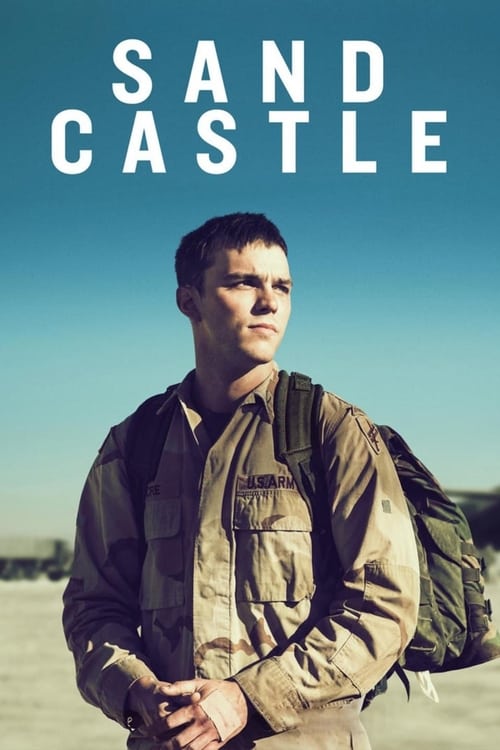
Sand Castle (2017)
Directed by Fernando Coimbra
No — Sand Castle is not woke, scoring 11 out of 100 on our wokeness meter.
Sand Castle arrives with the grim, sand-colored dignity of a film that knows precisely what it is and has no intention of apologizing.
Consciousness Markers
The cast is overwhelmingly white American soldiers, though Middle Eastern actors like Navid Negahban appear as Iraqi characters and the film grants Iraqi villagers (the school administrator, the father seeking medicine) some individual humanity. This is natural casting for a war film rather than a deliberate representational statement.
The film gestures at the humanity of the occupied Iraqis and the moral cost of occupation, but it is framed through the American soldiers' experience rather than any modern racial-justice lens.
The film carries a subdued anti-war melancholy and occasional moral reflection, but it largely avoids explicit sermonizing or direct-address messaging.
No LGBTQ+ characters, themes, or subtext appear anywhere in the film.
The film is an all-male military narrative with no women in substantive roles and no engagement with feminist themes.
Water scarcity drives the plot mechanics, but it is treated as a logistical and security problem, not a climate-crisis allegory.
No critique of capitalism or wealth inequality; the film's conflict is military and geopolitical.
No body-positivity themes or messaging present.
No neurodivergent characters or themes are depicted.
The film is inspired by the screenwriter's own Iraq War service and presents a conventional, ground-level account rather than a revisionist reframing of history.
Why it received this score
Sand Castle arrives with the grim, sand-colored dignity of a film that knows precisely what it is and has no intention of apologizing. A squad of American reservists is dispatched to restore water to a village near Baqubah, and the enterprise unfolds with the procedural patience of a plumbing manual written in grief. The soldiers are largely indistinguishable white men in body armor, which is honest casting for a 2003 Army Reserve unit and not a statement of any kind. The Iraqi characters who drift through the frame, the school administrator, the father ferrying his daughter toward medicine, are granted small mercies of personhood. This is decency, not doctrine. It does not lecture. It watches.
The film has no interest in the broader cultural conversations of its moment. There are no women of consequence, no queer lives, no meditation on the body or the mind's wiring, no wealthy villains to devour. Its water shortage is a logistics problem and a security problem, never an allegory for a warming planet. The politics here are the politics of a gunner's memoir: occupation is corrosive, the locals are human, and nobody wins. That sentiment is old and it is sincere, and it stops well short of sermonizing. The melancholy does the work a thesis statement might have done in a lesser production.
We are left with a modest, uneven war picture that fared poorly with critics and will be remembered, if at all, as one of the many Iraq films of the late 2010s. It is drawn from the screenwriter's own service, and it shows, in the best and most limited sense. A quiet, honest, faintly exhausted piece of work. Two and a half sandbags out of five.
Analysis generated by our Consciousness Algorithm


Synopsis
Set during the occupation of Iraq, a squad of U.S. soldiers try to protect a small village.
Questions about Sand Castle
Is Sand Castle woke?
No — Sand Castle is not woke, scoring 11 out of 100 on our wokeness meter. That earns it a verdict of Ultra Based.
Does Sand Castle have any woke elements?
Very few. None of the 10 markers reaches 30, the level where a marker counts as present; the highest is Representation Casting at 28.
How does Sand Castle compare to other 2017 movies?
It ranks #152 of the 309 films from 2017 we've scored; their average is 19. The wokest is I Am Not Your Negro (92).
How is the Woke Score calculated?
An AI-assisted process researches the film and its reception, scores it 0–100 on ten markers, then combines those into one 0–100 Woke Score. It measures a specific set of 2020s cultural themes, not film quality.