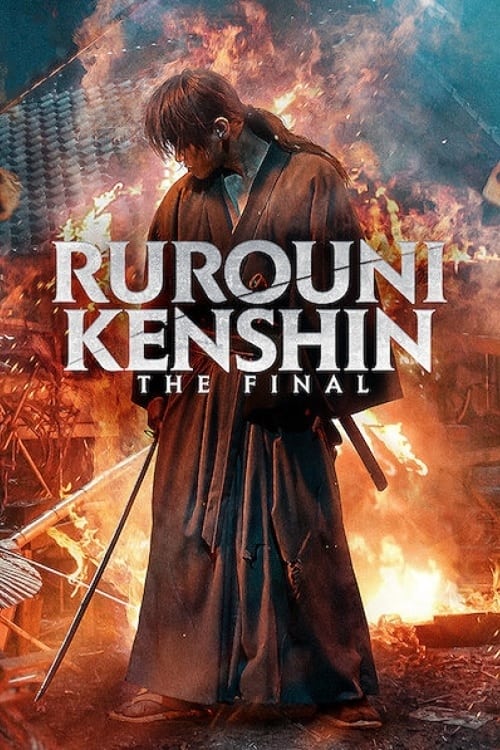
Rurouni Kenshin: The Final (2021)
Directed by Keishi Otomo
No — Rurouni Kenshin: The Final is not woke, scoring 0 out of 100 on our wokeness meter.
Rurouni Kenshin: The Final arrives as the fourth entry in a franchise that has spent a decade translating Nobuhiro Watsuki's manga into live-action jidaigeki, and it conducts itself with the discipline of a craftsman finishing a long commission.
Consciousness Markers
A Japanese production with an entirely Japanese cast playing Japanese historical and manga characters; no diversity-casting agenda is present or relevant.
No LGBTQ+ characters, themes, or subtext appear anywhere in the revenge narrative.
Kaoru and Misao are present and given screen time, but the film is a male-driven revenge samurai drama with no feminist thesis or commentary.
The film concerns Meiji-era political grudges and personal vengeance, not racial identity or racial justice.
No environmental or climate themes whatsoever.
The antagonist is a Shanghai mafia figure, but the film offers no critique of capitalism or wealth as a system.
No body-positivity messaging; the cast is conventionally fit for martial-arts choreography.
No neurodivergence themes or characters are depicted or referenced.
Set in the Meiji era as backdrop for a manga-derived revenge story; it makes no revisionist historical argument.
The film is a straightforward action drama about redemption and revenge, with no preachy moralizing or audience instruction.
Why it received this score
Rurouni Kenshin: The Final arrives as the fourth entry in a franchise that has spent a decade translating Nobuhiro Watsuki's manga into live-action jidaigeki, and it conducts itself with the discipline of a craftsman finishing a long commission. The cast is entirely Japanese, playing Japanese historical figures and Japanese comic-book characters, which renders the whole matter of representation casting moot in a way that feels almost restful. There is no thesis here about identity, no argument about who gets to tell whose story. A man with a cross-shaped scar on his cheek must answer for a killing he committed fifteen years earlier. That is the entire proposition.
The antagonist, Enishi, runs a criminal operation out of Shanghai and arrives in Tokyo to make Kenshin suffer as he suffered. A viewer hunting for commentary on wealth or empire will find none, despite the presence of a mafia chieftain. The film regards him as a bereaved brother, not a symbol. Kaoru and Misao are afforded real screen time, and Kaoru's kidnapping carries weight, but the engine of the plot is male grievance and male atonement. No character wrestles with their body, their neurology, or their place in a warming world. The Meiji era appears as texture, a backdrop of Western coats and Japanese steel, not as a platform for historical revision.
What the film offers instead is choreography of unusual precision and a moral concern that stays stubbornly personal. Kenshin's guilt is his own. He apologizes to a man who stabs him, and the gesture is meant sincerely, not as instruction. Nobody turns to the camera to explain how we should live. After several hundred films that do, this restraint registers as a small mercy.
We are left with a sturdy, well-mounted revenge picture that knows exactly what it is and declines to be anything else. The swords are sharp, the regrets are old, and the audience is trusted to draw its own conclusions. There is nothing to classify here beyond the genre itself, and for once that is a relief rather than a failure of ambition. The ledger stays clean. The sommelier sets down the glass and moves to the next bottle with a faint, unearned hope.
{"thematic_tags": ["sequel", "book_adaptation"]}
Analysis generated by our Consciousness Algorithm
Part of


Synopsis
In 1879, Kenshin and his allies face their strongest enemy yet: his former brother-in-law Enishi Yukishiro and his minions, who've vowed their revenge.
Questions about Rurouni Kenshin: The Final
Is Rurouni Kenshin: The Final woke?
No — Rurouni Kenshin: The Final is not woke, scoring 0 out of 100 on our wokeness meter. That earns it a verdict of Ultra Based.
Does Rurouni Kenshin: The Final have any woke elements?
No. All 10 markers score zero.
How does Rurouni Kenshin: The Final compare to other 2021 movies?
It ranks #234 of the 242 films from 2021 we've scored; their average is 23. The wokest is The Forever Purge (83).
Is Rurouni Kenshin: The Final the most woke Rurouni Kenshin movie?
No. It ranks #3 of the 5 Rurouni Kenshin films we've scored; the wokest is Rurouni Kenshin: The Beginning (7).