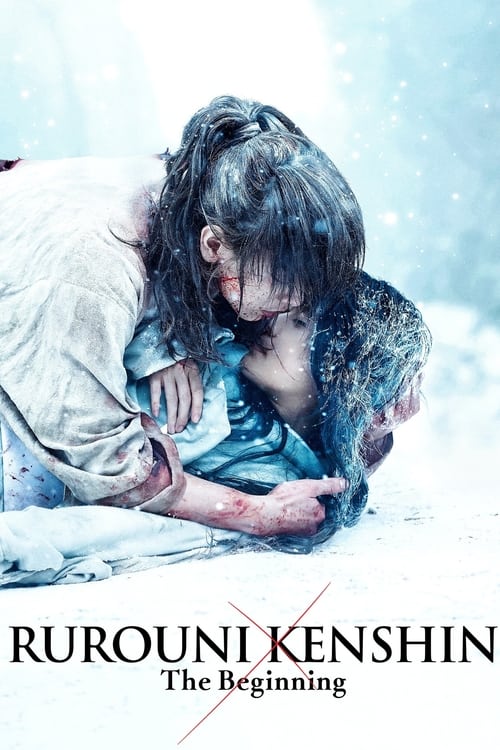
Rurouni Kenshin: The Beginning (2021)
Directed by Keishi Otomo
No — Rurouni Kenshin: The Beginning is not woke, scoring 7 out of 100 on our wokeness meter.
Rurouni Kenshin: The Beginning arrives as the fifth and final entry in a live-action series adapted from Nobuhiro Watsuki's manga, and it carries the somber duty of explaining how a gentle wanderer became a killer.
Consciousness Markers
Tomoe is given some agency as a spy who defies her handlers and ultimately shields Kenshin, but the film frames her primarily as a tragic romantic catalyst rather than advancing a feminist thesis.
Themes of redemption and the cost of killing are woven into the drama, but the film shows rather than preaches, with minimal didacticism.
An all-Japanese cast portraying Japanese historical figures in a Japanese production; no diversity-casting agenda is present or relevant.
No LGBTQ+ characters, themes, or subtext appear anywhere in the film.
The conflict is a 19th-century political power struggle between shogunate and imperial factions; no modern racial-consciousness framing is present.
No environmental or climate themes whatsoever.
The revolution depicted is a feudal political upheaval, not a critique of capitalism or wealth inequality.
No body-positivity themes or messaging.
No neurodivergent characters or themes are explored.
The film is a manga-derived historical fiction set during the Bakumatsu; it does not rewrite history to serve a modern ideological narrative.
Why it received this score
Rurouni Kenshin: The Beginning arrives as the fifth and final entry in a live-action series adapted from Nobuhiro Watsuki's manga, and it carries the somber duty of explaining how a gentle wanderer became a killer. The setting is the Bakumatsu, a 19th-century collision of shogunate loyalists and imperial revolutionaries, and the film treats that upheaval as a matter of clan politics and swordplay. Kenshin assassinates for the Chōshū, meets the quiet Tomoe Yukishiro, and retreats with her to a farming village where the two pretend at marriage. The camera lingers on sword fights and snow. There is no modern social program here, and the film does not pretend otherwise. An all-Japanese cast plays Japanese historical figures, which is simply what a Japanese production does. No themes of identity, environment, or economic grievance intrude on the narrative, because the narrative has no room for them.
Tomoe is the closest the film comes to a thesis. She is a spy who defies her handlers and eventually throws her body between Kenshin and his target, which grants her a measure of agency. Yet the screenplay positions her as a tragic romantic catalyst, the wound that explains the hero's later pacifism. Her interior life surfaces mostly through a diary read after her death. This is not a feminist argument. It is a melodrama with a woman at its center and a man's redemption as its point. On the question of killing, the film has opinions, but it keeps them in the drama. Kenshin's vow to stop once the new age arrives is shown through action and loss, not announced from a pulpit. The result is a somber, well-choreographed tragedy that respects its audience enough to withhold the sermon.
Viewers seeking cultural instruction will find none. The film is a period piece about guilt, revenge, and the cost of a blade, and it pursues those concerns with a straight face and a steady hand. It is, by the standards of contemporary messaging, remarkably quiet.
Analysis generated by our Consciousness Algorithm
Part of


Synopsis
Before he was a protector, Kenshin was a fearsome assassin known as Battosai. But when he meets gentle Tomoe Yukishiro, a beautiful young woman who carries a huge burden in her heart, his life will change forever.
Questions about Rurouni Kenshin: The Beginning
Is Rurouni Kenshin: The Beginning woke?
No — Rurouni Kenshin: The Beginning is not woke, scoring 7 out of 100 on our wokeness meter. That earns it a verdict of Ultra Based.
Does Rurouni Kenshin: The Beginning have any woke elements?
Very few. None of the 10 markers reaches 30, the level where a marker counts as present; the highest is Feminist Agenda at 10.
How does Rurouni Kenshin: The Beginning compare to other 2021 movies?
It ranks #201 of the 242 films from 2021 we've scored; their average is 23. The wokest is The Forever Purge (83).
Is Rurouni Kenshin: The Beginning the most woke Rurouni Kenshin movie?
Yes. It scores highest of the 5 Rurouni Kenshin films we've scored.