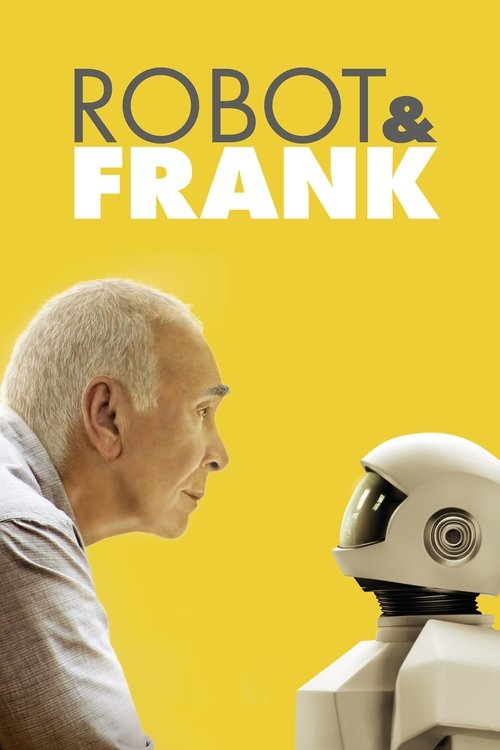
Robot & Frank (2012)
Directed by Jake Schreier
No — Robot & Frank is not woke, scoring 5 out of 100 on our wokeness meter.
Robot & Frank arrives in 2012 carrying a caretaker robot, a declining thief, and a library on the verge of becoming a community center.
Consciousness Markers
The antagonist is a wealthy young developer gentrifying the library into a community center, and the heist targets his jewels, but this is a plot device rather than an 'eat the rich' polemic.
The film sympathetically centers a protagonist with dementia and cognitive decline, treating him with dignity, though it is framed as age-related illness rather than the modern neurodivergence movement.
Liv Tyler's Madison and Susan Sarandon's Jennifer are given some agency, but the film is a male-centered character study with no feminist thesis or commentary on gender.
The filmmakers explicitly stated they wanted to explore technology 'without any particular moral undercurrent,' and the film stays a character-driven drama rather than a sermon.
The cast is overwhelmingly white and the film makes no effort at diverse or representative casting; the story is a small character piece with no commentary on representation.
There are no LGBTQ+ characters, relationships, or themes anywhere in the film.
Race is entirely absent as a subject; the film has no racial consciousness or commentary.
No environmental or climate themes appear in the film.
No body positivity themes or messaging are present.
The film is set in a near-future present and makes no revisionist claims about historical events.
Why it received this score
Robot & Frank arrives in 2012 carrying a caretaker robot, a declining thief, and a library on the verge of becoming a community center. The film concerns itself with memory, companionship, and the quiet indignities of aging, which places it well outside the cultural skirmishes that occupy our more excitable critics. Frank Langella plays Frank Weld, an ex-convict whose dementia is treated with a dignity that never once announces itself as a statement. The robot, a charmingly analog suit performed by a dancer, does not lecture. It gardens. It picks locks. It negotiates the terms of its own erasure with a calm the screenplay never feels compelled to moralize about.
The picture's politics are largely incidental. A wealthy young developer named Jake intends to convert the town library into something more profitable, and the heist that follows targets his jewels, which registers as a mild jab at gentrification and little more. Liv Tyler's Madison disapproves of the machine on ethical grounds, and Susan Sarandon's Jennifer runs the library with a certain weary authority, but the film remains a study of a man, not a thesis about gender. Race never enters the frame as a subject, and neither does the climate, the body, or the question of who gets to be cast.
What lingers is the film's refusal to sermonize. Its makers said plainly they wanted to consider technology without a moral undercurrent, and they kept that promise. The result is a small, humane crime comedy that treats cognitive decline as an illness rather than a cause, and treats its audience as adults. In an era that rewards films for their positions, this one offers only a man, a robot, and a tomato garden. It is, by the standards of our current accounting, remarkably quiet. That is not a failing. It is simply a different kind of film.
Analysis generated by our Consciousness Algorithm


Synopsis
Curmudgeonly old Frank lives by himself. His routine involves daily visits to his local library, where he has a twinkle in his eye for the librarian. His grown children are concerned about their father’s well-being and buy him a caretaker robot. Initially resistant to the idea, Frank soon appreciates the benefits of robotic support – like nutritious meals and a clean house – and eventually begins to treat his robot like a true companion. With his robot’s assistance, Frank’s passion for his old, unlawful profession is reignited, for better or worse.
Questions about Robot & Frank
Is Robot & Frank woke?
No — Robot & Frank is not woke, scoring 5 out of 100 on our wokeness meter. That earns it a verdict of Ultra Based.
Does Robot & Frank have any woke elements?
Very few. None of the 10 markers reaches 30, the level where a marker counts as present; the highest is Eat the Rich at 12.
How does Robot & Frank compare to other 2012 movies?
It ranks #143 of the 230 films from 2012 we've scored; their average is 12. The wokest is Killing Them Softly (92).
How is the Woke Score calculated?
An AI-assisted process researches the film and its reception, scores it 0–100 on ten markers, then combines those into one 0–100 Woke Score. It measures a specific set of 2020s cultural themes, not film quality.