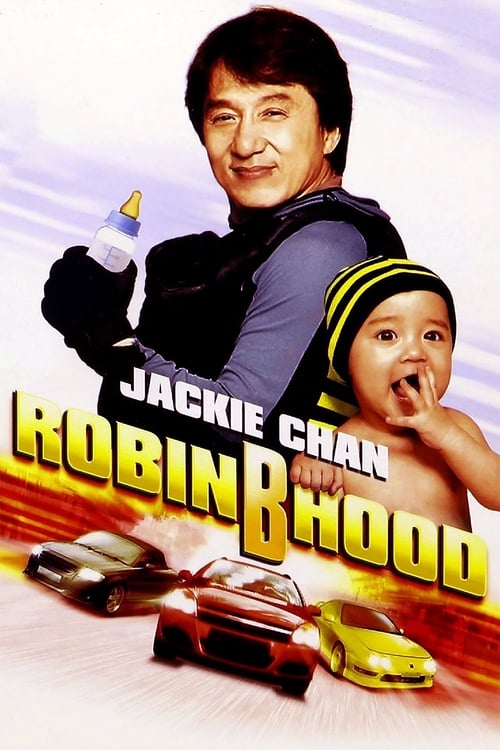
Rob-B-Hood (2006)
Directed by Benny Chan Muk-sing
No — Rob-B-Hood is not woke, scoring 6 out of 100 on our wokeness meter.
Rob-B-Hood arrives from 2006 with a diaper bag, a gambling debt, and Jackie Chan in a rare criminal role.
Consciousness Markers
Daniel Wu and Nicholas Tse make a brief comedic cameo as homosexual security van drivers, but LGBTQ+ themes are not substantive.
The cast is a natural Hong Kong/Chinese ensemble for a Hong Kong production, with no evident modern representation-casting agenda.
Female characters function as a love interest, a neglected pregnant wife, and a grieving landlady; no feminist agenda is present.
The film does not engage with racial consciousness or racial justice themes.
There is no climate-crisis or environmental messaging in the film.
The story involves criminals, a wealthy family, and triads, but it does not advance an eat-the-rich or anti-capitalist thesis.
No body-positivity themes or messaging are present.
The Landlady's grief-driven eccentricity is not framed as neurodivergence representation.
The film is a contemporary action comedy and does not revise or reinterpret historical events.
The film is primarily a kidnapping caper and action comedy, with no preachy or lecture-like messaging.
Why it received this score
Rob-B-Hood arrives from 2006 with a diaper bag, a gambling debt, and Jackie Chan in a rare criminal role. The plot is a kidnapping caper: three burglars snatch a wealthy family's infant for triad money, then develop inconvenient affection for him. The ensemble is a natural Hong Kong and Chinese lineup for a Hong Kong production. No modern representation casting agenda announces itself. The female characters are a student nurse who becomes a love interest, a pregnant wife neglected by her husband, and a landlady driven mad by grief who carries a doll. These roles are functional. They are not arranged to advance a feminist thesis.
The film's only detectable progressive gesture is a cameo. Daniel Wu and Nicholas Tse appear briefly as homosexual security van drivers during a car chase. The bit is comic, minor, and never developed into an LGBTQ+ theme. It is a fleck of social awareness in an otherwise unbothered commercial entertainment. The story involves triads, a wealthy family, and a trio of thieves, but it does not argue for eating the rich. It argues for returning the baby and perhaps paying your debts. There is no climate crisis messaging. There is no body positivity campaign. The landlady's eccentricity is grief, not neurodivergence representation.
The film is contemporary, so revisionist history has nothing to revise. It is an action comedy, so lecture energy stays at zero. Nobody turns to the camera to explain structural injustice. Nobody delivers a sermon on the environment or the carceral state. The baby cries, the stunts land, and the criminals find a soft spot. Rob-B-Hood is a well-oiled genre machine with a faint comedic footnote. As a cultural artifact, it is nearly inert. As a Jackie Chan vehicle, it does its job. The classification is simple: a caper with a baby, a cameo with a punchline, and no sustained progressive program.
Analysis generated by our Consciousness Algorithm


Synopsis
For never-do-well compulsive gambler Fong, there's only one thing more fearsome than debtors at his doorstep - having to coax a crying baby. But what if the baby becomes his golden goose to fend off his debtors? Can he overcome his phobia of diapers, milk bottles, and cloying lullabies?
Questions about Rob-B-Hood
Is Rob-B-Hood woke?
No — Rob-B-Hood is not woke, scoring 6 out of 100 on our wokeness meter. That earns it a verdict of Ultra Based.
Does Rob-B-Hood have any woke elements?
Very few. None of the 10 markers reaches 30, the level where a marker counts as present; the highest is LGBTQ+ Themes at 10.
How does Rob-B-Hood compare to other 2006 movies?
It ranks #121 of the 211 films from 2006 we've scored; their average is 11. The wokest is An Inconvenient Truth (92).
How is the Woke Score calculated?
An AI-assisted process researches the film and its reception, scores it 0–100 on ten markers, then combines those into one 0–100 Woke Score. It measures a specific set of 2020s cultural themes, not film quality.