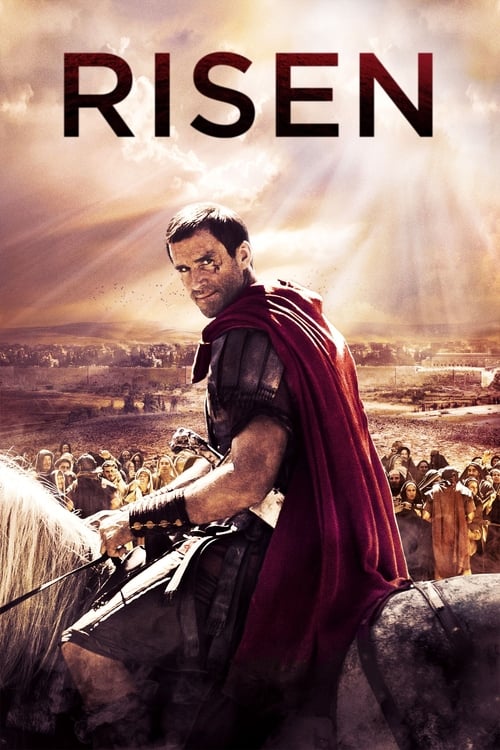
Risen (2016)
Directed by Kevin Reynolds
No — Risen is not woke, scoring 5 out of 100 on our wokeness meter.
Risen arrives as a genre hybrid few studios would attempt: the resurrection of Christ handled as a police procedural, with a Roman tribune named Clavius interviewing witnesses, shaking down a drunkard, and filing what amounts to an incident report on an empty tomb.
Consciousness Markers
A predominantly white European cast (Fiennes, Felton, Firth) plays first-century Judean and Roman roles, with Cliff Curtis as Yeshua providing the lone notable bit of non-white casting; reviewers even flagged the incongruous British accents.
The film carries devotional Christian messaging, but it is delivered through a mystery-thriller structure rather than preachy sermonizing, keeping the lecturing mild.
Mary Magdalene and other women appear as followers of Yeshua, but the film is entirely centered on a male Roman tribune's investigative journey with no feminist framing.
No LGBTQ+ characters, themes, or subtext of any kind appear in this biblical drama.
The film engages no racial or ethnic-justice themes; Roman-Judean tensions are political and religious, not racial commentary.
No environmental or climate themes are present.
There is no economic critique; the antagonists are an occupying imperial authority, not a capitalist system.
No body-positivity themes; a leper is healed, but this is a miracle narrative, not a body-acceptance message.
No neurodivergent characters or themes are depicted.
The film is a faith-based historical fiction retelling of the Gospel accounts, not a modern progressive reinterpretation of history.
Why it received this score
Risen arrives as a genre hybrid few studios would attempt: the resurrection of Christ handled as a police procedural, with a Roman tribune named Clavius interviewing witnesses, shaking down a drunkard, and filing what amounts to an incident report on an empty tomb. Kevin Reynolds directs with a straight face and a fondness for gray light, and the result is more watchable than most films built for the devotional market. Joseph Fiennes carries the investigation with a stoicism that critics of the day found inert, though the weariness suits a man who has spent his career crucifying people and is now asked to take notes on a miracle.
The casting is where the film's cultural ledger gets interesting. Fiennes, Tom Felton, and Peter Firth occupy first-century Judea and Rome with the vowels of an Oxford common room, a decision reviewers flagged and audiences accepted as the old convention for imperial authority. Cliff Curtis, as Yeshua, is the single significant departure from that prevailing pallor. Elsewhere the film keeps its politics buried in the sand. The occupying power is an empire, not a market, so no economic critique surfaces. No environmental themes intrude. A leper is healed, which registers as a miracle and not a body-acceptance statement. Women follow the risen figure and are given little to do beyond that.
What keeps the picture from tipping into sermonizing is its structure. Reynolds routes the theology through suspense, so the messaging arrives as plot instead of pulpit, and the lecturing stays mild. It is a curious artifact: a faith film that trusts its audience to keep up. Mildly ambitious, mostly competent, and culturally quiet. The tomb is empty, the runtime is not, and the classification is settled without much argument from anyone involved.
Thematic tags: true_story (a dramatization of the Gospel accounts and first-century figures), with no sequel, remake, superhero, Oscar, or chart-topping status to report. The box office record shows a third-place finish, which feels correct for a picture this polite about its own convictions. One leaves the theater neither stirred nor scolded, merely informed that the body was never there, which is either the point or the problem depending on the pew one occupies. The film ends with Clavius admitting he will never be the same. The audience, by contrast, will be exactly the same, and there is a strange integrity in that. It is a devotional thriller that declines to raise its voice, and in this climate, restraint of any kind deserves a note in the ledger, however small the entry. The sandals are accurate. The accents are not. The sermon is brief. The credits roll. We mark the file complete and move to the next screening, where presumably someone will shout at us about something. That will be a different review. This one is done, and the ledger closes gently, the way the film itself does, with a man walking away from an empire and toward nothing in particular that the marketing department could sell.
Analysis generated by our Consciousness Algorithm


Synopsis
Clavius, a powerful Roman military tribune, and his aide, Lucius, are tasked with solving the mystery of what happened to Jesus in the weeks following the crucifixion, in order to disprove the rumors of a risen Messiah and prevent an uprising in Jerusalem.
Questions about Risen
Is Risen woke?
No — Risen is not woke, scoring 5 out of 100 on our wokeness meter. That earns it a verdict of Ultra Based.
Does Risen have any woke elements?
Very few. None of the 10 markers reaches 30, the level where a marker counts as present; the highest is Lecture Energy at 12.
How does Risen compare to other 2016 movies?
It ranks #221 of the 285 films from 2016 we've scored; their average is 16. The wokest is 13th (92).
How is the Woke Score calculated?
An AI-assisted process researches the film and its reception, scores it 0–100 on ten markers, then combines those into one 0–100 Woke Score. It measures a specific set of 2020s cultural themes, not film quality.