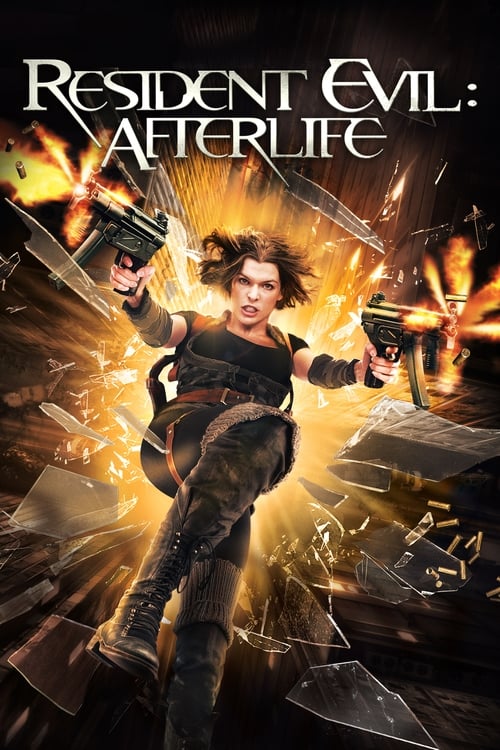
Resident Evil: Afterlife (2010)
Directed by Paul W. S. Anderson
No — Resident Evil: Afterlife is not woke, scoring 13 out of 100 on our wokeness meter.
Resident Evil: Afterlife arrives as the fourth entry in a series that has long since traded coherence for momentum.
Consciousness Markers
The ensemble is notably multiethnic (Boris Kodjoe, Sergio Peris-Mencheta, Norman Yeung, Wentworth Miller), but these characters exist naturally within the zombie-survival premise with no commentary or self-congratulation.
Alice is a superpowered female lead and Claire Redfield a capable fighter, giving the film a female-driven action core, but this is franchise convention rather than an articulated feminist thesis.
The Umbrella Corporation functions as a sinister mega-corporation villain, a mild 'evil corporation' trope, but the film offers no systemic critique of capitalism.
No LGBTQ+ characters, themes, or subtext appear anywhere in the film.
The film engages no racial themes, commentary, or historical reckoning whatsoever.
The viral apocalypse is a biohazard/zombie premise with no environmental or climate dimension.
No body-positivity themes; the film leans on conventional action-hero physicality.
No neurodivergent characters or themes are present.
The film is a fictional sci-fi horror sequel with no historical subject matter to revise.
The film is pure action-horror spectacle and makes no attempt to deliver a social or moral lecture.
Why it received this score
Resident Evil: Afterlife arrives as the fourth entry in a series that has long since traded coherence for momentum. Paul W. S. Anderson directs with an eye for 3D spectacle, slow-motion bullets, and a prison siege that exists to justify the next set piece. Alice, freshly stripped of her powers, teams with Claire Redfield and a band of Los Angeles survivors. The film is a sequel, a video game adaptation, and an exercise in forward propulsion. It makes no attempt to lecture. There is no sermon here, no moral instruction, no attempt to align the zombie apocalypse with contemporary social grievances.
Some progressive elements are present, though they arrive without fanfare. The ensemble is noticeably multiethnic, with Boris Kodjoe, Sergio Peris-Mencheta, Norman Yeung, and Wentworth Miller filling out the survivor group. These characters exist inside the premise, not as commentary. Alice remains a superpowered female lead, and Claire is a capable fighter, giving the film a female-driven action core. That core is franchise convention, not an articulated feminist argument. Umbrella functions as a sinister mega-corporation, which supplies a mild evil-corporation flavor. The film never builds a systemic critique of capitalism from it. The T-virus is a biohazard, not a climate parable.
Elsewhere the cupboard is bare. No LGBTQ themes, no racial reckoning, no body-positivity message, no neurodivergent characters, and no historical revisionism. The film is fictional sci-fi horror with no past to rewrite. It is also free of lecture energy, which in this case is a mercy. Afterlife wants to be a 3D thrill ride, and it succeeds at being exactly that. The social consciousness is thin, inherited, and mostly incidental. The result is a sequel that asks nothing of its audience beyond attention and a tolerance for slow motion.
Analysis generated by our Consciousness Algorithm
Part of


Synopsis
In a world ravaged by a virus infection, turning its victims into the Undead, Alice continues on her journey to find survivors and lead them to safety. Her deadly battle with the Umbrella Corporation reaches new heights, but Alice gets some unexpected help from an old friend. A new lead that promises a safe haven from the Undead takes them to Los Angeles, but when they arrive the city is overrun by thousands of Undead - and Alice and her comrades are about to step into a deadly trap.
Questions about Resident Evil: Afterlife
Is Resident Evil: Afterlife woke?
No — Resident Evil: Afterlife is not woke, scoring 13 out of 100 on our wokeness meter. That earns it a verdict of Ultra Based.
Does Resident Evil: Afterlife have any woke elements?
Very few. None of the 10 markers reaches 30, the level where a marker counts as present; the highest is Feminist Agenda at 25.
How does Resident Evil: Afterlife compare to other 2010 movies?
It ranks #63 of the 238 films from 2010 we've scored; their average is 11. The wokest is My Name Is Khan (84).
Is Resident Evil: Afterlife the most woke Resident Evil movie?
No. It ranks #3 of the 6 Resident Evil films we've scored; the wokest is Resident Evil: The Final Chapter (22).