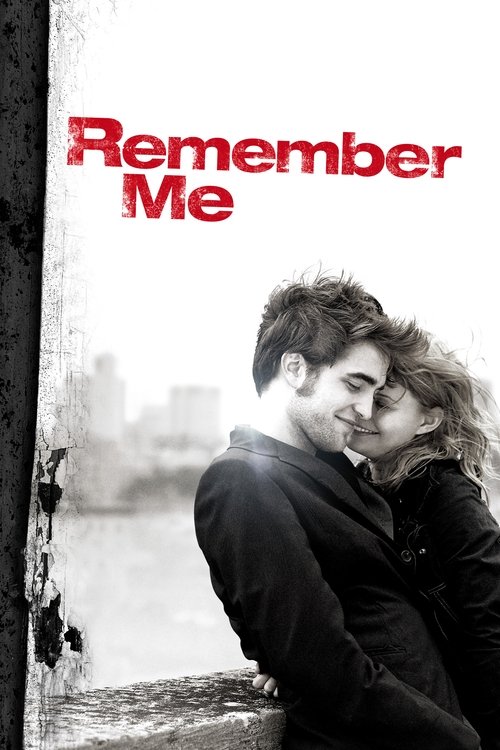
Remember Me (2010)
Directed by Allen Coulter
No — Remember Me is not woke, scoring 0 out of 100 on our wokeness meter.
Remember Me arrives from 2010, a year when young adult romance still believed a sad soundtrack and a brooding jawline could carry a film.
Consciousness Markers
The cast is overwhelmingly white and the film makes no deliberate effort at diverse or inclusive casting.
There are no LGBTQ+ characters, themes, or subtext in the film.
Female characters exist within a conventional romantic tragedy, but the film advances no feminist agenda or critique.
The film does not engage with race, racial injustice, or racial identity as a theme.
There is no environmental or climate-related content.
The workaholic businessman father is a source of family drama, not a vehicle for anti-capitalist critique.
The film does not address body image, body acceptance, or related themes.
Grief and trauma are central, but neurodivergence is not depicted or discussed.
The 9/11 ending is a narrative twist, not a revisionist reinterpretation of history.
The film aims for emotional tragedy and catharsis rather than social or political lecturing.
Why it received this score
Remember Me arrives from 2010, a year when young adult romance still believed a sad soundtrack and a brooding jawline could carry a film. It follows Tyler Hawkins, a NYU student with family wounds, and Ally Craig, a woman with her own subway-platform tragedy. Their courtship is conducted through bookstore shifts, dinners, and the slow exchange of trauma. The film is competently assembled and sincerely performed. It is also a closed system of personal grief. The world outside the characters' feelings barely intrudes, and when it does, it arrives as a plot device.
The film's social imagination is minimal. Its New York is white, middle-class, and preoccupied with divorce, suicide, and parental neglect. Race exists as background texture, never as subject. Queerness is absent. Feminist critique is not on the agenda; Ally is a romantic counterpart whose suffering is used to unlock Tyler's emotional arc. The workaholic father, Charles, is a domestic antagonist, not a proxy for capitalist critique. Environmental concerns are not present. Body image, neurodivergence, and identity politics do not figure. The film is not interested in lecturing us about how to live. It wants us to weep.
The final movement, which places Tyler in an office in the World Trade Center on the morning of September 11, 2001, has been called many things by better-paid critics. It is a twist, a mawkish bid for gravity, and a strange act of narrative borrowing. It is not a revisionist reading of history. It is not a sermon. It is a melodrama reaching for an importance it has not earned. The result is a film of modest emotional craft and no contemporary social instruction. We are left with grief, a diary voice-over, and the faint sense that the early 2010s were a simpler time for this sort of thing.
Analysis generated by our Consciousness Algorithm


Synopsis
Still reeling from a heartbreaking family event and his parents' subsequent divorce, Tyler Hawkins discovers a fresh lease on life when he meets Ally Craig, a gregarious beauty who witnessed her mother's death. But as the couple draws closer, the fallout from their separate tragedies jeopardizes their love.
Questions about Remember Me
Is Remember Me woke?
No — Remember Me is not woke, scoring 0 out of 100 on our wokeness meter. That earns it a verdict of Ultra Based.
Does Remember Me have any woke elements?
No. All 10 markers score zero.
How does Remember Me compare to other 2010 movies?
It ranks #204 of the 238 films from 2010 we've scored; their average is 11. The wokest is My Name Is Khan (84).
How is the Woke Score calculated?
An AI-assisted process researches the film and its reception, scores it 0–100 on ten markers, then combines those into one 0–100 Woke Score. It measures a specific set of 2020s cultural themes, not film quality.