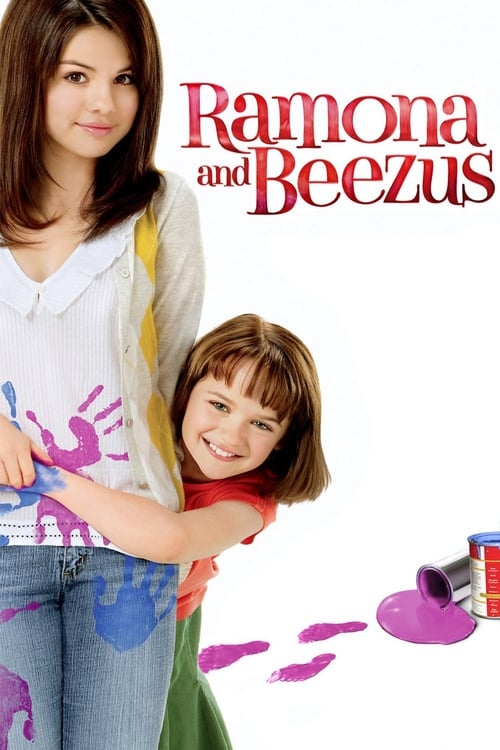
Ramona and Beezus (2010)
Directed by Elizabeth Allen Rosenbaum
No — Ramona and Beezus is not woke, scoring 9 out of 100 on our wokeness meter.
Ramona and Beezus arrives from 2010 as a G-rated adaptation of Beverly Cleary's mid-century novels, directed by Elizabeth Allen and assembled with the tidy competence of a studio that knows exactly which audience it is serving.
Consciousness Markers
The cast includes Selena Gomez and Sandra Oh in supporting roles, but the Quimby family is a conventional white suburban unit and no casting choices are framed as representative gestures.
A woman directs and the story centers on two sisters, but the film's concerns are childhood scrapes and family reconciliation rather than any feminist argument.
The film delivers gentle moral lessons about believing in yourself and family love, but they are woven into the plot rather than preached at the audience.
The father's layoff and the family's debt are treated as personal misfortune resolved by a creative job offer, not as a critique of economic systems.
No LGBTQ+ characters, themes, or subtext appear anywhere in the film.
Race is entirely absent as a subject; the film depicts an unexamined white middle-class milieu.
No environmental themes or climate messaging of any kind.
No body image or body positivity themes are present.
Ramona is characterized as imaginative and mischievous, a classic precocious-child archetype, not as neurodivergent.
The film is a straightforward adaptation of mid-century children's novels with no historical revisionism.
Why it received this score
Ramona and Beezus arrives from 2010 as a G-rated adaptation of Beverly Cleary's mid-century novels, directed by Elizabeth Allen and assembled with the tidy competence of a studio that knows exactly which audience it is serving. Joey King tumbles through the role of the third-grader with real charm, and Selena Gomez and Sandra Oh appear in support, which is the sort of casting we are now trained to notice. The Quimby family nonetheless remains a conventional white suburban unit, and nothing in the film presents these faces as a statement. They are simply there, doing the work.
The picture was directed by a woman and built around two sisters, which counts for something in the ledger. It does not count for much. The concerns here are spilled paint, a dead cat, a ruined school portrait, and the reconciliation of parents. No argument about anything is advanced. Race never surfaces as a subject; the milieu is unexamined and comfortable. There is no trace of queer life, no climate anxiety, no meditation on body image, and no framing of Ramona as anything other than the standard precocious child, imagination and mischief included at no extra interpretive cost.
Money does appear. The father loses his job, the family sinks into debt, and the crisis resolves through a creative job offer and a teaching post at Ramona's own school. This is misfortune, not indictment. The film's lessons about believing in yourself and holding the family together are folded into the plot, delivered with a light hand and an encouraging smile. It is sweet, wholesome, and entirely untroubled by the questions of its moment. A gentle artifact.
Analysis generated by our Consciousness Algorithm


Synopsis
Ramona is a little girl with a very big imagination and a nose for mischief. Her playful antics keep everyone in her loving family on their toes, including her older sister Beezus, who's just trying to survive her first year of high school. Through all the ups and downs of childhood, Ramona and Beezus learn that anything's possible when you believe in yourself and rely on each other.
Questions about Ramona and Beezus
Is Ramona and Beezus woke?
No — Ramona and Beezus is not woke, scoring 9 out of 100 on our wokeness meter. That earns it a verdict of Ultra Based.
Does Ramona and Beezus have any woke elements?
Very few. None of the 10 markers reaches 30, the level where a marker counts as present; the highest is Representation Casting at 22.
How does Ramona and Beezus compare to other 2010 movies?
It ranks #88 of the 238 films from 2010 we've scored; their average is 11. The wokest is My Name Is Khan (84).
How is the Woke Score calculated?
An AI-assisted process researches the film and its reception, scores it 0–100 on ten markers, then combines those into one 0–100 Woke Score. It measures a specific set of 2020s cultural themes, not film quality.