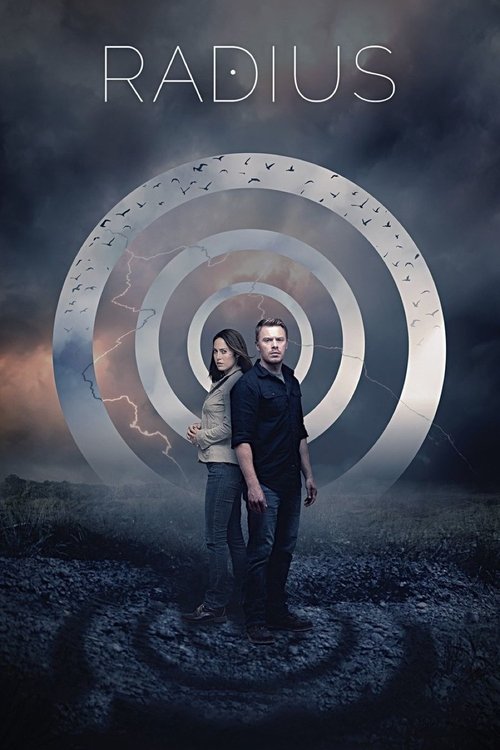
Radius (2017)
Directed by Steeve Léonard
No — Radius is not woke, scoring 7 out of 100 on our wokeness meter.
Radius arrives from Canada in 2017 with a premise a sommelier might call austere: a man wakes from a car crash, learns his name from a wallet, and discovers that every living thing within fifty feet of him drops dead.
Consciousness Markers
Co-director Caroline Labrèche and a female lead (Rose) with her own survival arc and backstory give a mild female presence, but the film makes no feminist argument or commentary.
The cast is uniformly white with no deliberate diverse or inclusive casting choices; characters exist without any representational commentary.
No LGBTQ+ characters, relationships, or themes appear anywhere in the film.
Race is entirely absent as a theme; no racial dynamics, commentary, or consciousness are present.
The film's threat is a supernatural/cosmic anomaly, not environmental; no climate themes appear.
No economic critique, class conflict, or anti-capitalist messaging is present.
No body-positivity themes or messaging appear in the film.
Amnesia is a plot device, not a depiction of neurodivergence; no neurodivergent themes are present.
The film is a fictional thriller with no historical subject matter to revise.
The film is a tense genre thriller that delivers its premise through suspense rather than moral instruction or preaching.
Why it received this score
Radius arrives from Canada in 2017 with a premise a sommelier might call austere: a man wakes from a car crash, learns his name from a wallet, and discovers that every living thing within fifty feet of him drops dead. It is lean genre engineering, and it spends its runtime on suspense instead of sermons. The film has no interest in instructing anyone about anything. It wants to watch a man walk through a field and count the bodies.
Directors Caroline Labrèche and Steeve Léonard build the thing from two borrowed parts, the climactic reveal of Oldboy and an old Superman comic in which the hero cannot touch anyone without killing them. That lineage is honest, and the result is a thriller that trusts its audience enough to withhold. Charlotte Sullivan's Rose carries her own survival arc, a missing twin, a marriage in slow collapse, and a willingness to make cold calculations when a hostage standoff demands it. This amounts to a female presence of some substance. It does not amount to an argument about anything. The camera is not interested in making a point. It is interested in the radius.
What the film lacks is a thesis. There is no racial dynamic, no economic grievance, no environmental parable, no commentary on bodies or brains or history. The cosmic anomaly is a cosmic anomaly, not a stand-in for carbon emissions. The amnesia is a plot device, not a diagnosis. When the reveal lands and the amnesiac turns out to be something far worse than a victim, the film simply lets the floor drop. The last image is a man doing the arithmetic and choosing the only sum that works. Grim, efficient, entirely free of instruction. A rare vintage, in its way. Nothing to decant. Nothing to discuss. Just the bodies, and the radius.
Analysis generated by our Consciousness Algorithm


Synopsis
Liam wakes from a car crash with no memory of who he is. As he makes his way into town to look for help, he finds only dead bodies, all with strange pale eyes. Liam's first assessment is that a virus is present in the air, but he soon discovers the horrible truth: anyone who comes within a 50-foot radius of him dies instantly.
Questions about Radius
Is Radius woke?
No — Radius is not woke, scoring 7 out of 100 on our wokeness meter. That earns it a verdict of Ultra Based.
Does Radius have any woke elements?
Very few. None of the 10 markers reaches 30, the level where a marker counts as present; the highest is Feminist Agenda at 12.
How does Radius compare to other 2017 movies?
It ranks #208 of the 309 films from 2017 we've scored; their average is 19. The wokest is I Am Not Your Negro (92).
How is the Woke Score calculated?
An AI-assisted process researches the film and its reception, scores it 0–100 on ten markers, then combines those into one 0–100 Woke Score. It measures a specific set of 2020s cultural themes, not film quality.