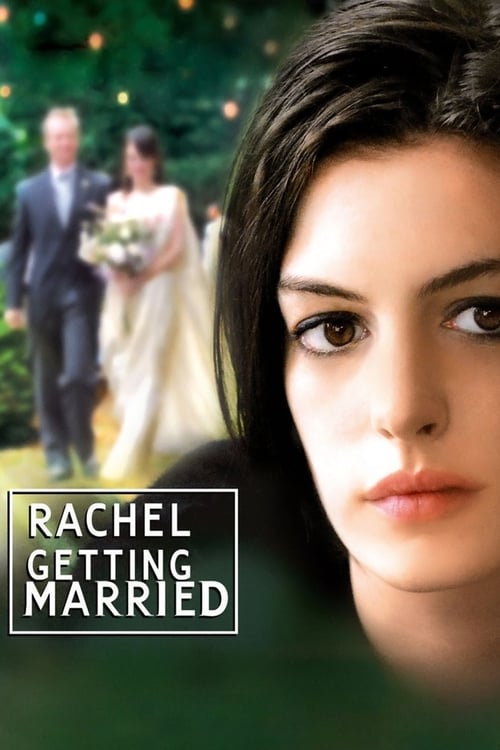
Rachel Getting Married (2008)
Directed by Jonathan Demme
No — Rachel Getting Married is not especially woke, scoring 20 out of 100 on our wokeness meter.
Jonathan Demme's 2008 family drama concerns Kym Buchman, nine months sober and released from rehab for the weekend of her sister Rachel's wedding at the family home in Connecticut.
Consciousness Markers
Features a racially mixed ensemble, including a Black romantic lead and supporting cast, and an Indian-themed wedding, though diversity is integrated naturally rather than foregrounded.
Centers on two sisters and their mother, with a female protagonist and female screenwriter, but treats this as character drama rather than explicit feminist thesis.
No LGBTQ+ characters or themes.
No racial consciousness or commentary; the interracial couple is presented without thematic exploration.
No climate themes.
No critique of capitalism or wealth.
No body positivity themes; an eating disorder is mentioned only as a lie in dialogue.
Addiction and guilt are central, but not framed as neurodivergence.
No historical revisionism.
Naturalistic family drama with no preachy or didactic messaging.
Why it received this score
Jonathan Demme's 2008 family drama concerns Kym Buchman, nine months sober and released from rehab for the weekend of her sister Rachel's wedding at the family home in Connecticut. She bikes to a mandated drug test. She sleeps with the best man. She stands at the rehearsal dinner and delivers a twelve-step amends to a room of people who would prefer she sit down. The film's engine is guilt, specifically the death of a younger brother named Ethan, drowned in a lake while Kym drove intoxicated as a teenager. Demme shot it in thirty-three days with handheld cameras and a live band playing in the next room, and the result has the texture of a home movie that happens to be devastating. Jenny Lumet wrote the screenplay, her first to reach production, and she declines to make anyone likable. This is a virtue.
On the matter of representation, the film assembles a genuinely mixed ensemble without announcing that it has done so. Tunde Adebimpe, of the band TV on the Radio, plays Sidney, the groom, a Black romantic lead in a household otherwise white, and Anna Deavere Smith appears in support. The wedding itself borrows an Indian theme, complete with a henna ceremony, which the film treats as a decorative choice by the bride and nothing more. The interracial relationship passes without a single line of commentary, which in 2008 was its own quiet statement and in retrospect looks less like a thesis than a casting decision. Progressive sensibilities are present in the fabric of the thing, not in its argument.
Likewise, the film centers two sisters, their mother, and a female screenwriter, and it never once stops to make a case for any of that. It simply watches. The mother, played by Debra Winger with a coldness that borders on clinical, refuses accountability in a scene that lands like a slap. Nobody learns anything. Nobody is lectured. The music plays in the next room, the dishwasher gets loaded, and the family endures. It is a good film about pain, which is not the same as a film with a message. The classification here is modest, and we record it as such.
Analysis generated by our Consciousness Algorithm


Synopsis
A young woman who has been in and out from rehab for the past 10 years returns home for the weekend for her sister's wedding.
Questions about Rachel Getting Married
Is Rachel Getting Married woke?
No — Rachel Getting Married is not especially woke, scoring 20 out of 100 on our wokeness meter. That earns it a verdict of Based.
Does Rachel Getting Married have any woke elements?
2 of the 10 markers register at 30 or above, led by Representation Casting (40) and Feminist Agenda (30). On Representation Casting: Features a racially mixed ensemble, including a Black romantic lead and supporting cast, and an Indian-themed wedding, though diversity is integrated naturally rather than foregrounded.
How does Rachel Getting Married compare to other 2008 movies?
It ranks #38 of the 212 films from 2008 we've scored; their average is 12. The wokest is Milk (68).
How is the Woke Score calculated?
An AI-assisted process researches the film and its reception, scores it 0–100 on ten markers, then combines those into one 0–100 Woke Score. It measures a specific set of 2020s cultural themes, not film quality.