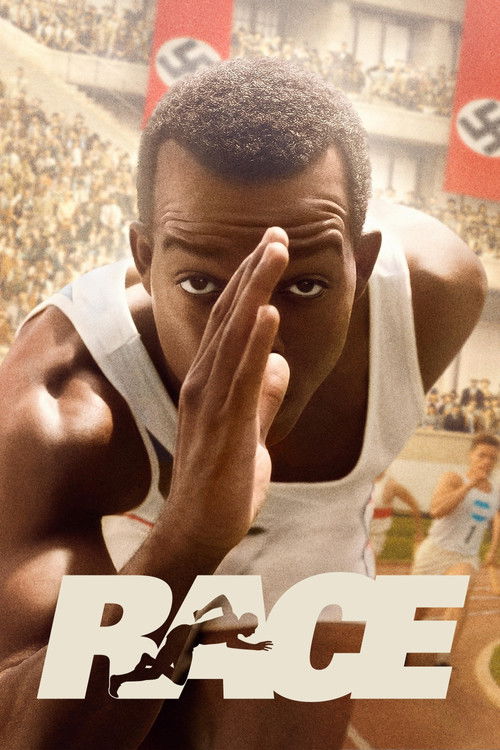
Race (2016)
Directed by Stephen Hopkins
No — Race is not especially woke, scoring 35 out of 100 on our wokeness meter.
The film is titled Race, which saves us all a certain amount of interpretive labor.
Consciousness Markers
Racism is the film's central subject: Nazi Aryan ideology, the NAACP's boycott plea, and the service-entrance humiliation are all dramatized directly.
A Black-led historical drama with Stephan James headlining and a predominantly Black principal cast, though this reflects the inherent subject matter rather than a deliberate diversity mandate.
The film carries a clear moral about defying racial ideology, but it delivers this through dramatized events rather than preachy monologues.
Ruth and Leni Riefenstahl are given some agency, but the film is squarely a male-athlete narrative with no feminist framing.
Avery Brundage's shady business arrangement with the Nazis and the cutting of Jewish athletes for commercial convenience gesture faintly at exploitation, but no systemic critique is offered.
No LGBTQ+ characters, themes, or subtext appear anywhere in the film.
No environmental or climate themes whatsoever.
No body-positivity themes; the film celebrates elite athletic performance in conventional terms.
No neurodivergent characters or themes are present.
The film is a conventional, largely faithful biopic of Jesse Owens, including the historically documented sidelining of Jewish relay runners.
Why it received this score
The film is titled Race, which saves us all a certain amount of interpretive labor. It concerns Jesse Owens, the Ohio State sprinter who traveled to Berlin in 1936 and came home with four gold medals, and it proceeds through the standard stations of the inspirational sports biography: the skeptical coach, the family in need of support, the rival who becomes an ally, the montage of records falling. Stephen Hopkins directs with a workmanlike steadiness. Nothing here startles, and nothing here offends.
The racial material is not decoration. It is the subject. Nazi officials issue assurances that athletes of any race may compete, the NAACP asks Owens to stay home, and a banquet doorman directs the guest of honor to the service entrance. A Black lead and a largely Black principal cast follow from the story itself, which is the honest kind of representation, the sort that requires no committee. Ruth and Leni Riefenstahl are granted small measures of agency, though the camera keeps its attention on the men in spikes.
What the film declines to include is equally legible. There is no queer material, no environmental register, no meditation on body image, no neurodivergent character. Avery Brundage's private arrangement with the Nazis and the quiet removal of two Jewish relay runners gestures at exploitation, then moves along. The history is rendered faithfully, without revision. The moral arrives through events instead of speeches, which is a mercy. The result is a decent, well-intentioned, faintly dutiful picture that honors its subject and forgets to surprise anyone.
Analysis generated by our Consciousness Algorithm


Synopsis
Based on the story of Jesse Owens, the athlete whose quest to become the greatest track and field athlete in history thrusts him onto the world stage of the 1936 Olympics, where he faces off against Adolf Hitler's vision of Aryan supremacy.
Questions about Race
Is Race woke?
No — Race is not especially woke, scoring 35 out of 100 on our wokeness meter. That earns it a verdict of Based.
Does Race have any woke elements?
2 of the 10 markers register at 30 or above, led by Racial Consciousness (70) and Representation Casting (60). On Racial Consciousness: Racism is the film's central subject: Nazi Aryan ideology, the NAACP's boycott plea, and the service-entrance humiliation are all dramatized directly.
How does Race compare to other 2016 movies?
It ranks #29 of the 285 films from 2016 we've scored; their average is 16. The wokest is 13th (92).
How is the Woke Score calculated?
An AI-assisted process researches the film and its reception, scores it 0–100 on ten markers, then combines those into one 0–100 Woke Score. It measures a specific set of 2020s cultural themes, not film quality.