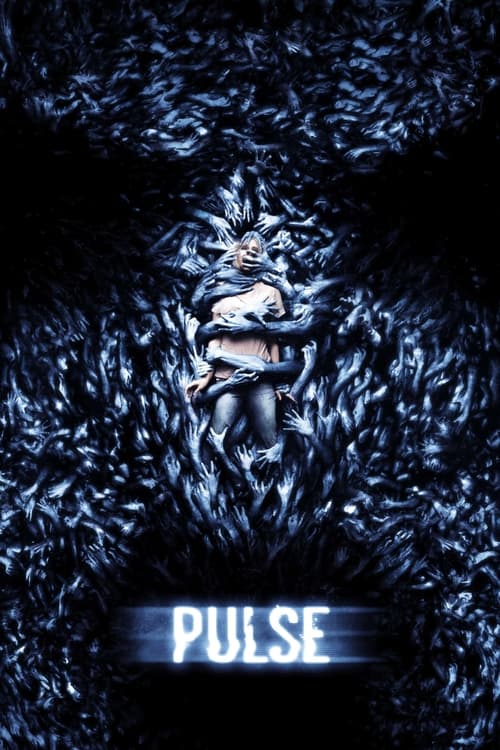
Pulse (2006)
Directed by Jim Sonzero
No — Pulse is not woke, scoring 0 out of 100 on our wokeness meter.
Pulse arrives in 2006 as an English-language restaging of Kiyoshi Kurosawa's 2001 film, in which the dead discover the internet and begin climbing out of it.
Consciousness Markers
The film features a diverse cast, including Christina Milian, Rick Gonzalez, and Octavia Spencer, but their characters exist naturally in the story without any commentary on race or deliberate inclusive casting.
There are no LGBTQ+ characters, relationships, or themes present in the film.
The film has a female protagonist, but she is presented as a conventional horror victim and the story contains no feminist themes or commentary.
The film does not engage with racial issues, systemic racism, or racial identity in any explicit or thematic way.
There is no environmental or climate-related message in the film; the threat is supernatural, not ecological.
The film critiques technology and isolation, but it does not target capitalism, wealth inequality, or economic systems.
The film does not address body image, size diversity, or body positivity in any form.
There are no characters or themes related to neurodivergence, mental health advocacy, or neurological differences.
The film is a remake of a Japanese horror film, but it does not revise historical events or engage in revisionist history.
The film's closing voice-over offers a vague lament about technology connecting us to dark forces, but it is not a social justice lecture or didactic moralizing.
Why it received this score
Pulse arrives in 2006 as an English-language restaging of Kiyoshi Kurosawa's 2001 film, in which the dead discover the internet and begin climbing out of it. Kristen Bell plays Mattie, a psychology student whose boyfriend hangs himself with a network cable and then keeps emailing. The remedy involves red tape, a memory stick, and a server room. The remedy fails. Dimension Films steered the production through a development cycle that included Wes Craven, a script by Vince Gilligan, and a temporary shutdown engineered to push Craven toward a different project. Very little of that turbulence reaches the screen, which settles instead for loud noises and wet gray figures.
On the question of social consciousness, the film is a blank ledger. The supporting cast includes Christina Milian, Rick Gonzalez, and Octavia Spencer, and the screenplay treats their presence as ordinary, which it is. No character remarks on race, and no scene organizes itself around identity. The antagonist is a supernatural frequency, not an oil company, a bank, or a landlord. Mattie is a horror heroine of the standard model, present to run and to scream, and the film offers no comment on her position. Bodies are not politicized, minds are not diagnosed, and history is not revised. The original film is merely translated, not reinterpreted.
The closing voice-over informs us that what was meant to connect us connected us to forces we could not have imagined, which is a mood, not an argument. There is no program here, no call to action, no sermon. It is a bad film, and it is bad on its own terms. We can respect that.
Analysis generated by our Consciousness Algorithm


Synopsis
When the dead discover a means to contact the living through electronic devices, cellphones and computers become open gateways to monstrosities and destruction.
Questions about Pulse
Is Pulse woke?
No — Pulse is not woke, scoring 0 out of 100 on our wokeness meter. That earns it a verdict of Ultra Based.
Does Pulse have any woke elements?
No. All 10 markers score zero.
How does Pulse compare to other 2006 movies?
It ranks #177 of the 211 films from 2006 we've scored; their average is 11. The wokest is An Inconvenient Truth (92).
How is the Woke Score calculated?
An AI-assisted process researches the film and its reception, scores it 0–100 on ten markers, then combines those into one 0–100 Woke Score. It measures a specific set of 2020s cultural themes, not film quality.