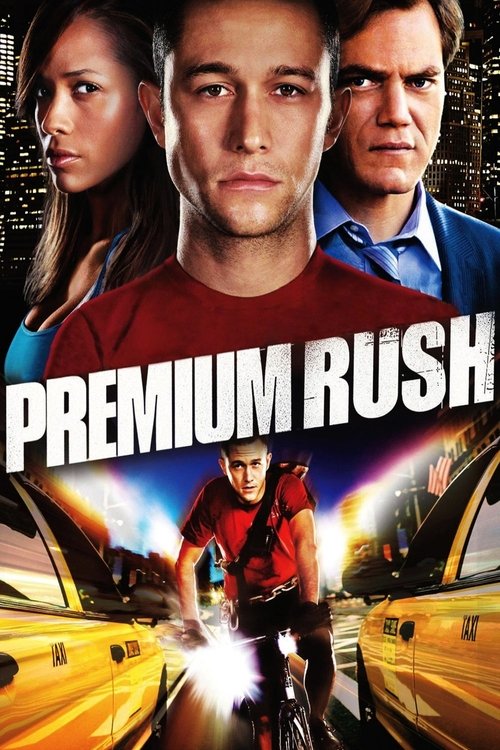
Premium Rush (2012)
Directed by David Koepp
No — Premium Rush is not woke, scoring 15 out of 100 on our wokeness meter.
A 2012 action thriller about a bicycle messenger who picks up an envelope and spends ninety minutes being chased around Manhattan by a corrupt detective, Premium Rush is a film of narrow ambitions and admirable follow-through.
Consciousness Markers
The cast includes Dania Ramirez, Jamie Chung, Wolé Parks, Aasif Mandvi, and Henry O in substantive roles, giving the film a naturally multiethnic ensemble, but their presence is never framed as a statement.
The plot involves a Chinese hawaladar, Chinatown, and a smuggling operation, but these are genre mechanics rather than any examination of race or systemic injustice.
Vanessa is a capable fellow messenger who nags Wilee to grow up, but the film is a chase thriller with no feminist thesis or gender commentary.
No LGBTQ+ characters, relationships, or themes appear anywhere in the film.
Bicycle messengers vs. cars is a premise, not a climate argument; no environmental theme is raised.
The villain is a corrupt gambling-addicted cop, a personal antagonist rather than a critique of wealth or capitalism.
No body-positivity themes or messaging of any kind.
No neurodivergent characters or themes are present.
A contemporary action thriller with no historical subject matter to revise.
The film is a propulsive chase movie with no preachy messaging or moral instruction.
Why it received this score
A 2012 action thriller about a bicycle messenger who picks up an envelope and spends ninety minutes being chased around Manhattan by a corrupt detective, Premium Rush is a film of narrow ambitions and admirable follow-through. David Koepp keeps the wheels turning, Michael Shannon sweats menace through a role that requires him to be a gambling addict with a badge, and Joseph Gordon-Levitt, still visibly stitched from a real collision with a taxi, sells the physicality of a man who would rather ride than take the bar exam. The film has no thesis. It has a route. That is not a criticism. It is a description of the genre working as intended.
The cast is notably polyglot, with Dania Ramirez, Jamie Chung, Wolé Parks, Aasif Mandvi, and Henry O all given something to do, and the film never stops to congratulate itself for this. The Chinatown hawaladar, the smuggling operation, the ticket that must reach Sister Chen: these are plot machinery, not sociology. A capable woman nags the hero about growing up, and the villain is a crooked cop with a gambling debt, which means the story has a personal antagonist and no interest whatsoever in the systems that produced him. The bicycle is not a statement about cars, oil, or the climate. It is a vehicle, in both senses, and the film treats it as such.
What remains is craft. The chase choreography is clean, the geography legible, the Sudoku-based assassination in the final reel a small, absurd pleasure. There is no sermon here, no moment where the film turns to the audience and instructs. It wants to be a William Friedkin chase picture and it largely succeeds at being one. For a certain kind of viewer, this will read as a deficiency. For the rest of us, it is a relief. The envelope gets delivered. The credits roll. Nothing is explained to us along the way.
Analysis generated by our Consciousness Algorithm


Synopsis
In Manhattan, a bike messenger picks up an envelope that attracts the interest of a dirty cop, who pursues the cyclist throughout the city.
Questions about Premium Rush
Is Premium Rush woke?
No — Premium Rush is not woke, scoring 15 out of 100 on our wokeness meter. That earns it a verdict of Ultra Based.
Does Premium Rush have any woke elements?
1 of the 10 markers register at 30 or above, led by Representation Casting (30). On Representation Casting: The cast includes Dania Ramirez, Jamie Chung, Wolé Parks, Aasif Mandvi, and Henry O in substantive roles, giving the film a naturally multiethnic ensemble, but their presence is never framed as a statement.
How does Premium Rush compare to other 2012 movies?
It ranks #57 of the 230 films from 2012 we've scored; their average is 12. The wokest is Killing Them Softly (92).
How is the Woke Score calculated?
An AI-assisted process researches the film and its reception, scores it 0–100 on ten markers, then combines those into one 0–100 Woke Score. It measures a specific set of 2020s cultural themes, not film quality.