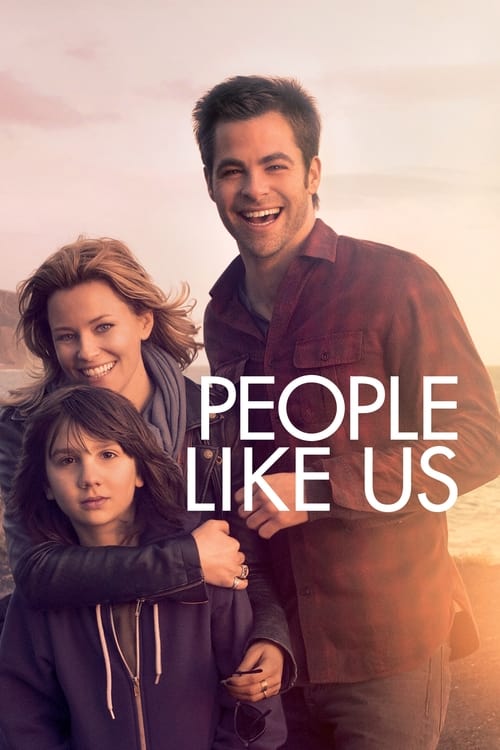
People Like Us (2012)
Directed by Alex Kurtzman
No — People Like Us is not woke, scoring 4 out of 100 on our wokeness meter.
People Like Us presents a melodrama that feels curiously insulated from the prevailing currents of modern social commentary.
Consciousness Markers
The cast is predominantly white with a few supporting minority performers (e.g., Barbara Eve Harris as a lawyer) who exist naturally in the story without any commentary on their presence. No deliberate diverse casting agenda.
Female characters (Frankie, Lillian, Hannah) have some agency and interiority, but the film is a conventional family melodrama with no feminist thesis or gendered critique.
The protagonist is a corporate trader who may have broken federal law, but the film treats this as personal moral baggage rather than a systemic indictment of capitalism.
The film is a straightforward emotional melodrama that shows rather than preaches; no overt moralizing or social-issue sermonizing.
No LGBTQ+ characters, themes, or subtext whatsoever in this family drama.
Race is entirely absent as a subject; minority characters appear without any racial consciousness or commentary.
No environmental or climate themes present.
No body positivity themes or messaging.
Josh is a 'troubled' child who fights and shoplifts, but no neurodivergence is depicted or named.
No historical revisionism; the film is a contemporary family drama with no engagement with historical narratives.
Why it received this score
People Like Us presents a melodrama that feels curiously insulated from the prevailing currents of modern social commentary. We are introduced to a struggling corporate man navigating a series of familial crises, a journey that remains resolutely focused on the internal mechanics of a fractured household. The narrative avoids contemporary obsessions, opting instead for the timeless conflicts of money, inheritance, and emotional reconciliation. The film maintains a traditional focus on personal arcs rather than systemic critique, which is perhaps its greatest stylistic achievement.
The supporting female characters, such as the daughter and the mother, possess a degree of interiority and agency that warrants passing comment. Yet this is a conventional family drama, not a thesis on gender dynamics or social justice. The film touches upon issues like alcoholism and the pressures of corporate law, but it frames these as individual burdens rather than symptoms of broader societal failures. We do not find any deliberate effort toward progressive sensibilities, such as addressing climate change or neurodivergence. Josh, the troubled youth, is a character defined by behavioral issues, but the script avoids labeling or analyzing his struggles through a contemporary cultural lens.
This picture functions as a straightforward, emotionally weighted exercise in human connection. It is a story of finding common ground across generational divides. The small moments of character development serve as the primary mechanism of the plot. It is a film that respects its genre, refusing to lean into the lecture energy that has become so prevalent in recent years. It is a study of broken connections, a surprisingly coherent vintage that prefers the quiet ache of a personal tragedy over the loud pronouncements of modern social consciousness.
Analysis generated by our Consciousness Algorithm


Synopsis
After flying home to L.A. for the funeral of his estranged record-producer father, a struggling man discovers that the will stipulates that he must deliver $150,000 in cash to a 30-year-old alcoholic sister he never knew existed, and her troubled 12-year-old son.
Questions about People Like Us
Is People Like Us woke?
No — People Like Us is not woke, scoring 4 out of 100 on our wokeness meter. That earns it a verdict of Ultra Based.
Does People Like Us have any woke elements?
Very few. None of the 10 markers reaches 30, the level where a marker counts as present; the highest is Representation Casting at 12.
How does People Like Us compare to other 2012 movies?
It ranks #152 of the 230 films from 2012 we've scored; their average is 12. The wokest is Killing Them Softly (92).
How is the Woke Score calculated?
An AI-assisted process researches the film and its reception, scores it 0–100 on ten markers, then combines those into one 0–100 Woke Score. It measures a specific set of 2020s cultural themes, not film quality.