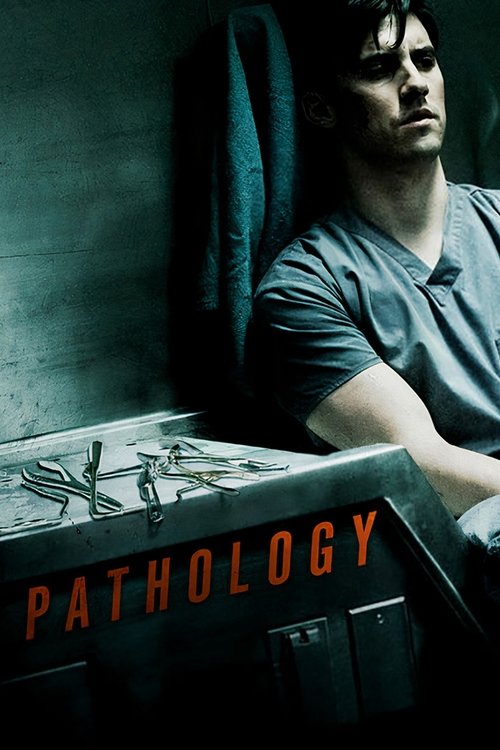
Pathology (2008)
Directed by Marc Schölermann
No — Pathology is not woke, scoring 8 out of 100 on our wokeness meter.
Pathology arrives from 2008 with the confidence of a film that believes it has stumbled onto something forbidden.
Consciousness Markers
The cast includes a few non-white performers (Meiling Melançon, Buddy Lewis) in supporting roles, but their presence is incidental and unremarked upon. No deliberate diversity casting agenda is evident.
A female serial killer and a female pathologist exist in the cast, but the film treats women largely as victims and objects of a lurid male rivalry. No feminist critique or agenda is present.
No LGBTQ+ characters, themes, or subtext appear anywhere in the film.
The film engages no racial themes or commentary whatsoever; its concerns are entirely about sociopathic medical students.
No environmental or climate themes appear in the film.
The film has no economic or class critique; the villains are affluent professionals motivated by boredom and ego, not capitalism.
No body-positivity themes; the film is a gory horror-thriller fixated on cadavers and mutilation.
The sociopathic characters are framed as villains, not as neurodivergent individuals deserving understanding. No neurodivergence themes are present.
The film is a fictional thriller with no historical subject matter to revise.
The film offers no moral lecturing or social messaging; it is a straightforward exploitation-flavored horror thriller.
Why it received this score
Pathology arrives from 2008 with the confidence of a film that believes it has stumbled onto something forbidden. It has not. A Harvard valedictorian named Teddy Grey joins an elite pathology residency and falls in with a clique of sociopathic residents who murder strangers and then compete to autopsy them. The premise is a morgue-set parlor game, and the film plays it with the sweaty self-satisfaction of a teenager who has just discovered Nietzsche.
The picture carries almost no social agenda to speak of. A handful of non-white performers appear in supporting roles, present but unremarked, which is the entire extent of its casting ambition. Women fare worse: a female pathologist and a female killer occupy the frame, yet the film mostly uses them as bodies to be opened and prizes to be fought over by men. There is no feminist argument here, only a lurid rivalry wearing a lab coat. Race, class, climate, disability, and history are simply not on the menu. The villains are affluent professionals bored with comfort. The film never asks why.
What remains is exploitation with a scalpel budget. It is competently grimy, occasionally tense, and entirely without a message, which in this case is its one honest virtue. Nobody lectures. Nobody learns. The corpses pile up, the gas gets left on, and the credits roll over a soundtrack nobody remembers. We are left to file it accordingly: a nasty little genre exercise that offends no ideology because it has none. The sommelier sets down the glass and reaches for the next bottle.
Analysis generated by our Consciousness Algorithm


Synopsis
Medical student Ted Grey graduates at the top of his class and quickly joins an elite pathology program, whose top students invite him into their circle. There he uncovers a gruesome secret: They play a game in which one tries to commit the perfect, undetectable murder, then the others compete to determine the victim's cause of death.
Questions about Pathology
Is Pathology woke?
No — Pathology is not woke, scoring 8 out of 100 on our wokeness meter. That earns it a verdict of Ultra Based.
Does Pathology have any woke elements?
Very few. None of the 10 markers reaches 30, the level where a marker counts as present; the highest is Representation Casting at 15.
How does Pathology compare to other 2008 movies?
It ranks #110 of the 212 films from 2008 we've scored; their average is 12. The wokest is Milk (68).
How is the Woke Score calculated?
An AI-assisted process researches the film and its reception, scores it 0–100 on ten markers, then combines those into one 0–100 Woke Score. It measures a specific set of 2020s cultural themes, not film quality.