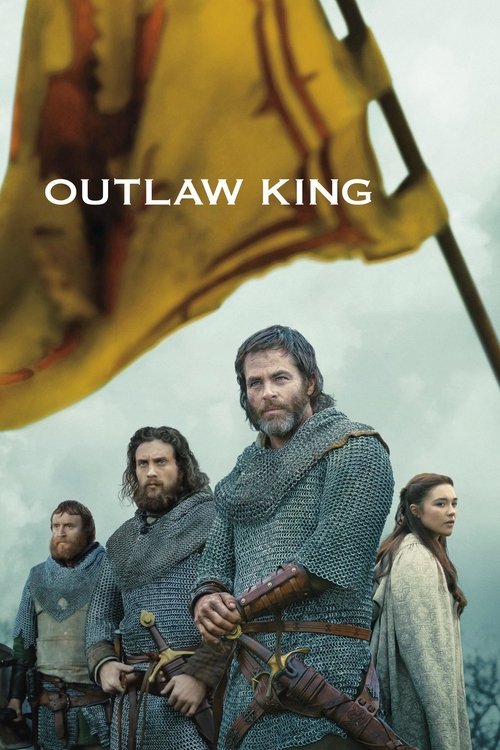
Outlaw King (2018)
Directed by David Mackenzie
No — Outlaw King is not woke, scoring 11 out of 100 on our wokeness meter.
Outlaw King arrives as a Netflix historical action drama, all mud, blood, beards, and the Scottish Wars of Independence.
Consciousness Markers
Florence Pugh's Elizabeth de Burgh is given notable agency — refusing to renounce her marriage and enduring a hanging cage — but this is conventional historical characterization rather than a feminist thesis.
The film is a straightforward historical action drama that largely shows rather than preaches; any thematic weight about freedom and nationhood is delivered through battle and plot rather than sermonizing.
The cast is overwhelmingly white, as befits a 14th-century Scottish historical epic; there is no evidence of deliberate diverse or color-conscious casting.
No LGBTQ+ characters, relationships, or themes appear anywhere in the film.
The conflict is national and dynastic (Scots vs. English) with no engagement with racial consciousness or identity.
No environmental or climate themes are present in this medieval war drama.
The film concerns kingship, rebellion, and feudal loyalty; there is no critique of capitalism or wealth.
No body-positivity themes or messaging appear in the film.
No neurodivergent characters or themes are depicted.
The film takes dramatic liberties with history (Edward II at Loudoun Hill, Robert as a man of the people), but these are conventional cinematic embellishments, not modern ideological revisionism.
Why it received this score
Outlaw King arrives as a Netflix historical action drama, all mud, blood, beards, and the Scottish Wars of Independence. David Mackenzie stages the thing with grim competence. The film concerns kingship, rebellion, feudal loyalty, and the price of a crown. It is a 2018 production that behaves like a 1995 one, which is a compliment of a narrow and specific kind.
The cast is white, uniformly so, as a fourteenth-century Scottish epic would be, and the film makes no attempt to comment on the fact or correct it. No LGBTQ characters appear anywhere. The conflict is national and dynastic, Scots against English, and the film never reaches for a racial or identity framework to explain it. There is no environmental lament, no critique of wealth or capital, no meditation on bodies or minds that deviate from a norm. The script has other business on its mind: spears, ditches, and the correct way to conceal a spear wall.
Florence Pugh's Elizabeth de Burgh is granted more spine than the period usually allows, refusing to renounce her marriage and enduring a hanging cage for the refusal. This is sturdy historical characterization, not a thesis. Elsewhere the film takes its liberties, placing Edward II at Loudoun Hill and shaping Robert into a man of the people, but these are the ordinary embellishments of the genre, not an ideological rewrite. Historians note that yellow, the most common dye in medieval Scotland, is almost entirely absent from the costumes, which tells you where the film's priorities sit. The theme of freedom arrives through mud and slaughter, not speeches. The film shows. It rarely lectures. For that small mercy, and for the mud, it earns a measure of respect.
Analysis generated by our Consciousness Algorithm


Synopsis
Forced into exile by the English after being crowned King of Scotland, legendary warrior Robert the Bruce fights to reclaim the throne.
Questions about Outlaw King
Is Outlaw King woke?
No — Outlaw King is not woke, scoring 11 out of 100 on our wokeness meter. That earns it a verdict of Ultra Based.
Does Outlaw King have any woke elements?
Very few. None of the 10 markers reaches 30, the level where a marker counts as present; the highest is Feminist Agenda at 15.
How does Outlaw King compare to other 2018 movies?
It ranks #184 of the 325 films from 2018 we've scored; their average is 20. The wokest is Return (92).
How is the Woke Score calculated?
An AI-assisted process researches the film and its reception, scores it 0–100 on ten markers, then combines those into one 0–100 Woke Score. It measures a specific set of 2020s cultural themes, not film quality.