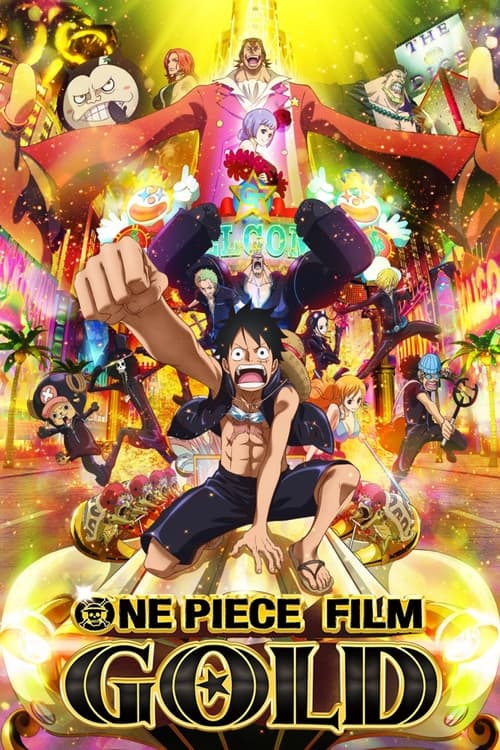
One Piece Film: GOLD (2016)
Directed by Hiroaki Miyamoto
No — One Piece Film: GOLD is not especially woke, scoring 27 out of 100 on our wokeness meter.
We approach One Piece Film: GOLD with a sense of weary anticipation.
Consciousness Markers
The villain is a literal billionaire casino owner who enslaves an entire city through debt and gold manipulation. The Straw Hats liberate the exploited masses, making this a solid 'eat the rich' adventure, albeit without modern jargon.
The voice cast is uniformly Japanese, and the film's diverse fictional characters are not deployed as a statement on representation. No modern casting agenda detected.
No LGBTQ+ characters, themes, or subtext. The only romance-adjacent energy is between pirates and treasure.
Nami and Carina are competent schemers, but the film's treatment of them is standard shonen adventure, not a feminist manifesto. No agenda.
The film features a multi-species pirate crew and a gold-obsessed tyrant, but it never engages with race or systemic racial injustice. Zero.
The only environmental concern is a city made of gold, which is more a metaphor for greed than a climate crusade. No carbon footprint hand-wringing.
No body positivity themes. The characters are mostly slender or exaggeratedly muscular, and no one delivers a monologue about self-love.
No neurodivergence representation or themes. Luffy's impulsiveness is played for comedy, not diagnosis.
No historical revisionism. The film is set in a fictional world of pirates and marines, not a reimagining of real events.
The film is an action-packed anime adventure, not a TED Talk. It shows greed's evils through punching, not preaching.
Why it received this score
We approach One Piece Film: GOLD with a sense of weary anticipation. The film operates within the established framework of a shonen adventure, a territory where sophisticated cultural commentary often goes to die. While the narrative succeeds in its traditional goals of high-stakes action and maritime escapism, its deployment of modern progressive sensibilities is, at best, perfunctory. The film treats its primary antagonists and themes with a casual reverence that suggests the anxieties of the current cultural moment were not fully grasped by its creators.
The only area where the picture achieves a degree of social awareness is in its treatment of economic exploitation. The villain is a literal plutocrat, and the plot hinges on the systemic abuse of debt and the subjugation of citizens by gold. The Straw Hat Pirates' intervention serves as a primitive form of anti-capitalist liberation, an act of rebellion against a billionaire who weaponizes finance. This is perhaps the film's most significant cultural moment. However, this single spark of commentary is insufficient to sustain a claim of genuine progressive intent.
Outside of the financial critique, the film offers nothing remotely substantial. The cast is uniformly Japanese, and the representation of marginalized identities remains as underdeveloped as a blank slate. We see no engagement with themes of systemic racial injustice or neurodivergent experience. The narrative functions purely as a high-octane exercise in physics and combat, lacking the necessary didactic weight to qualify as a cultural artifact of note. It is a remarkably competent spectacle, yet it remains comfortably within the bounds of traditional genre fare, making its overall impact as a piece of contemporary social consciousness remarkably negligible.
Analysis generated by our Consciousness Algorithm
Part of


Synopsis
The glittering Gran Tesoro, a city of entertainment beyond the laws of the government, is a sanctuary for the world’s most infamous pirates, Marines, and filthy rich millionaires. Drawn by dreams of hitting the jackpot, Captain Luffy and his crew sail straight for the gold. But behind the gilded curtains lies a powerful king whose deep pockets and deeper ambitions spell disaster for the Straw Hats and the New World alike.
Questions about One Piece Film: GOLD
Is One Piece Film: GOLD woke?
No — One Piece Film: GOLD is not especially woke, scoring 27 out of 100 on our wokeness meter. That earns it a verdict of Based.
Does One Piece Film: GOLD have any woke elements?
1 of the 10 markers register at 30 or above, led by Eat the Rich (45). On Eat the Rich: The villain is a literal billionaire casino owner who enslaves an entire city through debt and gold manipulation.
How does One Piece Film: GOLD compare to other 2016 movies?
It ranks #50 of the 285 films from 2016 we've scored; their average is 16. The wokest is 13th (92).
Is One Piece Film: GOLD the most woke One Piece movie?
Yes. It scores highest of the 4 One Piece films we've scored.