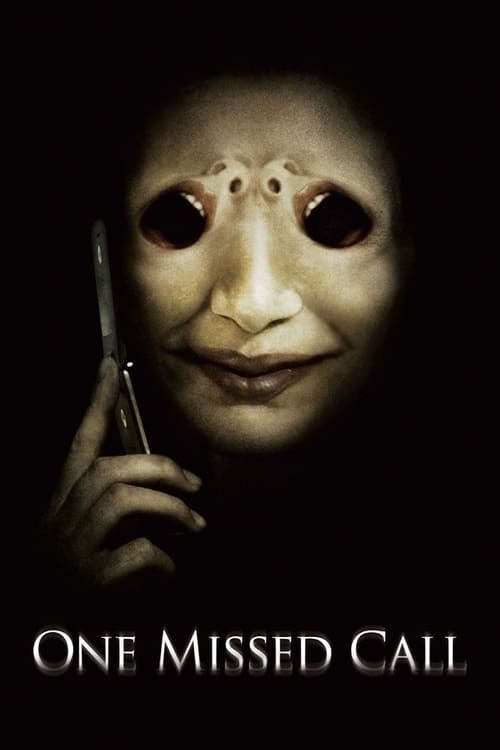
One Missed Call (2008)
Directed by Eric Valette
No — One Missed Call is not woke, scoring 6 out of 100 on our wokeness meter.
One Missed Call arrives in 2008 as the American remake of Takashi Miike's 2003 chiller, itself drawn from a Yasushi Akimoto novel, and it carries the distinction of a zero percent approval rating on Rotten Tomatoes, a Moldy Tomato Award, and a CinemaScore of D. Critics were not screened, which tells us plenty.
Consciousness Markers
The cast is moderately diverse for a 2008 horror film (a Latina lead in Ana Claudia Talancón, a Black supporting actress in Meagan Good), but this reflects ordinary casting rather than any deliberate representation agenda.
A female protagonist anchors the story, but she is a conventional horror victim/survivor with no feminist framing or commentary.
No LGBTQ+ characters, themes, or subtext appear anywhere in the film.
The film engages no racial themes or commentary whatsoever.
No environmental or climate content is present.
No economic critique or anti-capitalist messaging appears; the corporate TV producer is a plot device, not a target of class commentary.
No body-positive themes or messaging are present.
The film touches on Munchausen by proxy and childhood asthma, but treats these as horror plot mechanics rather than neurodivergence advocacy or representation.
The film is a straightforward remake with no historical revisionism.
The film delivers no moralizing or preachy messaging; it is a by-the-numbers supernatural horror remake.
Why it received this score
One Missed Call arrives in 2008 as the American remake of Takashi Miike's 2003 chiller, itself drawn from a Yasushi Akimoto novel, and it carries the distinction of a zero percent approval rating on Rotten Tomatoes, a Moldy Tomato Award, and a CinemaScore of D. Critics were not screened, which tells us plenty. The film concerns a cursed voicemail that predicts the date, time, and manner of the recipient's death, a premise it executes with lullaby ringtones, red candies, and a great deal of screaming.
For our purposes, the picture is a wasteland. The cast includes Ana Claudia Talancón and Meagan Good, a modest diversity for a 2008 horror release, but the arrangement reflects ordinary hiring, not a representation program. Shannyn Sossamon anchors the story as a woman pursued by a supernatural curse, which is the horror genre's oldest furniture, and no feminist reading survives contact with the script. There is no LGBTQ content, no racial commentary, no climate anxiety, no class warfare against the television producer who serves as a plot device, no body-positive messaging, and no neurodivergent advocacy. Munchausen by proxy and childhood asthma appear, but as mechanisms of dread, not as representation. The film is a remake and makes no attempt to revise history, because it has no history to revise.
Above all, there is no sermon. The movie wants to frighten us with phones and then end. It fails at the frightening, but it never once lectures, which in this climate is its own small mercy.
We are left with a document of pure commercial calculation, a studio hoping a recognizable title and a ringing phone would suffice. It did not. The curse, like the film, simply runs out of people to call.
Analysis generated by our Consciousness Algorithm


Synopsis
Several people start receiving voice-mails from their future selves -- messages which include the date, time, and some of the details of their deaths.
Questions about One Missed Call
Is One Missed Call woke?
No — One Missed Call is not woke, scoring 6 out of 100 on our wokeness meter. That earns it a verdict of Ultra Based.
Does One Missed Call have any woke elements?
Very few. None of the 10 markers reaches 30, the level where a marker counts as present; the highest is Representation Casting at 20.
How does One Missed Call compare to other 2008 movies?
It ranks #129 of the 212 films from 2008 we've scored; their average is 12. The wokest is Milk (68).
How is the Woke Score calculated?
An AI-assisted process researches the film and its reception, scores it 0–100 on ten markers, then combines those into one 0–100 Woke Score. It measures a specific set of 2020s cultural themes, not film quality.