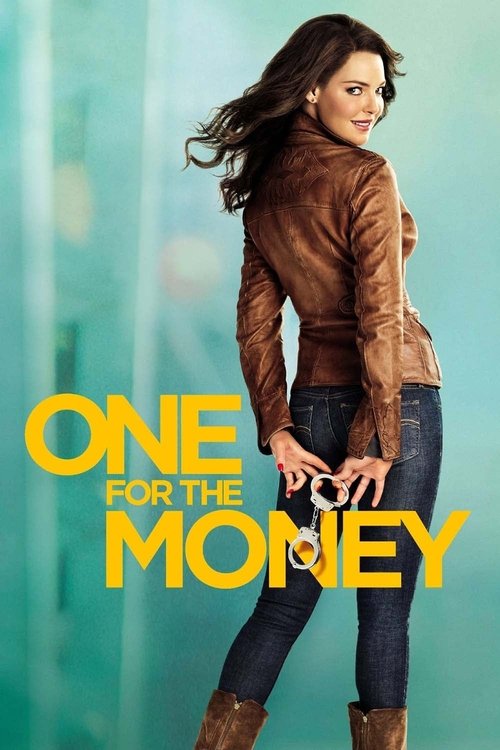
One for the Money (2012)
Directed by Julie Anne Robinson
No — One for the Money is not woke, scoring 9 out of 100 on our wokeness meter.
The 2012 crime comedy One for the Money arrives as a curious artifact of a bygone era, a time when a best-selling novel could be adapted into a star vehicle with minimal regard for coherence.
Consciousness Markers
The ensemble is notably diverse (Sherri Shepherd, Daniel Sunjata, John Leguizamo, Leonardo Nam, Olga Merediz), but this reflects the source novel's Trenton, New Jersey milieu rather than any deliberate representational agenda.
A female director, female screenwriters, and a female lead playing a woman breaking into the male-dominated bounty-hunting trade give a faint feminist sheen, but critics explicitly noted it is not 'girl-power filmmaking' and the plot resolves into a conventional romance.
The film features a multiracial supporting cast but makes no comment on race, racism, or racial identity; the diversity is incidental to the crime-comedy plot.
No LGBTQ+ characters, themes, or subtext appear anywhere in the film.
No environmental or climate-related content whatsoever.
The film is a bounty-hunting caper with no critique of wealth, class, or capitalism; the heroine's motivation is simply personal debt.
No body-positivity themes; the film trades on conventional glamour and a 'guidette' aesthetic rather than challenging body norms.
No neurodivergent characters or themes are present.
The film is a contemporary fictional crime story with no historical subject matter to revise.
A lightweight comic thriller that makes no attempt to preach or deliver social messaging to the audience.
Why it received this score
The 2012 crime comedy One for the Money arrives as a curious artifact of a bygone era, a time when a best-selling novel could be adapted into a star vehicle with minimal regard for coherence. Katherine Heigl plays Stephanie Plum, an unemployed lingerie buyer turned bounty hunter in Trenton, New Jersey. The film was panned by critics and ignored by audiences, grossing less than its budget. We can see why. The plot lurches between screwball comedy and gritty thriller, never settling on a tone. The direction by Julie Anne Robinson is workmanlike. The script, credited to three women, struggles to find a consistent voice.
In terms of social consciousness, the film offers little to analyze. Its ensemble cast is notably diverse, with Sherri Shepherd, Daniel Sunjata, John Leguizamo, and others filling out the Trenton milieu. This diversity reflects the source novel's setting, not any deliberate representational agenda. The film makes no comment on race or racial identity. A female director, female screenwriters, and a female lead breaking into a male-dominated trade suggest a faint feminist undercurrent. Yet the story resolves into a conventional romance, and critics rightly observed it is not girl-power filmmaking. The feminist gesture is cosmetic at best.
The remaining markers of modern cultural awareness are absent. No LGBTQ characters or themes appear. No environmental concerns are raised. The bounty-hunting caper offers no critique of capitalism; the heroine's motivation is personal debt. Body positivity is nowhere to be found, as the film trades on conventional glamour. Neurodivergence is not addressed. There is no historical revisionism in this contemporary fiction. And the film never lectures its audience. It is a lightweight comic thriller that aspires only to entertain, and fails even at that. We are left with a film that is neither socially progressive nor regressive. It is simply inert.
Analysis generated by our Consciousness Algorithm


Synopsis
An unemployed lingerie buyer convinces her bail bondsman cousin to give her a shot as a bounty hunter. Her first assignment is to track down a former cop on the run for murder – the same man who broke her heart years before. With the help of some friends and the best bounty hunter in the business, she slowly learns what it takes to be a true bounty hunter.
Questions about One for the Money
Is One for the Money woke?
No — One for the Money is not woke, scoring 9 out of 100 on our wokeness meter. That earns it a verdict of Ultra Based.
Does One for the Money have any woke elements?
Very few. None of the 10 markers reaches 30, the level where a marker counts as present; the highest is Representation Casting at 25.
How does One for the Money compare to other 2012 movies?
It ranks #86 of the 230 films from 2012 we've scored; their average is 12. The wokest is Killing Them Softly (92).
How is the Woke Score calculated?
An AI-assisted process researches the film and its reception, scores it 0–100 on ten markers, then combines those into one 0–100 Woke Score. It measures a specific set of 2020s cultural themes, not film quality.