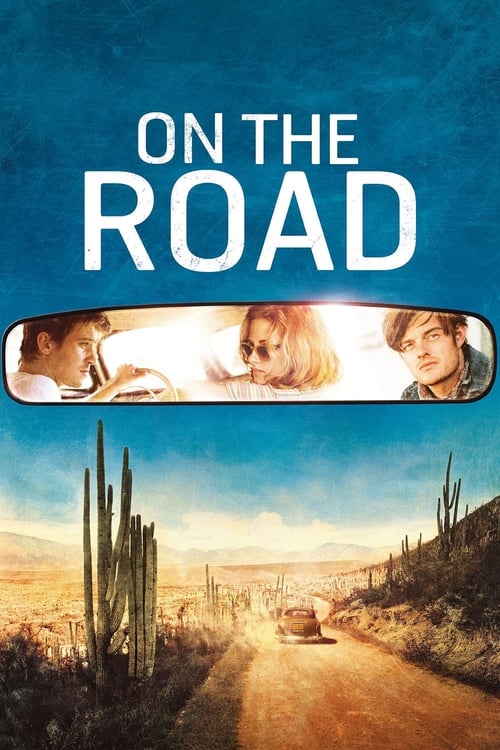
On the Road (2012)
Directed by Walter Salles
No — On the Road is not especially woke, scoring 32 out of 100 on our wokeness meter.
Walter Salles approaches the Beat generation with the reverence of a museum docent handling fragile manuscripts.
Consciousness Markers
The narrative explores non-traditional sexual dynamics and explicitly touches upon a character's questioning of his sexuality, aligning with modern queer themes.
The characters are actively rejecting mainstream societal conformity and bourgeois norms, choosing a life on the margins, which carries a mild anti-establishment undertone.
Female characters are active participants in the journey, but their roles are primarily defined by their relationships with the male protagonists, lacking a strong feminist agenda.
The film features a diverse ensemble of actors, but the focus remains on the bohemian lifestyle rather than specific modern representation quotas.
The film is a road movie focused on visceral experience and personal freedom, not a didactic piece of social commentary.
The film is set in the 1940s and focuses on a predominantly white, upper-class, bohemian milieu, offering minimal commentary on racial issues.
There is no thematic engagement with environmentalism or climate change within the narrative.
The film prioritizes the spiritual and experiential journey over the physical appearance or acceptance of the characters' bodies.
No characters are presented with recognized neurodivergent traits or conditions.
As a fictionalized literary adaptation, it does not seek to revise a specific historical event or accepted historical narrative.
Why it received this score
Walter Salles approaches the Beat generation with the reverence of a museum docent handling fragile manuscripts. The film has motion, jazz, marijuana, and handsome young people staring at horizons, but its rebelliousness is carefully catalogued. The ensemble is diverse on paper, yet the camera's attention stays fixed on the white, male, literary appetites of the period. The casting spreads across nationalities and faces, but the film's real devotion is to the mythology of the male artist. Racial consciousness barely registers in this bohemian bubble, and the film seems content to let the era's exclusionary social arrangements sit in the background like furniture.
Carlo's halting confession of possible homosexuality and his affair with Dean give the film its clearest modern charge. The narrative treats these desires as part of the road's experimental menu, which is more than many period pieces manage. Women are active travelers and lovers, but Marylou, Camille, and Terry are still defined by their proximity to Dean or Sal. The men get the myth-making; the women get the waiting rooms and the emotional cleanup.
The characters reject postwar conformity, which lends the film a mild anti-bourgeois hum, though it is closer to libertine lifestyle branding than a serious critique of capital. There is no environmental argument, no body-acceptance subplot, no neurodivergent diagnosis, and no attempt to revise the historical record. Salles prefers marijuana, jazz, and roadside drift to sermonizing, and the film rarely lectures. It is a road movie with a social conscience in its pocket, taken out only when the scenery demands a little weight.
Analysis generated by our Consciousness Algorithm


Synopsis
Sal Paradise is a young writer whose life is shaken and ultimately redefined by the arrival of Dean Moriarty, a free-spirited, fearless, fast talking Westerner and his girl, Marylou. Traveling cross-country, Sal and Dean venture out on a personal quest for freedom from the conformity and conservatism engulfing them in search of the unknown, themselves, and the pursuit of “it” -- the pure essence of experience.
Questions about On the Road
Is On the Road woke?
No — On the Road is not especially woke, scoring 32 out of 100 on our wokeness meter. That earns it a verdict of Based.
Does On the Road have any woke elements?
3 of the 10 markers register at 30 or above, led by LGBTQ+ Themes (65), Eat the Rich (40) and Feminist Agenda (30). On LGBTQ+ Themes: The narrative explores non-traditional sexual dynamics and explicitly touches upon a character's questioning of his sexuality, aligning with modern queer themes.
How does On the Road compare to other 2012 movies?
It ranks #21 of the 230 films from 2012 we've scored; their average is 12. The wokest is Killing Them Softly (92).
How is the Woke Score calculated?
An AI-assisted process researches the film and its reception, scores it 0–100 on ten markers, then combines those into one 0–100 Woke Score. It measures a specific set of 2020s cultural themes, not film quality.