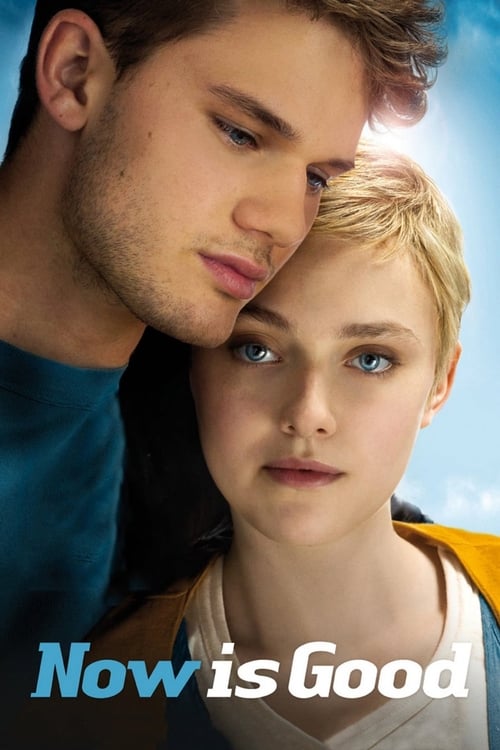
Now Is Good (2012)
Directed by Ol Parker
No — Now Is Good is not woke, scoring 8 out of 100 on our wokeness meter.
Now Is Good is a 2012 British teen romance about Tessa, a seventeen-year-old dying of leukemia who compiles a bucket list and pursues, among other items, the loss of her virginity.
Consciousness Markers
The story centers on a young woman asserting her own desires (including losing her virginity) against paternal authority, but this is standard coming-of-age territory rather than an explicit ideological feminist statement.
A predominantly white British cast with a handful of minority actors (Franz Drameh, Rakie Ayola) in incidental supporting roles; no conscious or race-bent casting directed at representation goals.
Aside from a closing voiceover musing that 'life is a series of moments,' the film prioritizes sentiment over sermon and carries no explicit ideological thesis.
No LGBTQ+ characters, relationships, or themes appear anywhere in the narrative.
Race is never a subject of the film; the illness-and-bucket-list narrative is entirely colorblind with no racial commentary.
Environmental concerns play no role in this terminal-illness romance.
No critique of wealth, capitalism, or class structures is present; the family is comfortably middle-class and the economy is never addressed.
The dying protagonist's body is a site of illness and decline, not a platform for body-acceptance messaging.
No neurodivergent characters or themes are depicted.
The film is a straightforward contemporary adaptation with no historical revisionism.
Why it received this score
Now Is Good is a 2012 British teen romance about Tessa, a seventeen-year-old dying of leukemia who compiles a bucket list and pursues, among other items, the loss of her virginity. Ol Parker directs from Jenny Downham's novel Before I Die. The film is a weepie with respectable performances and a soft-focus approach to mortality. Its social consciousness is minimal. The cast is mostly white, with Franz Drameh and Rakie Ayola appearing in incidental supporting roles. Race is not a subject. Illness is not a metaphor for identity. The film has no interest in commentary on representation, and it does not pretend otherwise.
Tessa's desire to control her remaining life, including her sexual experience, gives the story a mild feminist gesture. This is standard coming-of-age material, not an ideological statement. No LGBTQ characters or themes appear. Climate concerns are absent. The family is middle-class and capitalism is never questioned. Tessa's body is a site of decline, not body-acceptance messaging. No neurodivergent characters or themes are present. History is not revised. The film's lecture energy is faint, limited to a closing voiceover about life being a series of moments. It prefers sentiment to sermon.
The result is a conventional romance from 2012, released before the current cultural flashpoints hardened into their present form. It offers humanist sympathy, which is not the same as modern progressive signaling. The dying girl's wish to be touched, to be known, to leave a mark, is treated with sincerity. The film does not organize itself around a thesis. It organizes itself around tears. That is not a crime. It is simply a modest vintage, low in cultural agitation, best paired with a tissue and no expectations of ideological instruction. The classification is straightforward: a gentle weepie with almost no contemporary social markers beyond a faint feminist pulse and a handful of non-white faces in the margins.
Analysis generated by our Consciousness Algorithm


Synopsis
A girl dying of leukemia compiles a list of things she'd like to do before passing away. Topping the list is her desire to lose her virginity.
Questions about Now Is Good
Is Now Is Good woke?
No — Now Is Good is not woke, scoring 8 out of 100 on our wokeness meter. That earns it a verdict of Ultra Based.
Does Now Is Good have any woke elements?
Very few. None of the 10 markers reaches 30, the level where a marker counts as present; the highest is Feminist Agenda at 18.
How does Now Is Good compare to other 2012 movies?
It ranks #98 of the 230 films from 2012 we've scored; their average is 12. The wokest is Killing Them Softly (92).
How is the Woke Score calculated?
An AI-assisted process researches the film and its reception, scores it 0–100 on ten markers, then combines those into one 0–100 Woke Score. It measures a specific set of 2020s cultural themes, not film quality.