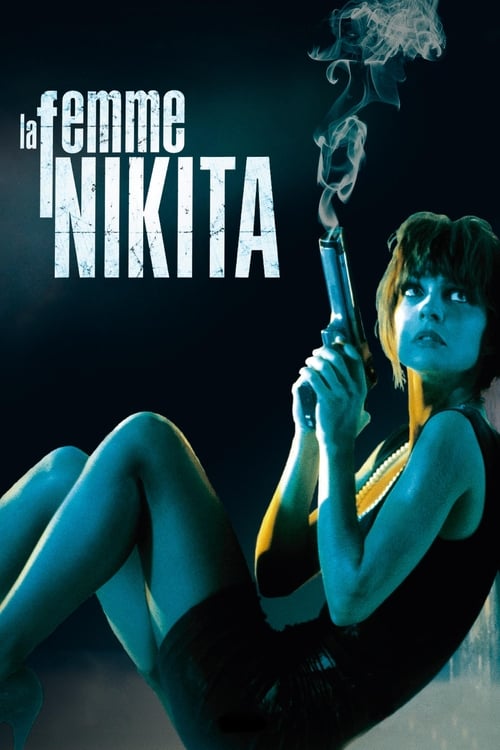
Nikita (1990)
Directed by Luc Besson
No — Nikita is not woke, scoring 0 out of 100 on our wokeness meter.
Luc Besson's Nikita arrives from 1990, a full three decades before the cultural apparatus that would have demanded it explain itself.
Consciousness Markers
The cast is entirely white European; no modern diversity casting markers are present.
No LGBTQ+ themes, characters, or subtext.
A female assassin protagonist, but the film treats her as a femme fatale controlled by male handlers; no feminist agenda.
No engagement with race, racism, or racial justice.
No environmental or climate themes.
No critique of capitalism, wealth, or class struggle.
No body positivity themes; the protagonist is conventionally glamorous and styled as a femme fatale.
No neurodivergence themes; drug addiction is not framed as neurodivergence.
No historical revisionism or reimagining of past events.
No preachy lecture energy or didactic social messaging.
Why it received this score
Luc Besson's Nikita arrives from 1990, a full three decades before the cultural apparatus that would have demanded it explain itself. Anne Parillaud plays a feral junkie who murders a policeman during a pharmacy robbery, is declared dead by a shadowy agency called the Centre, and is remade into a government assassin. The premise places a woman at the center of an action thriller, which today would summon an entire industry of commentary. Here it summons nothing, because the film has no interest in making an argument. She is a weapon with a pulse, trained by men, deployed by men, and styled by a female handler into a conventional glamour that the camera admires without ever interrogating.
The film's pleasures are almost aggressively apolitical. Nikita learns computer skills and martial arts, shoots a diplomat in a crowded restaurant, and falls into a tender, unexamined romance with a supermarket cashier named Marco who has no idea what she does for a living. When the two vacation in Venice, the phone rings mid-embrace and she must assemble a rifle in the bathroom while he talks to her through the door. It is pure pulp mechanics, executed with real craft, and it advances no thesis about gender, power, or the state beyond the obvious note that governments are cold. Besson wrote the part against Parillaud's actual temperament, which is the only identity-conscious decision anywhere near this production, and it is a casting note, not a manifesto.
The result is a sleek, moody thriller that treats its heroine as a beautiful instrument of violence, dresses her accordingly, and never stops to instruct the audience on how to feel about any of it. The supporting cast is uniformly white and European. Race, class, sexuality, climate, and the body are simply not on the agenda. There is no sermon and no corrected history. For a viewer raised on the modern habit of films announcing their moral position before the credits roll, the silence is startling. It is a film about a killer, made for people who wanted to watch one.
Analysis generated by our Consciousness Algorithm


Synopsis
A beautiful felon, sentenced to life in prison for the murder of a policeman, is given a second chance – as a secret political assassin controlled by the government.
Questions about Nikita
Is Nikita woke?
No — Nikita is not woke, scoring 0 out of 100 on our wokeness meter. That earns it a verdict of Ultra Based.
Does Nikita have any woke elements?
No. All 10 markers score zero.
How does Nikita compare to other 1990 movies?
It ranks #54 of the 68 films from 1990 we've scored; their average is 9. The wokest is Nightbreed (60).
How is the Woke Score calculated?
An AI-assisted process researches the film and its reception, scores it 0–100 on ten markers, then combines those into one 0–100 Woke Score. It measures a specific set of 2020s cultural themes, not film quality.