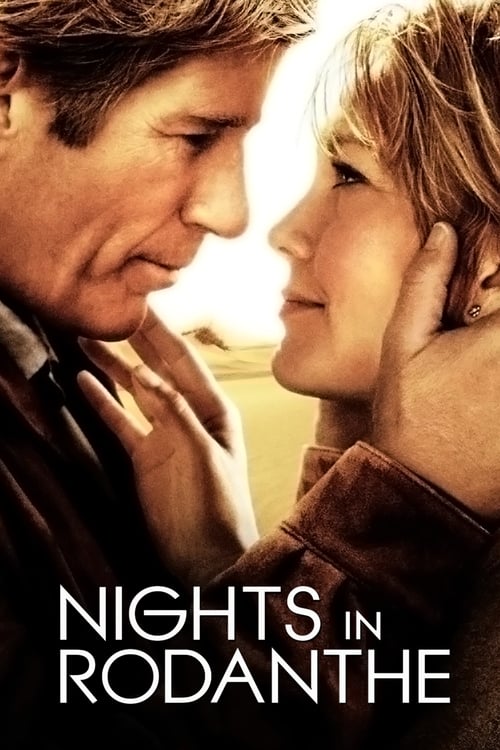
Nights in Rodanthe (2008)
Directed by George C. Wolfe
No — Nights in Rodanthe is not woke, scoring 9 out of 100 on our wokeness meter.
Nights in Rodanthe arrived in 2008 as the fourth cinematic harvest of a Nicholas Sparks novel, pairing Diane Lane and Richard Gere for a third time and asking them to generate passion across a windswept North Carolina inn.
Consciousness Markers
Viola Davis appears in a supporting role as Adrienne's friend, and the cast is otherwise conventionally white; her presence is natural and unremarked, not a statement.
Adrienne's arc involves leaving an unfaithful husband and reclaiming her own life, but the film frames this entirely through romantic fulfillment rather than any explicit feminist argument.
The film offers gentle moralizing about seizing a rare, special love, but it preaches through sentiment rather than explicit sermonizing.
No LGBTQ+ characters or themes appear anywhere in this heterosexual romance.
Race is never addressed or thematized; the story unfolds in an unexamined white coastal milieu.
A hurricane drives the plot's third act, but it is a romantic device, not an environmental parable.
No critique of wealth, class, or capitalism; the leads are a surgeon and a comfortable homeowner.
A patient's facial hemangioma is mentioned only as a surgical backstory, with no body-positive framing whatsoever.
No neurodivergent characters or themes are present.
A contemporary romance with no historical subject matter to revise.
Why it received this score
Nights in Rodanthe arrived in 2008 as the fourth cinematic harvest of a Nicholas Sparks novel, pairing Diane Lane and Richard Gere for a third time and asking them to generate passion across a windswept North Carolina inn. The hurricane supplies the third act. The letters supply the second. The first act supplies a woman deciding whether to take back the husband who left her, which the film treats as a genuine dilemma deserving of ninety minutes. It finished second at the box office behind Eagle Eye, a fact the studio has presumably filed under dignity.
The film's social consciousness is faint but traceable. Viola Davis appears as a friend and confidante, present and unremarked, which is about the most a 2008 studio romance was prepared to offer. Adrienne's separation from her unfaithful husband gestures toward self-reclamation, though the film routes every ounce of that independence back into romantic fulfillment, as if a woman's autonomy were merely the antechamber to the correct man. Race goes unmentioned in this white coastal milieu. Class goes unmentioned. The environment is a plot device with rain in it. A patient's facial hemangioma exists solely to explain a surgeon's guilt, not to say anything about bodies or beauty. The question of queerness does not arise, because in this world it does not exist.
What remains is the sermonizing, soft and constant. The film believes in a rare and special love, and it will tell us so, gently, at length, with the ocean behind it. This is schmaltz executed by competent hands with no urgency behind it. The result is a film that means well and risks nothing, which is its own kind of statement. Two stars for the craft, none for the courage, and a modest nod to the horses, who asked for nothing and received it.
THEMATIC TAGS: book_adaptation
Analysis generated by our Consciousness Algorithm
Part of


Synopsis
Adrienne is trying to decide whether to stay in her unhappy marriage or not, and her life changes when Paul, a doctor who is travelling to reconcile with his estranged son, checks into an inn where she is staying.
Questions about Nights in Rodanthe
Is Nights in Rodanthe woke?
No — Nights in Rodanthe is not woke, scoring 9 out of 100 on our wokeness meter. That earns it a verdict of Ultra Based.
Does Nights in Rodanthe have any woke elements?
Very few. None of the 10 markers reaches 30, the level where a marker counts as present; the highest is Feminist Agenda at 15.
How does Nights in Rodanthe compare to other 2008 movies?
It ranks #102 of the 212 films from 2008 we've scored; their average is 12. The wokest is Milk (68).
How is the Woke Score calculated?
An AI-assisted process researches the film and its reception, scores it 0–100 on ten markers, then combines those into one 0–100 Woke Score. It measures a specific set of 2020s cultural themes, not film quality.