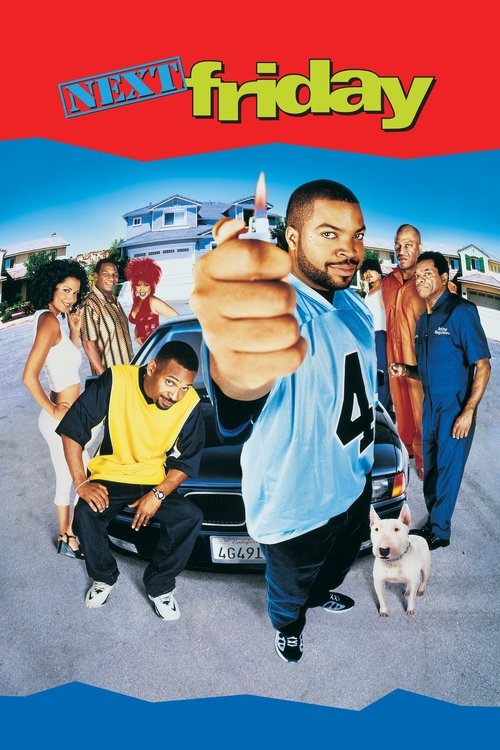
Next Friday (2000)
Directed by Steve Carr
No — Next Friday is not woke, scoring 13 out of 100 on our wokeness meter.
Next Friday arrives as the second installment in the Friday series, a 2000 stoner comedy in which Craig Jones retreats from South Central to Rancho Cucamonga to live with a lottery-winning uncle and evade a freshly paroled bully.
Consciousness Markers
The film features a predominantly Black and Latino cast, but this reflects the natural ensemble of a 2000 stoner comedy rather than a modern diversity-casting initiative.
There are no LGBTQ+ characters, themes, or subtext in the film.
Female characters exist mainly as ex-girlfriends, relatives, or comic obstacles, with no feminist agenda or commentary.
The film is set in Black and Latino communities, but it does not engage in racial-justice themes or explicit racial consciousness.
There is no climate-related content or environmental messaging.
The plot involves lottery winnings, repossession, and theft, but none of it is framed as anti-capitalist critique.
The film contains no body-positivity themes; physical appearance is sometimes used for comedy rather than affirmation.
No characters are presented with neurodivergence as a theme or identity.
The film is a contemporary comedy sequel and does not revise or reinterpret historical events.
The film is a stoner comedy with no preachy or lecture-like messaging.
Why it received this score
Next Friday arrives as the second installment in the Friday series, a 2000 stoner comedy in which Craig Jones retreats from South Central to Rancho Cucamonga to live with a lottery-winning uncle and evade a freshly paroled bully. The plot concerns a stolen hydraulic pump, a house facing repossession, and a trio of criminal brothers known as the Jokers. It is a sequel, it opened at number one, and it is content to be exactly what it is. We approach such a film with the sommelier's caution: there is little here to decant.
The cast is predominantly Black and Latino, and this registers as the natural ensemble of a neighborhood comedy rather than any deliberate diversity initiative. The film simply casts the people its story requires. Beyond that, the cupboard is bare. Female characters arrive as ex-girlfriends, relatives, or comic obstacles, and no feminist commentary attends them. No LGBTQ+ presence, no racial-justice thesis, no environmental sermon, no body-affirming message, no neurodivergent identity, no revision of the historical record. The economic engine of the plot is a lottery payout and a plan to rob the neighbors, which is theft as farce, not a critique of capital. Nobody lectures. Nobody preaches. The camera lingers on cannabis and slapstick instead.
That absence is, in its way, clarifying. Here is a comedy that wants nothing more than to make its audience laugh at a dog dosed with marijuana and a man's back giving out at the worst possible moment. It has no thesis to advance and no congregation to address. The result is coarse, aimless, and largely unfunny, as the critics of the day were quick to note. Yet it is honest about its ambitions, which are small and uncomplicated. For the purposes of classification, we record a film of negligible social consciousness and sturdy commercial instinct. It won the weekend, and it earned it.
Analysis generated by our Consciousness Algorithm


Synopsis
A streetwise man flees South Central Los Angeles heading to the suburbs and his lottery-winner uncle and cousin to avoid a neighborhood thug with a grudge who has just escaped from prison. But trouble soon follows and the suburbs will never be the same.
Questions about Next Friday
Is Next Friday woke?
No — Next Friday is not woke, scoring 13 out of 100 on our wokeness meter. That earns it a verdict of Ultra Based.
Does Next Friday have any woke elements?
1 of the 10 markers register at 30 or above, led by Representation Casting (30). On Representation Casting: The film features a predominantly Black and Latino cast, but this reflects the natural ensemble of a 2000 stoner comedy rather than a modern diversity-casting initiative.
How does Next Friday compare to other 2000 movies?
It ranks #41 of the 125 films from 2000 we've scored; their average is 13. The wokest is But I'm a Cheerleader (72).
How is the Woke Score calculated?
An AI-assisted process researches the film and its reception, scores it 0–100 on ten markers, then combines those into one 0–100 Woke Score. It measures a specific set of 2020s cultural themes, not film quality.