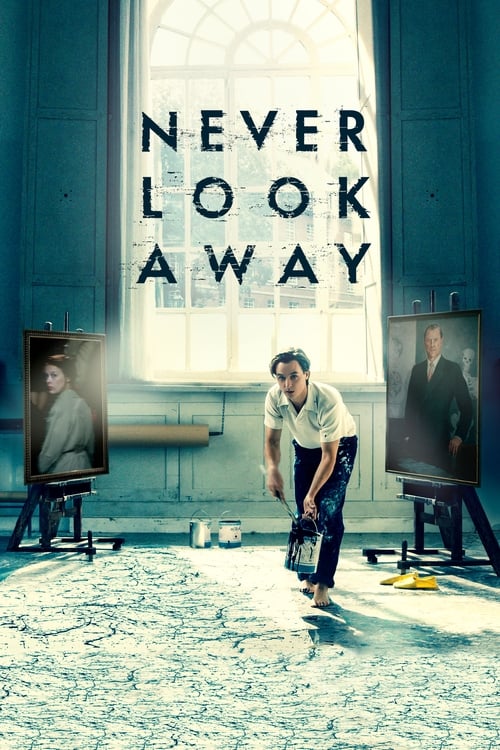
Never Look Away (2018)
Directed by Florian Henckel von Donnersmarck
No — Never Look Away is not woke, scoring 12 out of 100 on our wokeness meter.
Florian Henckel von Donnersmarck returns with three hours of German suffering, and he means every minute of them.
Consciousness Markers
Kurt's aunt Elisabeth is diagnosed with schizophrenia and murdered under the Nazi euthanasia program, giving the film a genuine, sympathetic focus on a neurodivergent character and her persecution.
Women suffer forced sterilization and a coerced abortion at the hands of a patriarchal SS doctor, but this is framed as historical atrocity rather than a modern feminist thesis.
The film is a serious art drama with thematic weight about truth and beauty, but it is not preachy in a modern activist register.
The film critiques totalitarian ideology and the art establishment, but offers no eat-the-rich economic argument.
The film is a fictionalization inspired by Gerhard Richter's life, which Richter himself denounced as a distortion, but it does not reinterpret history through a modern ideological lens.
The cast is entirely white German performers; there is no diverse or color-conscious casting agenda at work.
No LGBTQ+ characters or themes appear anywhere in the narrative.
The film concerns German national history and the Nazi/GDR regimes, not racial consciousness in any modern sense.
No environmental or climate themes are present.
No body-positivity themes or messaging appear.
Why it received this score
Florian Henckel von Donnersmarck returns with three hours of German suffering, and he means every minute of them. A boy named Kurt watches his aunt Elisabeth play Bach, deliver a bouquet to Hitler, and then come apart at the seams. The diagnosis is schizophrenia. The remedy is sterilization and, shortly after, death by the Nazi euthanasia program. The doctor who signs the order is an SS gynecologist named Seeband, who will later become the father of the woman Kurt loves. The film treats these horrors as history, which is what they are, and it lets the audience draw its own breath.
The cultural inventory here is thin. The cast is German and white throughout, with no color-conscious gesture anywhere in the frame. No character is gay, no romance bends away from the heterosexual template, and no environmental anxiety intrudes on the rubble of Dresden. What the film does offer is Elisabeth, whose illness is drawn with genuine sympathy, a portrait of a mind the state found inconvenient and therefore expendable. The women in this story are sterilized, aborted, and managed by men, but the camera frames their pain as atrocity, not as a thesis about patriarchy. Seeband and the socialist-realist art bureaucracy take their lumps, yet nobody in the film proposes that wealth is the problem. The problem is power, and the film has been reading about it since 1937.
Then there is the awkward matter of Gerhard Richter, whose biography supplied the bones and who has since described the result as an abuse and a gross distortion of his life. The film wears his trauma without his consent, which is a curious position for a work so concerned with truth and beauty. It carries the gravity of a nineteenth-century salon painting: earnest, handsome, faintly sermonizing about art and memory. But its sermon is an old one, about totalitarianism and the soul, delivered without the vocabulary of any current movement. It is a serious film, and serious is not the same as contemporary.
Analysis generated by our Consciousness Algorithm


Synopsis
German artist Kurt Barnert has escaped East Germany and now lives in West Germany, but is tormented by his childhood under the Nazis and the GDR regime.
Questions about Never Look Away
Is Never Look Away woke?
No — Never Look Away is not woke, scoring 12 out of 100 on our wokeness meter. That earns it a verdict of Ultra Based.
Does Never Look Away have any woke elements?
1 of the 10 markers register at 30 or above, led by Neurodivergence (30). On Neurodivergence: Kurt's aunt Elisabeth is diagnosed with schizophrenia and murdered under the Nazi euthanasia program, giving the film a genuine, sympathetic focus on a neurodivergent character and her persecution.
How does Never Look Away compare to other 2018 movies?
It ranks #169 of the 325 films from 2018 we've scored; their average is 20. The wokest is Return (92).
How is the Woke Score calculated?
An AI-assisted process researches the film and its reception, scores it 0–100 on ten markers, then combines those into one 0–100 Woke Score. It measures a specific set of 2020s cultural themes, not film quality.