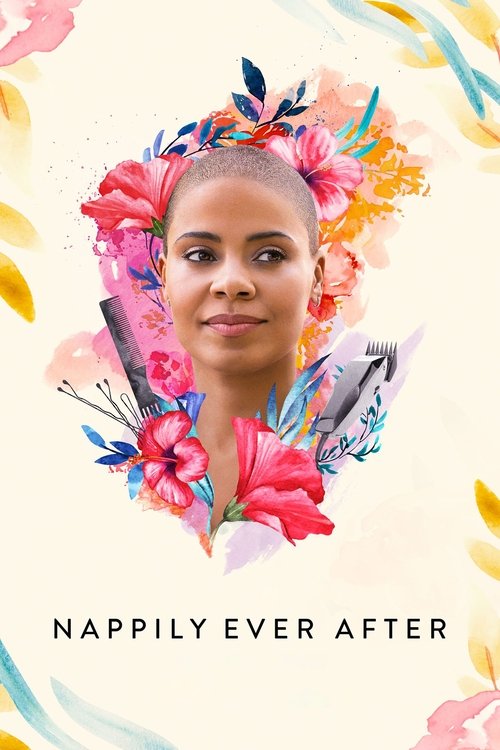
Nappily Ever After (2018)
Directed by Haifaa al-Mansour
Yes — Nappily Ever After is woke, scoring 64 out of 100 on our wokeness meter.
Nappily Ever After arrives as a Netflix romantic comedy with a serious thesis tucked beneath its meet-cute mechanics: Black hair is not a styling choice but a battleground.
Consciousness Markers
The central conflict revolves around Black natural hair, Eurocentric beauty standards, workplace bias, and racialized ideas of professionalism and desirability.
The film features a predominantly Black cast led by Sanaa Lathan, centering Black women's experiences, with a Saudi woman director at the helm.
The film critiques beauty standards imposed on women, explores mother-daughter pressure, and emphasizes female self-determination, though it remains a mainstream romcom.
The film delivers messages about natural hair, identity, and resisting beauty norms, but it does so within a light romantic-comedy framework rather than a preachy one.
The film promotes self-acceptance of natural hair and appearance, including a shaved head, but it does not engage with body-size positivity or fat-acceptance themes.
There are no LGBTQ+ themes, characters, or storylines in the film.
There is no climate change or environmental advocacy content in the film.
The film briefly critiques the advertising industry's preference for blonde models, but it does not advance an anti-capitalist or eat-the-rich message.
There is no exploration of neurodivergence or neurodiverse characters in the film.
The film is a contemporary romantic comedy and does not revise or reinterpret historical events.
Why it received this score
Nappily Ever After arrives as a Netflix romantic comedy with a serious thesis tucked beneath its meet-cute mechanics: Black hair is not a styling choice but a battleground. Directed by Haifaa al-Mansour and led by Sanaa Lathan, the film assembles a predominantly Black cast and keeps Black women's interior lives at the center. Violet's struggle with relaxers, weaves, frizz, and finally a shaved head is treated as a racialized negotiation with professionalism, desirability, and maternal expectation. The advertising office where blonde models win the pitch is not incidental. It is the film's quiet indictment of Eurocentric standards dressed up as workplace realism. The representation is not decorative. It is the engine.
The feminist current is present but domesticated. The film critiques the beauty standards imposed on women, explores the pressure passed from mother to daughter, and insists on female self-determination. Yet it never abandons the mainstream romantic comedy playbook. There are proposals, misunderstandings, a soulful barber, and a final act of poolside liberation that plays like a softened manifesto. Body positivity extends to natural hair and a shaved head, not to body size or fat acceptance. The sermonizing is mild, folded into jokes and montages. The film has no LGBTQ storyline, no climate agenda, no anti-capitalist appetite beyond a brief jab at ad agencies, no neurodivergent arc, and no revisionist historical project. Its instruction is limited and its genre loyalties are intact.
The film leaves a specific, uneven cultural awareness. It is most persuasive when it lets hair carry the argument and least persuasive when it reaches for tidy resolution. The plant-based hair product pitch and the confident walk into the credits suggest a brand of empowerment that is personal, market-friendly, and carefully contained. This is not a radical text. It is a respectable vintage: smooth on entry, with a finish of shea butter and compromise. We classify it accordingly, with a critic's weary nod.
Analysis generated by our Consciousness Algorithm


Synopsis
After an accident at the hair salon, Violet realizes she's not living life to the fullest. A soulful barber helps her put the pieces back together.
Questions about Nappily Ever After
Is Nappily Ever After woke?
Yes — Nappily Ever After is woke, scoring 64 out of 100 on our wokeness meter. That earns it a verdict of Woke.
What makes Nappily Ever After woke?
4 of the 10 markers register at 30 or above, led by Racial Consciousness (85), Representation Casting (80) and Feminist Agenda (60). On Racial Consciousness: The central conflict revolves around Black natural hair, Eurocentric beauty standards, workplace bias, and racialized ideas of professionalism and desirability.
How does Nappily Ever After compare to other 2018 movies?
It ranks #15 of the 325 films from 2018 we've scored; their average is 20. The wokest is Return (92).
How is the Woke Score calculated?
An AI-assisted process researches the film and its reception, scores it 0–100 on ten markers, then combines those into one 0–100 Woke Score. It measures a specific set of 2020s cultural themes, not film quality.