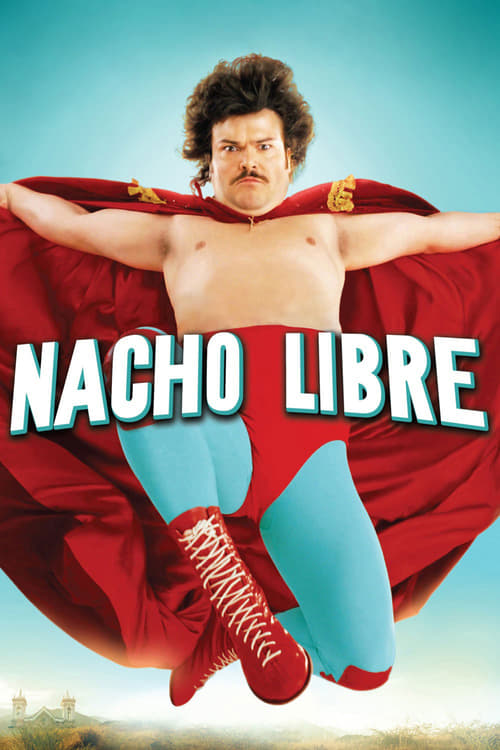
Nacho Libre (2006)
Directed by Jared Hess
No — Nacho Libre is not woke, scoring 5 out of 100 on our wokeness meter.
Nacho Libre arrives from 2006, directed by Jared Hess, with Jack Black wearing a friar's robe and a luchador mask in roughly equal measure.
Consciousness Markers
The film is set in Oaxaca and features a predominantly Mexican/Latino supporting cast, but the lead is white American Jack Black playing a Mexican friar, a choice the production itself flagged as a concern. Representation here is incidental to the setting, not a woke statement.
Sister Encarnación exists largely as the object of Ignacio's forbidden crush; she has no agency-driven arc and the film advances no feminist argument.
The film is steeped in Mexican culture and locale but never engages racial consciousness, systemic inequality, or identity politics as themes.
Poverty and the orphanage's lack of funds motivate the plot, but the film is a money-earning underdog comedy, not a critique of capitalism or the wealthy.
A broad, silly sports comedy that never pauses to preach or moralize to the audience.
No LGBTQ+ characters, themes, or subtext of any kind.
No environmental or climate themes whatsoever.
Cándida, an overweight woman, is played purely as a punchline when Steven flees her in horror — the opposite of a body-positivity message.
No neurodivergent characters or themes are present.
Loosely inspired by the real Fray Tormenta, but the film makes no historical revisionist claims or reframings.
Why it received this score
Nacho Libre arrives from 2006, directed by Jared Hess, with Jack Black wearing a friar's robe and a luchador mask in roughly equal measure. The premise is sturdy. A cook at an Oaxacan monastery secretly wrestles to keep the orphanage in tortillas. The film is loosely tethered to Fray Tormenta, the real Mexican priest who spent twenty-three years in the ring for much the same reason. Black reportedly raised his own discomfort about playing a Mexican character and was told the friar was a gringo raised in Mexico. That distinction satisfied the production. It does not entirely satisfy the ledger.
What we find on inspection is a film soaked in Mexican place and custom that declines to make any argument about them. The supporting cast is largely Mexican and the setting is genuine, shot entirely in Oaxaca. None of this is offered as a statement. It is scenery, and pleasant scenery at that. Sister Encarnación exists to be gazed at across a courtyard, and she has no arc of her own. An overweight woman named Cándida appears so that Steven may flee from her in visible horror, which is the film's whole position on the subject of bodies. There is no queer presence, no environmental concern, no neurodivergent character, no reframing of the historical record. The orphanage's poverty drives the plot, but the prize money buys a bus, and the film ends content.
The picture never stops to instruct us, and for that we should be grateful. It is a loud, silly sports comedy with a one-joke engine and no interest in moral instruction of any kind. The result is a low-proof vintage: broad, harmless, culturally adjacent, unlikely to trouble anyone's conscience. It goes down easily. It leaves nothing behind.
Analysis generated by our Consciousness Algorithm
Part of


Synopsis
Ignacio, a disrespected cook at a Mexican monastery, can barely afford to feed the orphans who live there. Inspired by a local wrestling hero, he decides to moonlight as the not-so-famous Luchador "Nacho Libre" to earn money for the monastery -- not to mention the admiration of beautiful nun Sister Encarnación.
Questions about Nacho Libre
Is Nacho Libre woke?
No — Nacho Libre is not woke, scoring 5 out of 100 on our wokeness meter. That earns it a verdict of Ultra Based.
Does Nacho Libre have any woke elements?
Very few. None of the 10 markers reaches 30, the level where a marker counts as present; the highest is Representation Casting at 18.
How does Nacho Libre compare to other 2006 movies?
It ranks #132 of the 211 films from 2006 we've scored; their average is 11. The wokest is An Inconvenient Truth (92).
How is the Woke Score calculated?
An AI-assisted process researches the film and its reception, scores it 0–100 on ten markers, then combines those into one 0–100 Woke Score. It measures a specific set of 2020s cultural themes, not film quality.