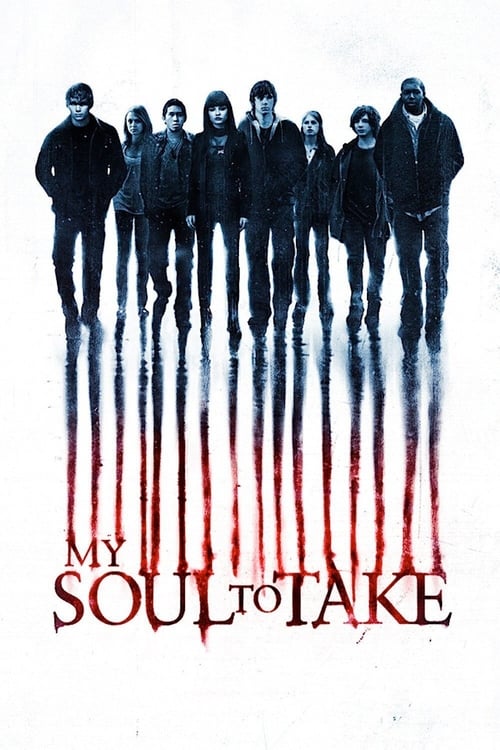
My Soul to Take (2010)
Directed by Wes Craven
No — My Soul to Take is not woke, scoring 8 out of 100 on our wokeness meter.
Wes Craven returned to the slasher in 2010 with a film about seven children born on the night a serial killer died, which is the sort of premise that sounds like a franchise starter and instead became a footnote.
Consciousness Markers
The cast is notably diverse for a 2010 slasher — Denzel Whitaker, Danai Gurira, Shareeka Epps, Raúl Esparza, and Jeremy Chu all appear — but the diversity is incidental to the ensemble rather than a stated representational aim.
Female characters exist (Penelope, Brittany, and the vengeful Fang/Leah), and Fang is given a genuine arc, but they are largely defined by slasher archetypes — the religious girl, the beautiful girl, the resentful sister — with no feminist framing.
Dissociative identity disorder is central to the plot, but it is deployed as a horror trope — the killer's 'soul' inhabiting a body — rather than as affirming neurodivergent representation, so it registers only faintly and negatively.
Craven's film is a straightforward genre exercise with no overt moralizing or social messaging directed at the audience.
No LGBTQ+ characters, themes, or subtext appear anywhere in the film.
The film features a multiracial cast but makes no comment on race, racism, or racial identity; the characters' ethnicities are simply present.
No environmental or climate themes are present.
No economic critique or class-based commentary appears; the small-town setting is purely atmospheric.
No body-positive themes or messaging are present.
The film is a contemporary slasher with no historical subject matter to revise.
Why it received this score
Wes Craven returned to the slasher in 2010 with a film about seven children born on the night a serial killer died, which is the sort of premise that sounds like a franchise starter and instead became a footnote. The Riverton Ripper, a family man named Abel Plenkov, suffers from dissociative identity disorder and houses a second soul. Sixteen years later the children begin dying, and Craven treats the condition as a mechanism for the plot, a vessel that evil can hop between, which is a long way from any modern sensitivity about mental health. The film plays this for menace. It does not pause to explain or apologize.
The ensemble is more varied than the 2010 slasher average, with Denzel Whitaker, Danai Gurira, Shareeka Epps, Raúl Esparza, and Jeremy Chu among the players, though the film never remarks on any of it. The characters simply are who they are, and the story shows no interest in why that matters. Emily Meade's Fang, later revealed as Bug's sister Leah, gets the closest thing to an arc, a resentful survivor who reconciles with the brother she blames. The other women are the religious girl and the beautiful girl, dispatched on schedule.
This is a genre exercise, and a fairly grim one. Craven offers no sermon, no lesson, no plea to the audience about how to live. The small town is atmosphere, not argument. Critics at the time were unkind, and audiences were worse, but a decade of reappraisal has settled the film into a modest cult corner. It asks nothing of us except attention, and it is content to be a slasher.
Analysis generated by our Consciousness Algorithm


Synopsis
On the day the Riverton Ripper vanished without a trace, seven children were born. Today, they're all turning 16... and turning up dead.
Questions about My Soul to Take
Is My Soul to Take woke?
No — My Soul to Take is not woke, scoring 8 out of 100 on our wokeness meter. That earns it a verdict of Ultra Based.
Does My Soul to Take have any woke elements?
Very few. None of the 10 markers reaches 30, the level where a marker counts as present; the highest is Representation Casting at 25.
How does My Soul to Take compare to other 2010 movies?
It ranks #100 of the 238 films from 2010 we've scored; their average is 11. The wokest is My Name Is Khan (84).
How is the Woke Score calculated?
An AI-assisted process researches the film and its reception, scores it 0–100 on ten markers, then combines those into one 0–100 Woke Score. It measures a specific set of 2020s cultural themes, not film quality.