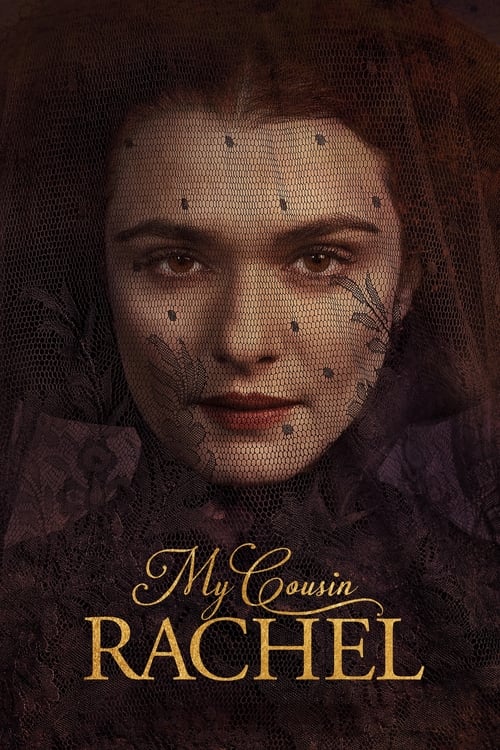
My Cousin Rachel (2017)
Directed by Roger Michell
No — My Cousin Rachel is not woke, scoring 5 out of 100 on our wokeness meter.
My Cousin Rachel arrives in 1830s Cornwall with fog, cliffs, pearls, and a widow who may or may not have poisoned her husband.
Consciousness Markers
The film centers on a sexually liberated woman and critiques the young male protagonist's sense of entitlement, but it frames this through gothic ambiguity rather than explicit modern feminist messaging.
The cast is almost entirely white British and Italian performers in a period English setting; no meaningful diversity casting or color-conscious choices are evident.
No LGBTQ+ characters, relationships, or themes appear in the story.
The story is set in 1830s Cornwall and Italy with no engagement with race, colonialism, or racial politics.
No environmental or climate themes are present.
Wealth and estate inheritance drive the plot, but the film does not critique capitalism or class structures in an eat-the-rich mode.
No body-positivity themes or diverse body representation are present.
No neurodivergent characters or themes are present.
It is a period literary adaptation, not a revisionist historical narrative.
The film is a restrained gothic romance and does not pause for direct social or political lecturing.
Why it received this score
My Cousin Rachel arrives in 1830s Cornwall with fog, cliffs, pearls, and a widow who may or may not have poisoned her husband. Roger Michell directs Daphne du Maurier's novel as a slow-burning gothic romance, and the film has the good manners not to interrupt its own story with a lecture. The cast is white, the estates are inherited, and the emotional weather is jealousy. This is a period literary adaptation with traditional concerns, and its social imagination does not stretch toward the modern categories that would raise its temperature. No environmental sermon, no economic polemic, no therapeutic vocabulary of identity. The film simply wants to know whether Rachel is a killer.
Where the film shows a mild pulse of contemporary awareness is in its treatment of Rachel. Weisz plays her as sexually liberated, unapologetic about pleasure, and uninterested in performing gratitude for Philip's financial gestures. Philip, meanwhile, is a virginal young man whose desire curdles into entitlement. He assumes a night in her bed is a marriage contract, and the screenplay lets us see his petulance for what it is. This is a critique of male presumption, but it comes wrapped in ambiguity and gothic dread, not in a thesis. The film never stops to explain the moral. It trusts the audience to notice.
The result is an elegant, minor-key adaptation that scores low on the modern cultural index. Its inheritance plot is not an eat-the-rich parable. Its Cornwall is not a colonial case study. Its ending refuses to resolve whether Rachel was a poisoner or a victim of male fantasy. The final image of Philip haunted by headaches and uncertainty is a fitting one for a film that prefers questions to sermons. As a specimen of social consciousness, it is nearly inert. As a gothic romance, it has a pulse.
Analysis generated by our Consciousness Algorithm
Part of


Synopsis
A young Englishman plots revenge against his mysterious, beautiful cousin, believing that she murdered his guardian. But his feelings become complicated as he finds himself falling under the beguiling spell of her charms.
Questions about My Cousin Rachel
Is My Cousin Rachel woke?
No — My Cousin Rachel is not woke, scoring 5 out of 100 on our wokeness meter. That earns it a verdict of Ultra Based.
Does My Cousin Rachel have any woke elements?
Very few. None of the 10 markers reaches 30, the level where a marker counts as present; the highest is Feminist Agenda at 20.
How does My Cousin Rachel compare to other 2017 movies?
It ranks #241 of the 309 films from 2017 we've scored; their average is 19. The wokest is I Am Not Your Negro (92).
How is the Woke Score calculated?
An AI-assisted process researches the film and its reception, scores it 0–100 on ten markers, then combines those into one 0–100 Woke Score. It measures a specific set of 2020s cultural themes, not film quality.