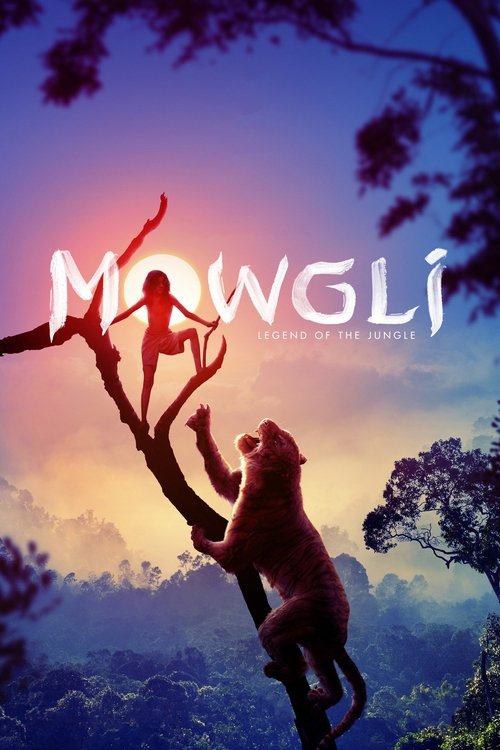
Mowgli: Legend of the Jungle (2018)
Directed by Andy Serkis
No — Mowgli: Legend of the Jungle is not woke, scoring 12 out of 100 on our wokeness meter.
Andy Serkis's Mowgli: Legend of the Jungle arrives as a grim, humorless cousin to the Disney musical, a Netflix acquisition that Warner Bros.
Consciousness Markers
An Indian-American lead (Rohan Chand) and Indian supporting players (Freida Pinto) anchor a story set in colonial India, though the voice cast remains overwhelmingly white British, drawing criticism for under-representing Indians.
The villain is a British colonial trophy hunter who mutilated Hathi and killed Bhoot, giving the film a faint postcolonial undercurrent as the Indian man-cub and the jungle rise against the imperial predator.
The closing note about Mowgli giving the animals a voice and bringing peace carries a mild moral, but the film is a grim adventure rather than a sermon.
Female characters (Nisha, Kaa, Messua) exist in maternal and mentor roles but the film advances no feminist argument or gendered critique.
No LGBTQ+ characters, themes, or subtext anywhere in the film.
No environmental or climate-change messaging; the jungle is a setting, not a cause.
No economic critique or anti-wealth themes present.
Bhoot the albino wolf cub is an outcast friend, but the film makes no body-positivity argument about appearance or self-acceptance.
No neurodivergent characters or themes.
A darker retelling of Kipling's source material, but it does not rewrite or reinterpret historical events.
Why it received this score
Andy Serkis's Mowgli: Legend of the Jungle arrives as a grim, humorless cousin to the Disney musical, a Netflix acquisition that Warner Bros. offloaded after years of delays and cold feet. It adapts Kipling with a straight face and a high body count, trading singalongs for mutilation and colonial trophy hunters. The film is many things: dark, ambitious, occasionally incoherent. It is not, however, a lecture. The sermonizing is kept to a minimum, which is its own small mercy.
The production does make a partial gesture toward representation. Rohan Chand, an Indian-American actor, carries the film as Mowgli, and Freida Pinto appears as Messua. That is a modest step. The voice cast, however, remains a parade of white British thespians, a fact that critics in India rightly noticed. There is also a faint postcolonial pulse. The villain is John Lockwood, a British hunter who collects trophies and shot the tusk off Hathi. The Indian man-cub and the jungle creatures unite against the imperial predator. It is not a treatise. It is a whiff of context.
Elsewhere, the film's social consciousness is close to nonexistent. No LGBTQ characters or themes. No climate crusade. No anti-capitalist anger. No body positivity, despite the albino wolf cub Bhoot. No neurodivergence. No revisionist history, unless we count making Kipling darker. The feminist angle is a shrug: Nisha and Messua are kind, but the film offers no gendered critique. The closing narration about Mowgli giving the animals a voice is a mild moral, nothing more. What we have is a somber adventure that occasionally remembers it is set in colonial India. The rest is just wolves, tigers, and melancholy.
Analysis generated by our Consciousness Algorithm
Part of


Synopsis
A human child raised by wolves, must face off against a menacing tiger named Shere Khan, as well as his own origins.
Questions about Mowgli: Legend of the Jungle
Is Mowgli: Legend of the Jungle woke?
No — Mowgli: Legend of the Jungle is not woke, scoring 12 out of 100 on our wokeness meter. That earns it a verdict of Ultra Based.
Does Mowgli: Legend of the Jungle have any woke elements?
1 of the 10 markers register at 30 or above, led by Representation Casting (35). On Representation Casting: An Indian-American lead (Rohan Chand) and Indian supporting players (Freida Pinto) anchor a story set in colonial India, though the voice cast remains overwhelmingly white British, drawing criticism for under-representing Indians.
How does Mowgli: Legend of the Jungle compare to other 2018 movies?
It ranks #169 of the 325 films from 2018 we've scored; their average is 20. The wokest is Return (92).
How is the Woke Score calculated?
An AI-assisted process researches the film and its reception, scores it 0–100 on ten markers, then combines those into one 0–100 Woke Score. It measures a specific set of 2020s cultural themes, not film quality.