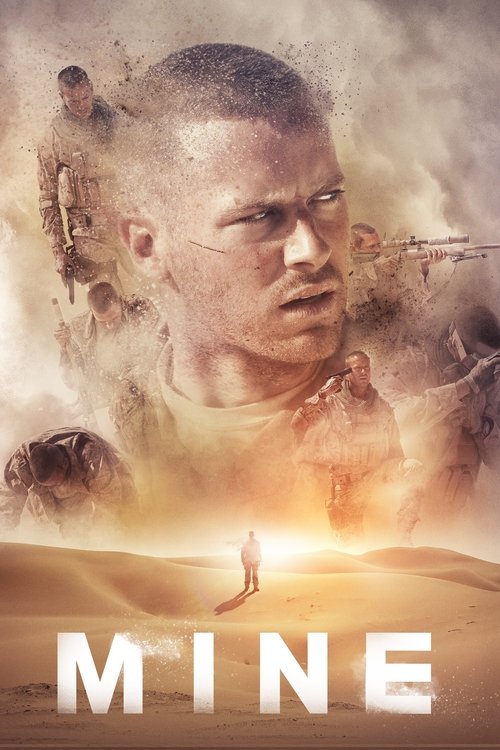
Mine (2016)
Directed by Fabio Guaglione
No — Mine is not woke, scoring 4 out of 100 on our wokeness meter.
Armie Hammer plays a United States Marine sniper who, having botched an assassination in North Africa, finds himself standing on an unmapped landmine in the desert with one foot planted and nowhere to go.
Consciousness Markers
The cast is overwhelmingly white, led by Armie Hammer, with only incidental minority presence (Clint Dyer, a Berber character). No deliberate diverse-casting agenda is evident.
The film is set in North Africa with a Berber character, but race is never examined or commented upon; the setting is backdrop, not thesis.
The lone female character is a girlfriend in flashbacks serving as emotional motivation; no feminist themes or commentary are present.
The film is a tense survival thriller with no didactic messaging or moral lecturing to the audience.
No LGBTQ+ characters, themes, or subtext appear anywhere in the film.
The desert is a survival obstacle, not a vehicle for environmental messaging.
No economic critique or anti-capitalist themes; the conflict is military and personal.
No body-positivity themes or messaging of any kind.
Hallucinations and psychological strain are depicted as trauma and survival stress, not as neurodivergence framed positively or as identity.
A fictional war-survival story with no historical revisionism or reframing of real events.
Why it received this score
Armie Hammer plays a United States Marine sniper who, having botched an assassination in North Africa, finds himself standing on an unmapped landmine in the desert with one foot planted and nowhere to go. For roughly ninety minutes he stands there. He is visited by hallucinations, sandstorms, dogs, insurgents, and one Berber hermit who lost a leg to the same sort of device and offers encouragement. His spotter, played briefly by Tom Cullen, removes himself from the narrative with a pistol. This is a survival exercise, and it is content to be one.
For those of us who keep ledgers, the picture offers little to record. The cast is white to a man, with the North African setting functioning as terrain and nothing more. A Berber character appears, speaks a little English, dispenses folk wisdom, and departs. Race is never examined, only dressed. The girlfriend exists in flashbacks, where she serves as a photograph that breathes, motivating our hero toward a final proposal and no further. There is no romantic or political subtext to speak of, no environmental grievance lodged against the desert, no economic critique, no meditation on the body, none of the neurological framing that would recast a man's hallucinations as identity. The trauma here is simply trauma, old-fashioned and untreated.
The film's indifference to social questions is matched by its indifference to preaching. There is no lecture, no moral appended before the credits, no invitation to examine our complicity in anything at all. A mine is a mine. A man stands on it. That is the extent of the argument, and the film has the good sense not to pretend otherwise. A austere vintage, thin on the nose, and it will not be cellared.
Analysis generated by our Consciousness Algorithm


Synopsis
After a failed assassination attempt, a soldier finds himself stranded in the desert. Exposed to the elements, he must survive the dangers of the desert and battle the psychological and physical toll of the treacherous conditions.
Questions about Mine
Is Mine woke?
No — Mine is not woke, scoring 4 out of 100 on our wokeness meter. That earns it a verdict of Ultra Based.
Does Mine have any woke elements?
Very few. None of the 10 markers reaches 30, the level where a marker counts as present; the highest is Representation Casting at 12.
How does Mine compare to other 2016 movies?
It ranks #232 of the 285 films from 2016 we've scored; their average is 16. The wokest is 13th (92).
How is the Woke Score calculated?
An AI-assisted process researches the film and its reception, scores it 0–100 on ten markers, then combines those into one 0–100 Woke Score. It measures a specific set of 2020s cultural themes, not film quality.