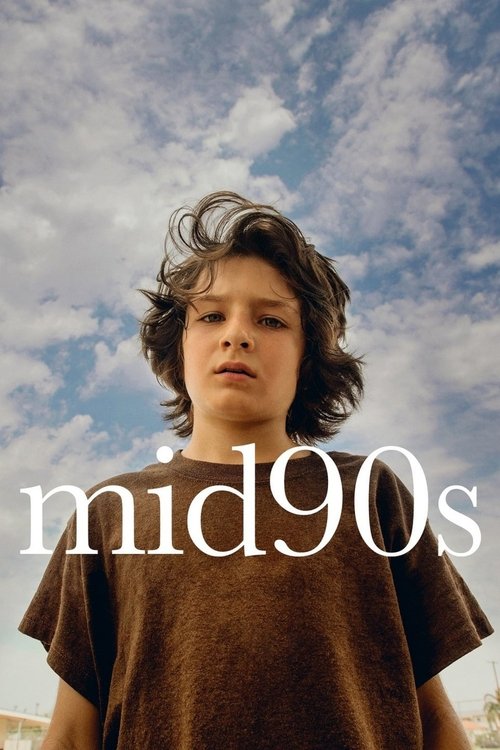
mid90s (2018)
Directed by Jonah Hill
No — mid90s is not woke, scoring 9 out of 100 on our wokeness meter.
For a film so committed to the texture of 1996 Los Angeles, mid90s arrives with remarkably little to sell.
Consciousness Markers
The skate crew is racially mixed and features real-life skaters like Na-kel Smith, but their presence is natural and unremarked upon, with no casting framed as a representational statement.
A TMDB keyword flags a 'gay theme,' and the skaters' dialogue is laced with homophobic slurs, but this is period-accurate texture rather than affirmative LGBTQ+ storytelling.
The film has been criticized for its toxic masculinity and misogyny; female characters like Dabney and Estee are largely marginal to the boys' world, and no feminist thesis is advanced.
Occasional racist slurs appear as period verisimilitude, but the film offers no racial consciousness or commentary on systemic issues.
Hill explicitly disavowed moralizing ('I'm not a moralist'), and the film observes its characters' flaws without lecturing the audience.
Poverty is depicted (Fourth Grade cannot afford socks), but the film makes no structural critique of capitalism or class.
No environmental themes or climate messaging of any kind.
No body positivity themes present.
Self-harm and adolescent mental health are depicted, but neurodivergence is not a theme.
A nostalgic period piece set in 1996, with no revisionist reframing of history.
Why it received this score
For a film so committed to the texture of 1996 Los Angeles, mid90s arrives with remarkably little to sell. Jonah Hill's debut shoots in 4:3 on Super 16mm, casts actual skateboarders alongside trained actors, and lets the camera sit in the back seat while teenage boys say terrible things to each other. The result is a mood piece about a thirteen-year-old named Stevie, an abusive brother, a tired mother, and a crew at the Motor Avenue Skateshop that offers him belonging at a price. Hill has said he is not a moralist. The film believes him.
The crew is racially mixed, and Hill cast real skaters such as Na-kel Smith without ever stopping to announce it. That quiet is the point, and it keeps the film's representational gestures modest. Meanwhile the dialogue is thick with homophobic and racist slurs, deployed as period furniture. Sam Adams of Slate called them a cheap shortcut to verisimilitude, which is fair. The women in Stevie's orbit, his mother and the older girl Estee, hover at the edges of a story that belongs to the boys, and the film has drawn criticism for the misogyny it declines to correct. Poverty shows up too: Fourth Grade cannot afford socks. Nobody turns that into an argument about class.
Instruction, however, is not this film's business. There is no environmental conscience here, no body politics, no reframing of the historical record, no lecture waiting at the end of the third act. Stevie's self-harm and the group's casual cruelty are presented as facts of adolescence, not as teaching moments. Even the ending, a hospital room and a homemade skate tape, withholds judgment. This is a nostalgic object built with real craft and almost no thesis. As cultural documents go, it is a skate video with a budget, and it knows it.
Analysis generated by our Consciousness Algorithm
Part of


Synopsis
In 1990s Los Angeles, a 13-year-old spends his summer navigating between a troubled home life and a crew of new friends he meets at a skate shop.
Questions about mid90s
Is mid90s woke?
No — mid90s is not woke, scoring 9 out of 100 on our wokeness meter. That earns it a verdict of Ultra Based.
Does mid90s have any woke elements?
Very few. None of the 10 markers reaches 30, the level where a marker counts as present; the highest is Representation Casting at 20.
How does mid90s compare to other 2018 movies?
It ranks #203 of the 325 films from 2018 we've scored; their average is 20. The wokest is Return (92).
How is the Woke Score calculated?
An AI-assisted process researches the film and its reception, scores it 0–100 on ten markers, then combines those into one 0–100 Woke Score. It measures a specific set of 2020s cultural themes, not film quality.