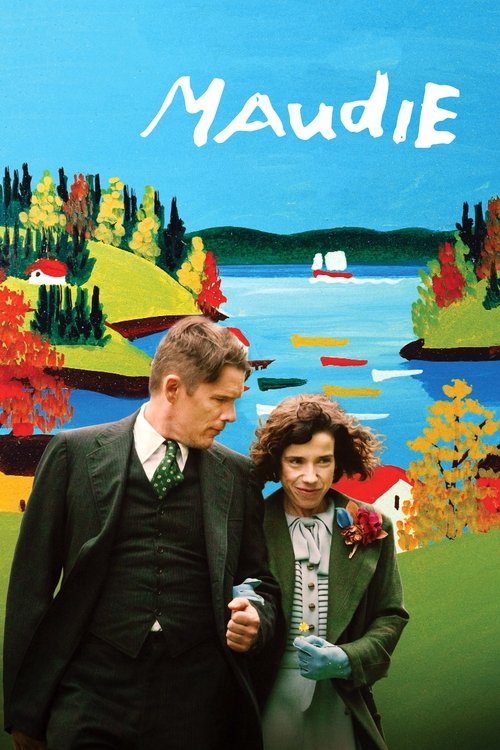
Maudie (2016)
Directed by Aisling Walsh
No — Maudie is not woke, scoring 15 out of 100 on our wokeness meter.
Maudie arrives with the soft tread of a film that has no interest in arguing with anyone.
Consciousness Markers
Maudie portrays a woman asserting independence, pursuing art, and marrying on her own terms within a patriarchal 1930s setting, with a female director at the helm.
The film presents a disabled woman as a romantic lead and artist without making her disability the sole focus, offering a modest form of disability acceptance and body diversity.
The film centers a disabled female protagonist and is directed by a woman, but the cast is otherwise uniformly white and the disabled role is played by an able-bodied actress, limiting its modern representation-casting credentials.
No LGBTQ+ characters or themes are present.
The film features an all-white cast and does not engage with racial issues.
No environmental or climate themes are present.
The film depicts poverty and art commerce but offers no critique of capitalism.
No neurodivergent characters or themes are present.
The film is a straightforward biopic of Maud Lewis and does not revise historical narratives through a modern ideological lens.
The film is a quiet, humanist drama that does not preach or lecture.
Why it received this score
Maudie arrives with the soft tread of a film that has no interest in arguing with anyone. Aisling Walsh directs the story of Maud Lewis, the Nova Scotian folk painter who sold cheerful cards from a shack the size of a generous closet, and the picture unfolds with the patience of a Sunday afternoon. Sally Hawkins plays Maud with a crooked gait and an unkillable cheerfulness, and the screenplay declines to turn her arthritis into a lesson. The camera simply watches her paint flowers on a wall while her surly employer, Everett, grunts in the corner. It is a love story about two difficult people finding each other in a very small house.
There is a modest progressive streak here. A woman marries on her own terms in 1930s Nova Scotia, pursues her art, and earns money of her own, and a female director steers the whole affair. The film also places a disabled woman at the center of a romance without making her body the subject of a lecture. That said, the role goes to an able-bodied performer, and the cast is uniformly white, so the picture's cultural awareness stays within the bounds of a well-mannered period drama.
What the film does not do is preach. No sermons about capital, no racial reckoning, no climate anxieties intrude on the Maritime landscape. The result is warm, restrained, and slightly thin, a portrait that skims its subject's surface while Hawkins does the heavy lifting. It collected awards in Canada and Ireland, revived interest in Lewis's paintings, and then went quietly on its way. A gentle film. Nothing more, nothing less.
Analysis generated by our Consciousness Algorithm


Synopsis
Canadian folk artist Maud Lewis falls in love with a fishmonger while working for him as a live-in housekeeper.
Questions about Maudie
Is Maudie woke?
No — Maudie is not woke, scoring 15 out of 100 on our wokeness meter. That earns it a verdict of Ultra Based.
Does Maudie have any woke elements?
1 of the 10 markers register at 30 or above, led by Feminist Agenda (40). On Feminist Agenda: Maudie portrays a woman asserting independence, pursuing art, and marrying on her own terms within a patriarchal 1930s setting, with a female director at the helm.
How does Maudie compare to other 2016 movies?
It ranks #107 of the 285 films from 2016 we've scored; their average is 16. The wokest is 13th (92).
How is the Woke Score calculated?
An AI-assisted process researches the film and its reception, scores it 0–100 on ten markers, then combines those into one 0–100 Woke Score. It measures a specific set of 2020s cultural themes, not film quality.