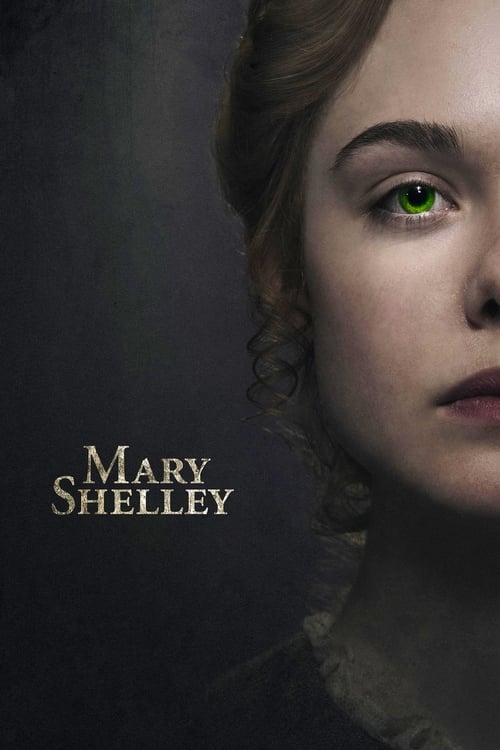
Mary Shelley (2017)
Directed by Haifaa al-Mansour
No — Mary Shelley is not especially woke, scoring 27 out of 100 on our wokeness meter.
Mary Shelley arrives dressed in the somber garments of the literary biopic, tracing the youthful years of the woman who invented science fiction before the term existed.
Consciousness Markers
The core conflict revolves around Mary Shelley's intellectual freedom and her struggle against societal constraints, particularly regarding the publication of her work under her own name.
The film centers on a female protagonist and is directed by a woman, Haifaa al-Mansour, providing a strong focus on female agency in a historical context.
As a dramatic interpretation of a true story, it engages with historical events, but it does not aggressively challenge established historical narratives in a modern revisionist sense.
The film touches upon financial instability and publishing rights, but it does not offer a systemic critique of capitalism.
While the relationships are unconventional and fluid, the film does not feature explicit LGBTQ+ themes or characters as a central element of the narrative.
The film is a period romance and drama, lacking the didactic or highly theoretical nature associated with 'lecture energy' films.
The film contains no discussion or representation of race, ethnicity, or racial dynamics.
There are no environmental themes or references to climate change within the film's plot or setting.
The film does not address body image, diverse body types, or body acceptance in any meaningful way.
There is no evidence of characters being portrayed with neurodivergent traits or conditions.
Why it received this score
Mary Shelley arrives dressed in the somber garments of the literary biopic, tracing the youthful years of the woman who invented science fiction before the term existed. Haifaa al-Mansour directs, Elle Fanning carries the title role, and the film concerns itself chiefly with a young woman's claim to her own mind. It is a romance, a period piece, and a study of authorship. The mood is damp, the parlors are cold, and the men are mostly insufferable.
The central drama is one of intellectual property and personal freedom. Mary writes Frankenstein, no publisher will touch it under a lady's name, and her husband's preface becomes the price of admission. The film takes real interest in that indignity, and its feminist sympathies are legible without being shouted. The casting and the direction place a woman's agency at the center of a story that history preferred to tell through the men around her. What the film does not do is extend that attention to race, class in any systemic sense, or the natural world. The bohemian arrangements of the Shelley circle are unconventional and casually libertine, though the film keeps those matters firmly in the register of period scandal.
Elsewhere the ledger is quiet. There is no sermonizing, no body politics, no diagnostic language about the mind, and no attempt to rewrite the nineteenth century into a lecture hall. The film smooths out a genuinely strange life into recognizable prestige drama, which is its own kind of timidity. Historians have complained, critics have shrugged, and the box office barely noticed. A modest, well-mannered picture about a woman who wrote something monstrous, and a film content to let the monster stay off screen where the manners are better.
A restrained vintage, then, with a firm tannin of female authorship and very little else in the glass. It will not trouble anyone's evening, and it will not start an argument at dinner. The sommelier notes it, files it, and moves on to the next bottle.
{"thematic_tags": ["true_story"]}
Analysis generated by our Consciousness Algorithm


Synopsis
The love affair between poet Percy Shelley and Mary Wollstonecraft Godwin resulted in the creation of an immortal novel, “Frankenstein; or, The Modern Prometheus.”
Questions about Mary Shelley
Is Mary Shelley woke?
No — Mary Shelley is not especially woke, scoring 27 out of 100 on our wokeness meter. That earns it a verdict of Based.
Does Mary Shelley have any woke elements?
2 of the 10 markers register at 30 or above, led by Feminist Agenda (75) and Representation Casting (65). On Feminist Agenda: The core conflict revolves around Mary Shelley's intellectual freedom and her struggle against societal constraints, particularly regarding the publication of her work under her own name.
How does Mary Shelley compare to other 2017 movies?
It ranks #70 of the 309 films from 2017 we've scored; their average is 19. The wokest is I Am Not Your Negro (92).
How is the Woke Score calculated?
An AI-assisted process researches the film and its reception, scores it 0–100 on ten markers, then combines those into one 0–100 Woke Score. It measures a specific set of 2020s cultural themes, not film quality.