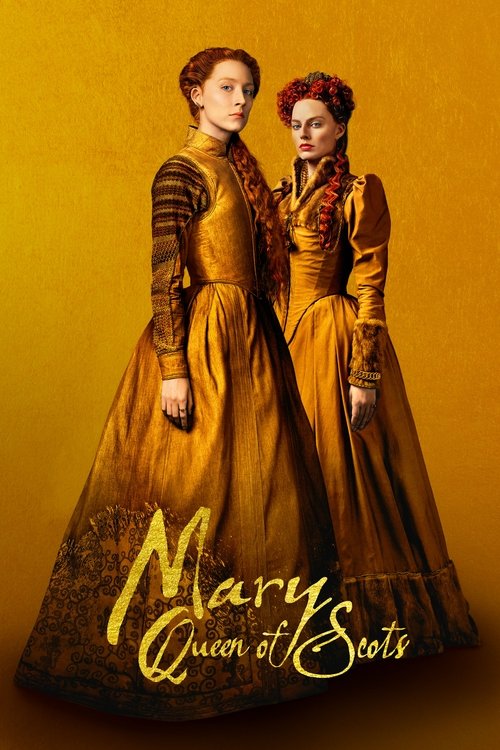
Mary Queen of Scots (2018)
Directed by Josie Rourke
Partly — Mary Queen of Scots is somewhat woke, scoring 49 out of 100 on our wokeness meter.
Josie Rourke approached the Tudor court the way a modern casting director approaches a repertory company, and she said so out loud.
Consciousness Markers
Director Josie Rourke explicitly applied colour-blind casting, stating she 'would not direct an all-white period drama' — casting a mixed-race actor as the Piedmontese David Rizzio, a Black actor as Lord Randolph, and Gemma Chan as the historically white Elizabeth Hardwick.
A female-directed film centering two queens and their fraught power dynamic, with a deliberate thesis about women rulers being undermined by men; the feminist framing is present but largely subsumed into period drama rather than explicit advocacy.
The film invents a face-to-face meeting between Mary and Elizabeth that never occurred, reimagines historical figures' races, and reinterprets Darnley's sexuality — a modern reframing of the historical record that drew criticism from historians.
Lord Darnley is portrayed as bisexual, with a scene of him in bed with Mary's secretary Rizzio and his sexuality framed as a source of pressure and shame; historians welcomed the 'louche lothario' reading.
The colour-blind casting is a conscious racial statement about who gets to inhabit historical European power, though the film does not otherwise engage racial themes in its narrative.
The film carries a soft thematic argument about sisterhood, female sovereignty, and the cost of male-dominated power, but delivers it through drama rather than direct sermonizing.
No environmental or climate content whatsoever.
No critique of capitalism or economic class structures; the conflict is dynastic and religious.
No body-positivity themes present.
No neurodivergence themes present.
Why it received this score
Josie Rourke approached the Tudor court the way a modern casting director approaches a repertory company, and she said so out loud. Her Mary Queen of Scots places a mixed-race actor in the role of David Rizzio, a Black actor as the English ambassador Thomas Randolph, and Gemma Chan as a woman who was, in the historical record, white. Rourke's stated position that she would not direct an all-white period drama is the engine behind these choices. The film itself does not pause to explain them. The court simply is what it is, and the drama proceeds. This is representation as production design, woven into the fabric without a speech attached.
The screenplay, adapted from John Guy's biography, takes other liberties. It stages a face-to-face meeting between Mary and Elizabeth that never happened, since the two queens conducted their entire relationship by letter. It reads Lord Darnley as a bisexual man whose desires are a source of pressure and shame, a reading some historians have welcomed. It builds a quiet argument about female sovereignty, two crowned women ground down by the men who advise, marry, and betray them. That argument arrives through plotting and performance, not through a monologue. The sermon stays in the subtext, which is where it works best.
What the film does not do is reach for the broader cultural toolkit. There is no environmental lament, no indictment of capital, no meditation on bodies or brains. Its progressive instincts are confined to who stands in the frame and how the past gets rearranged. The result is a handsomely mounted drama that wants credit for its casting and its sympathies, and mostly earns the first. The second remains a matter of taste.
Analysis generated by our Consciousness Algorithm
Part of


Synopsis
In 1561, Mary Stuart, widow of the King of France, returns to Scotland, reclaims her rightful throne and menaces the future of Queen Elizabeth I as ruler of England, because she has a legitimate claim to the English throne. Betrayals, rebellions, conspiracies and their own life choices imperil both Queens. They experience the bitter cost of power, until their tragic fate is finally fulfilled.
Questions about Mary Queen of Scots
Is Mary Queen of Scots woke?
Partly — Mary Queen of Scots is somewhat woke, scoring 49 out of 100 on our wokeness meter. That earns it a verdict of Woke-Adjacent.
What makes Mary Queen of Scots woke?
6 of the 10 markers register at 30 or above, led by Representation Casting (82), Feminist Agenda (52) and Revisionist History (48). On Representation Casting: Director Josie Rourke explicitly applied colour-blind casting, stating she 'would not direct an all-white period drama' — casting a mixed-race actor as the Piedmontese David Rizzio, a Black actor as Lord Randolph, and Gemma Chan as the historically white Elizabeth Hardwick.
How does Mary Queen of Scots compare to other 2018 movies?
It ranks #38 of the 325 films from 2018 we've scored; their average is 20. The wokest is Return (92).
How is the Woke Score calculated?
An AI-assisted process researches the film and its reception, scores it 0–100 on ten markers, then combines those into one 0–100 Woke Score. It measures a specific set of 2020s cultural themes, not film quality.