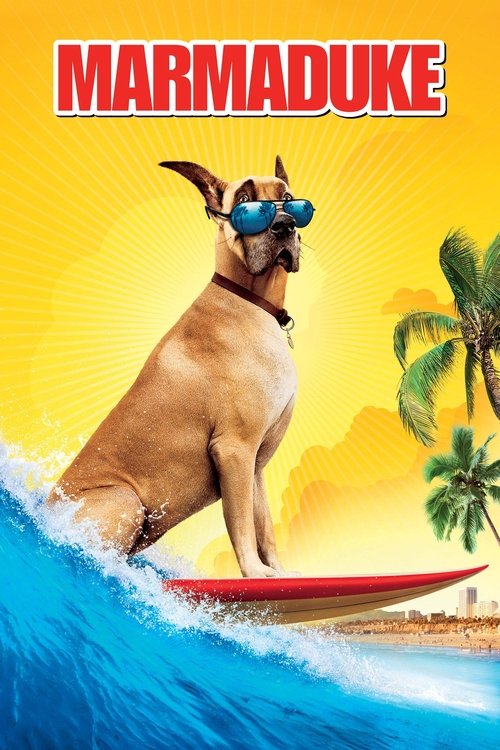
Marmaduke (2010)
Directed by Tom Dey
No — Marmaduke is not woke, scoring 2 out of 100 on our wokeness meter.
A Great Dane relocates from Kansas to Orange County, and the culture shock is confined entirely to canine social strata.
Consciousness Markers
Marmaduke gives a mild closing speech that differences shouldn't matter and all dogs deserve equal park access, but it is generic family-film moralizing rather than modern lecture energy.
The voice cast includes some minority performers, but the film makes no issue of representation and casts them in broad comic roles without comment.
No LGBTQ+ characters, themes, or subtext appear in the film.
Female dogs exist as romantic interests and friends, but the film offers no feminist critique or agenda.
The pedigrees-versus-mutts dog park hierarchy is a generic social-clique plot, not a racial-consciousness narrative.
No environmental or climate themes are present.
Corporate marketing and a Petco deal drive the plot, but the film treats them as comic backdrop rather than targets of anti-capitalist critique.
No body-positivity themes or messaging are present.
No neurodivergence themes or characters are present.
The film has no historical setting or revisionist historical claims.
Why it received this score
A Great Dane relocates from Kansas to Orange County, and the culture shock is confined entirely to canine social strata. Marmaduke arrives in 2010 with a comic-strip pedigree, an ensemble of talking animals, and a plot assembled from the standard parts: a snobbish clique of purebreds, a surfing contest staged for a Petco pitch, a dream date hijacked from the wrong girl, a runaway third act, and a closing musical number. The film has no interest in saying anything about the world. It has interest in a dog passing gas in bed and winking at the camera. That is the entire thesis, and it is delivered without apology.
On the matter of social consciousness, the ledger is nearly blank. The voice cast includes minority performers, but they are deployed as broad comic accents and nothing more, and the film never pauses to comment on their presence. The pedigrees-versus-mutts hierarchy at the park reads as a generic clique plot, the sort of lunchroom politics that predates any modern vocabulary for it. There is no romantic architecture beyond a love triangle resolved by convenience, no identity inquiry, no environmental grievance, no critique of the corporate machinery that literally drives the story. Bark Organics and Petco are comic furniture. The film regards them the way it regards everything else, as something to knock over.
What remains is a faint residue of moral instruction. Marmaduke's closing address to the park, in which he proposes that differences should not matter and that all dogs deserve equal access to the grass, is the sort of sentiment that family films have been issuing since the medium learned to talk. It is warm, it is brief, and it is entirely untethered from anything the preceding ninety minutes bothered to establish. A critic can only log it and move on. The dog surfs, the dog apologizes, the dog wins. Somewhere a marketing director keeps his job.
Analysis generated by our Consciousness Algorithm


Synopsis
When Phil and Debbie Winslow relocate from their native Kansas to the sunny climes of Orange County, their big-hearted, havoc-wreaking Great Dane gets a taste of the dog's life, California-style.
Questions about Marmaduke
Is Marmaduke woke?
No — Marmaduke is not woke, scoring 2 out of 100 on our wokeness meter. That earns it a verdict of Ultra Based.
Does Marmaduke have any woke elements?
Very few. None of the 10 markers reaches 30, the level where a marker counts as present; the highest is Lecture Energy at 10.
How does Marmaduke compare to other 2010 movies?
It ranks #191 of the 238 films from 2010 we've scored; their average is 11. The wokest is My Name Is Khan (84).
How is the Woke Score calculated?
An AI-assisted process researches the film and its reception, scores it 0–100 on ten markers, then combines those into one 0–100 Woke Score. It measures a specific set of 2020s cultural themes, not film quality.